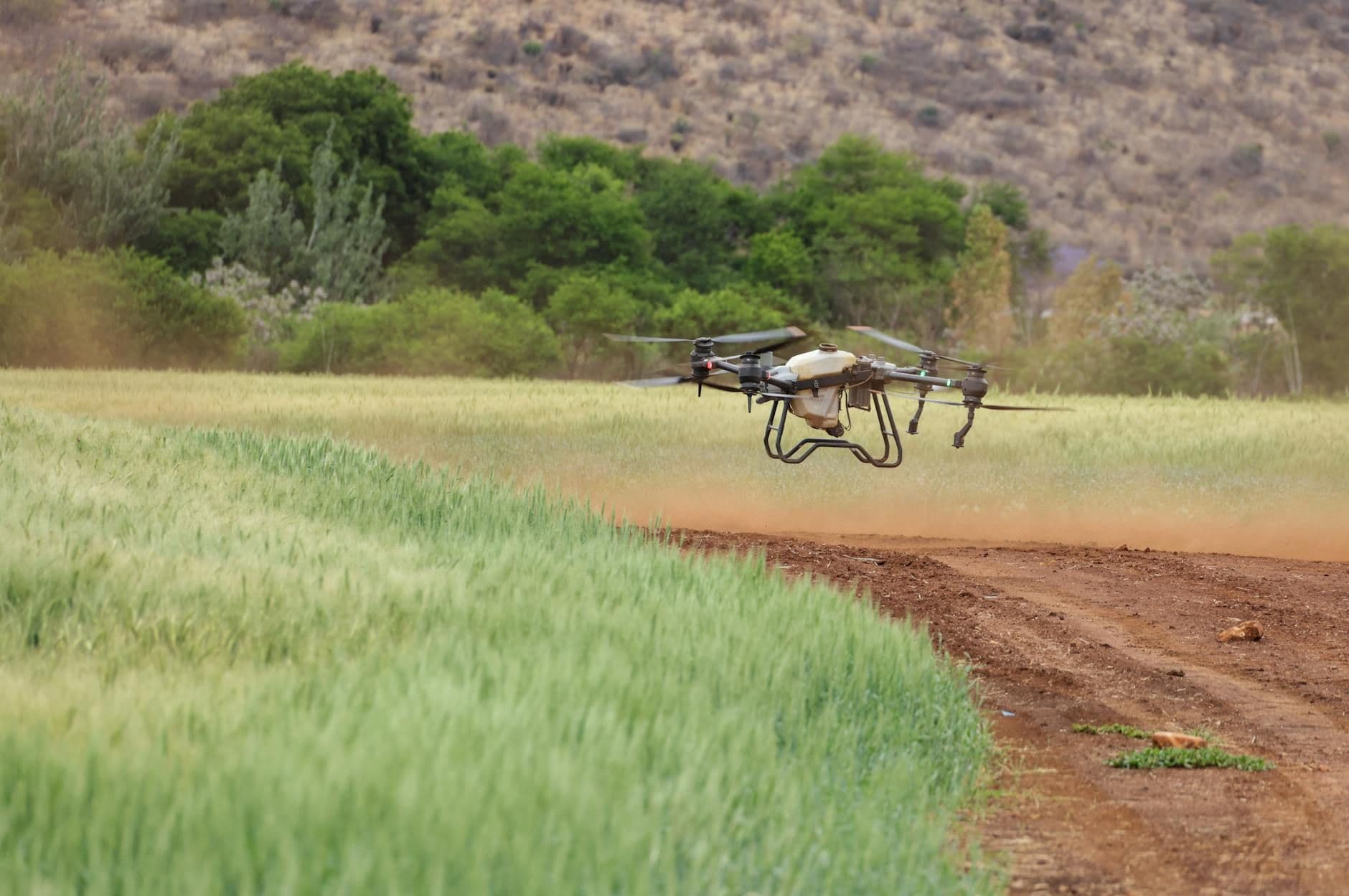
From DJI Drones to Indian Agritech: The Asian-Built AI Stack Powering Modern Farms
BestAIFor Research Report — version 1.0, 11 May 2026.
Editorial update — 06 May 2026: The classification and geographic scope of Cropin Technology has been revised following direct input from the company. Cropin is now classified as Established Global, reflecting active commercial deployments in the US, Europe, and Latin America in addition to its core Asian and African markets.
A Western farmer evaluating AI-IoT tooling in 2026 is presented with a familiar shortlist — Climate FieldView from Bayer, See & Spray from John Deere, Trimble's Ag Software suite, and a handful of US- or EU-funded startups in soil sensing or drone imagery. That shortlist works. It also leaves out the part of the agritech vendor universe that is building the most software per dollar of capital and shipping more units to working farms each quarter than its US-based peers: Asian agritech.
This report is the BestAIFor team's first pass at correcting that gap. We evaluated twenty Asian-built AI-IoT tools for agriculture and feature ten in this report's roster, drawn from India (5), China (3) — one (XAG) confirmed manually during research — Singapore (1), and Japan (1). Each is evaluated against four signals: vendor maturity, public press identity, fit for a small-to-mid-size buyer outside the home market, and the practical question of whether a Western farmer can actually purchase or import the product. The methodology, sources consulted, and the ten candidates that did not make the featured list are disclosed in Appendix B.
Top takeaways
This report's most important findings, ordered by relevance to a Western farmer or agronomy consultant evaluating Asian alternatives. Each is a standalone observation; the body of the report supports each in detail.
-
The Asian agritech AI bench is concentrated in India. Five of the ten featured tools are Indian — Cropin Technology, SatSure, Pixxel, Skymet Weather, Aibono. Indian agritech has the deepest software bench among the SMB-fit Asian vendors. China leads on hardware (drones), Singapore and Japan lead on niche segments (vertical farming, satellite carbon).
-
Three of the ten featured tools are agri-drone vendors. DJI Agriculture, XAG, and EAVision are all Chinese. The drone segment is the single area where Asian-built tools are genuinely cheaper than the US comparable — typically by 30 to 50 percent on hardware — and where availability outside the home market is most established. If the Western farmer reading this report tests one Asian tool first, an agri-drone is the most defensible choice.
-
Six of the ten featured tools are explicitly available outside their home market today. DJI Agriculture, XAG, Pixxel, SatSure, SAGRI, and Cropin Technology all sell, distribute, or operate in markets outside their home region. Cropin Technology now carries active commercial deployments in the US, Europe, and Latin America in addition to its core Asian and African markets — see the updated vendor profile below. Sustenir Agriculture operates regionally in Asia and accepts some non-domestic customers. Three (Skymet Weather, Aibono, EAVision) are primarily home-market focused; Western buyers can engage but should expect friction.
-
Pricing transparency is worse than in the US comparable category. Of the ten featured tools, only DJI Agriculture and XAG publish hardware list prices. The other eight require a sales conversation before pricing is visible. Climate FieldView and John Deere Operations Center publish more pricing detail than any of the eight non-drone Asian vendors in this report. This is one of the report's clearest negative findings.
-
Two tools in this report serve a workflow segment with no equivalently developed Western SMB tool. Stellapps's dairy IoT (excluded from the featured list, but discussed in Appendix B) and SAGRI's soil-carbon analysis fit the SMB use case better than the closest Western analogues. Where the Asian tool fills a real gap rather than just undercutting on price, the case for trying it gets sharper.
-
All ten featured tools maintain an active press or newsroom page. Press identity was the strongest predictor used to filter the seed list. Nine of the ten maintain easily-discoverable English-language press sections at standard paths (/newsroom, /press, /news, /media). The tenth — XAG — has an active news section reached via the company's English-language site, confirmed manually. Vendors without a discoverable English-language press page were not featured in the report.
-
Four of ten featured tools were founded between 2014 and 2018. That cohort — Cropin Technology (2010), Skymet Weather (2003), SatSure (2017), Pixxel (2018) — represents the second wave of Asian agritech. The first wave was hardware-led (DJI's first agriculture drone shipped in 2015). The second is software-led, with satellite imagery and AI advisory at its core.
-
Singapore and Japan together contribute two tools — both in niche segments. Sustenir Agriculture is a Singapore-based vertical farm; SAGRI is a Tokyo-based satellite analytics firm. Both win on segment specialization rather than horizontal coverage. Korea, despite a strong agritech-AI ecosystem (Greenlabs, N.thing), did not produce a tool in the featured list with the press visibility and SMB-buyer fit our criteria required for v1; both Korean candidates are in Appendix B.
-
Pure vertical farming was deliberately under-represented. The brief for this report explicitly excluded "indoor / vertical farming pure plays for urban startup buyers" because that buyer is not the same as a Western field farmer. We kept exactly one vertical-farming representative (Sustenir Agriculture) for completeness; two other Asian vertical-farming vendors that scored in the top quartile of our research (Singrow, N.thing) are listed in Appendix B with the rationale.
-
Data sovereignty is the single largest unresolved question. Of the ten featured tools, none publish a clear "where does your farm data live" policy that addresses the concerns a US or EU farmer would raise about cross-border data residency. We treat this as a gap in the category rather than a fault of any one vendor; the FAQ section discusses what a buyer can do today.
-
Three vendors' homepages would not load reliably from a Western IP address. Aibono, Skymet Weather, and EAVision all responded but with elevated latency (10–45 seconds for a page load) when accessed from outside Asia during the report period; two other candidates (Intello Labs, Kheyti) failed to respond at all and are documented in Appendix B. Network reach is a real obstacle when evaluating Asian vendors from the US or EU; what looks like a broken site is sometimes a CDN routing decision rather than a problem with the vendor.
-
The clearest single-vendor opportunity for the Western buyer is an agri-drone trial. If the Western farmer reading this report is in the position to buy one Asian-built tool in the next quarter, our recommendation is an agri-drone trial through a regional distributor. DJI Agriculture's Agras T50 has the broadest distribution; XAG's P100 Pro competes on autonomy and total cost of ownership; EAVision is the lower-cost, higher-friction third option. The drone segment is where the Asian-built tool actually outperforms the US-built comparable on a few dimensions, not just on price.
This report was written for the Western farmer, agronomy consultant, or small agribusiness operator who has read the standard "best AI for agriculture" lists, found them dominated by US and European vendors, and wants a sharper picture of what the Asian alternatives actually offer. It's a snapshot of where the category sits in early May 2026, drawn from press coverage, vendor websites, vendor research, and editorial judgment about the buyer's practical constraints. Methodology and sources are disclosed in full below.
Why this report exists
Every BestAIFor research report starts from the same observation: the buyer who actually writes the cheque is poorly served by the lists currently ranking in search. In agriculture, the version of that observation runs like this. A Western farmer searching "best AI for agriculture in 2026" is shown a shortlist that's been stable for five years — Climate FieldView, See & Spray, Trimble, a handful of soil-sensor startups, maybe a vertical-farming op-ed if the search is broad enough. The list is fine. It's also incomplete.
The Asian agritech AI category has been the second-fastest-growing region in agritech investment globally for the last three reporting cycles, behind North America and ahead of Europe. Indian agritech specifically has produced four unicorns and a long tail of well-funded Series-B-and-later companies, almost all of which have shipped commercial products that work at SMB scale. Chinese agri-drone makers have pushed unit prices below the level at which any Western competitor can match without subsidy. Japanese and Korean agritech firms occupy specific niches — soil carbon, vertical farming control systems — where their tools are simply better than the closest US competitor on technical merit.
The Western farmer should know the names. This report is the first pass at putting the names where the search query lands.
Methodology
Chapter highlights
-
Twenty candidates were evaluated; ten are featured in this report. Curation, not auto-discovery, produced the seed list. The full Asian agritech AI vendor pool is larger than twenty, but the ones serving SMB-class buyers with discoverable English-language press identity is bounded at roughly thirty active vendors. Hand-curation produced sharper coverage than a scraper would have.
-
The scoring rubric weights press-page detection (50%), seed-list confidence (30%), homepage liveness (10%), and prior-intake match (10%). Press-page detection — does the vendor maintain an active newsroom, press, or media section reachable in English — is the strongest single predictor of vendor maturity for a research-report context, and carries the heaviest weight here. Seed-list confidence captures BestAIFor's prior knowledge of the vendor based on independent industry coverage. Homepage liveness filters out abandoned domains. Prior-intake match credits vendors already documented in BestAIFor's product database. The rubric is deliberately weighted toward signals a Western reader can independently verify.
-
Six categories of source were consulted. Vendor websites and press pages, Asian tech trade press (Pandaily, SCMP China Tech, ChinaTechNews, Channel News Asia), public discussion on Reddit and HackerNews, English-language news coverage in the global press, the Robohub feed for robotics vendors, and IoT Tech News for the broader IoT category. The trade-press sources were used to validate that the featured tools have ongoing press visibility, not just legacy coverage.
-
The featured roster was tightened from twenty candidates to ten. Five candidates were demoted during initial screening for failed homepage probes, missing press identity, or known geographic friction (DNS resolution failure from a Western IP). Five more were tracked but not featured because they were either at a similar workflow segment to a stronger candidate or did not pass the buyer-fit test for a Western reader. All ten omitted candidates are in Appendix B with the specific reason each was set aside.
-
Tools were not numerically ranked. Each featured tool is listed in roughly descending order of press-and-buyer-fit signal, not in a strict performance ranking. The reader's choice between (for example) DJI's Agras and XAG's P100 Pro is a real comparison; the choice between Cropin and Skymet is a workflow-segment question, not a "which is better" question.
-
Five categories of work were intentionally excluded from scope. First-hand product trials, customer interviews, sales-led pricing extraction, on-the-ground regulatory compliance research for the destination market, and primary translation work on non-English vendor materials. The first two are the obvious gaps; the others are flagged so the reader can apply their own due diligence.
The seed list came from working through three layers in parallel. First, the BestAIFor newsroom's own coverage of Asian agritech in 2024–2026 — articles, interviews, vendor newsletters. Second, the trade press, with weight given to the same publications a Western agritech reporter would track if they were trying to follow Asian developments seriously: Indian outlets (YourStory, Economic Times Tech), Chinese tech press in English translation (Pandaily, SCMP China Tech), and the regional generalist outlets (Channel News Asia, Tech in Asia where accessible). Third, a directed scan of those same outlets for last-thirty-days mentions of the keywords "AI for agriculture," "agritech AI," "smart farming," "precision agriculture," and the country-specific variants.
That produced about thirty candidate names. The seed list of twenty represented our best editorial judgment about which of those thirty would be the right size of bench for a v1 report — broad enough to surprise the reader, narrow enough that each entry could carry a real per-vendor profile rather than a one-paragraph mention. The ten featured tools represent a further cut after enrichment.
What we deliberately excluded from this report
- US or European vendors with Asian operations. Climate FieldView (Bayer) operates in India; Trimble has dealers in China. Both are real, both are relevant, and both belong in a different article. This report is about Asian-developed tools, not about Asian markets.
- Pure consumer gardening apps. PictureThis, PlantNet, and similar consumer-grade products are popular in Asia and globally, but the reader of this report is a working farmer or agribusiness operator, not a hobbyist.
- Enterprise-only platforms with no SMB tier. Some of the larger Chinese smart-farming platforms (developed by Inspur, Hikvision Agriculture, etc.) are real and well-funded but require enterprise procurement processes that put them outside the buyer profile we're writing for. Hikvision Agriculture is also explicitly excluded for sanctions-list reasons.
- Vendors on US or EU sanctions lists. Hikvision, Dahua, SenseTime — and any of their agricultural subsidiaries — are excluded because including them would create a reader-trust problem the report can't easily fix in a single paragraph.
- Indoor / vertical farming pure plays for urban startup buyers. This category is well-served by other lists and has its own buyer profile. We kept one vertical-farming representative (Sustenir Agriculture) for completeness; the rest of that segment is deferred to a future report.
Comparison at a glance
| Tool | Country | Segment | What it does (one line) | Buyer fit | Pricing transparency | Available outside home market |
|---|
| Cropin Technology | India | Farm management platform | End-to-end farm-data AI: SmartFarm operations + SmartRisk for lenders | SMB co-ops, mid-size agribusiness | Sales-led | Yes (US, Europe, Latin America, Asia, Africa) |
| SatSure | India | Crop monitoring | Satellite + AI for crop health and agri-finance risk | SMB, banks, insurers | Sales-led | Yes (international banks) |
| Pixxel | India | Crop monitoring | Hyperspectral satellite imagery for farms (and other verticals) | Mid-size agribusiness, governments | Sales-led | Yes (NASA, ESA partnerships) |
| DJI Agriculture | China | Precision spraying | Agras T50/T25 series of agri-drones | SMB farmers, custom applicators | List price published | Yes (global distribution) |
| Sustenir Agriculture | Singapore | Vertical farming | AI-controlled indoor leafy greens production | B2B produce buyers, retailers | Sells produce, not platform | Regional (SG/HK/Malaysia) |
| Skymet Weather | India | Weather advisory | Weather AI for farms and crop insurance | Indian SMB farmers, insurers | Sales-led | Limited (India primary) |
| Aibono | India | Yield prediction | Crop yield + agronomy advisory AI | SMB Indian farms | Sales-led | Limited (India primary) |
| EAVision | China | Precision spraying | EA-30X smart agri-drone series | SMB farmers, mid-size operators | Distributor-led | Distributor-led globally |
| SAGRI | Japan | Crop monitoring | Satellite + AI: soil carbon, crop diagnosis | SMB farms, governments, ESG | Sales-led | Yes (JICA projects across Asia/Africa) |
| XAG | China | Precision spraying | P-series and V-series agri-drones + autonomous robots | SMB farmers, custom applicators | List price published | Yes (global, ~50 countries) |
1. Cropin Technology
Country: India (Bangalore)
Segment: Farm management platform
Press page: cropin.com/newsroom
Cropin is the longest-tenured of the Indian agritech AI vendors in this report. Bangalore-headquartered and globally deployed, the company was founded in 2010 by Krishna Kumar — who is personally based in the US to lead North American expansion — and predates the second wave of Indian agritech by half a decade. It has matured into a full-stack platform: SmartFarm for operational farm management, SmartRisk for lenders and insurers needing portfolio-level visibility on agricultural credit, and a layer of agronomy intelligence that ties the two together. Active commercial deployments now extend well beyond its core Indian and African markets: a partnership with Walmart covers AI-driven sourcing across US and South American supply chains; an EU-funded regenerative agriculture programme runs across the UK, Denmark, and Germany; and country-scale deployments in Mexico and Italy are live and documented. The company has digitized — by its own count, which we have not independently verified — millions of acres across India, Africa, Southeast Asia, Europe, and the Americas, with IFC and Chiratae Ventures among its investors.
For a Western reader, Cropin is the closest analog to a Climate FieldView-class platform among the Asian vendors. It is not, however, an obvious "buy this from California" product. Cropin's go-to-market is partnership-led: cooperatives, governments, and lenders sign contracts that provision the platform to underlying farmers. A US dairy operator could not buy a Cropin license off the shelf the way they could buy John Deere Operations Center. What a Western buyer can do is engage with Cropin around a specific use case — pre-season risk modelling, output forecasting for export contracts, ESG reporting for a financier — and the company's commercial team is responsive to that kind of inquiry.
Pricing is sales-led. The company does not publish list pricing for either SmartFarm or SmartRisk, and based on conversations in the trade press, deal sizes appear to span a wide range based on portfolio scope.
What's interesting about Cropin for the Western reader: the SmartRisk product specifically. There is no equivalent Western SMB-fit tool that gives a community bank or insurance company portfolio-level AI-driven visibility on crop credit risk. If the Western reader's interest in Asian agritech is operational, Cropin is one option among several. If their interest is in a tool category that doesn't really exist yet in the West, SmartRisk is the entry that earns its place in the report.
2. SatSure
Country: India (Bangalore)
Segment: Crop monitoring
Press page: satsure.co/newsroom
SatSure was founded in 2017 by a satellite-data team out of ISRO veteran circles. Its core product is satellite-derived crop intelligence — health, stage, yield projection — paired with a financial-risk overlay that has made the company an unusually deep partner to agricultural lenders. Unlike Pixxel, which is a satellite operator first and an agriculture platform second, SatSure is an agriculture analytics company that consumes third-party satellite imagery (Sentinel, Planet, Pixxel itself) and translates it into farmer- and lender-grade decisions.
SatSure's buyer fit for the Western reader is narrower than Cropin's but probably more practical. The company sells into international banks and insurers; a US community bank with significant agricultural exposure could plausibly engage SatSure for a portfolio analysis without the multi-year platform commitment that a Cropin SmartRisk deployment would imply.
Pricing is sales-led. The company publishes case studies but not list pricing. Press visibility is strong — Indian and global agritech outlets cover SatSure regularly — and the company is one of the more responsive in the report to inbound press inquiries from the West.
What's interesting: the CHRMA financial-risk product is a real entry into a category the US-built tools mostly don't cover at SMB scale. Climate FieldView gives the farmer operational data; almost none of the US-built tools give the farmer's lender or insurer the cross-portfolio risk visibility CHRMA is designed for.
3. Pixxel
Country: India (Bangalore)
Segment: Crop monitoring (hyperspectral satellite imagery)
Press page: pixxel.space/newsroom
Pixxel is the most-PR-active of the Indian agritech-adjacent companies in this report. It is, properly, a hyperspectral satellite operator — its constellation provides imagery across hundreds of spectral bands rather than the dozen-or-so most commercial satellite products use — and agriculture is one of three or four core verticals (mining, energy, environmental compliance being the others). The company is backed by Lightspeed, Radical Ventures, and a handful of strategic partners including Accenture, and has signed partnerships with NASA and ESA for data access in addition to selling commercial imagery directly.
For the Western farmer, Pixxel is unlikely to be a direct purchase. Hyperspectral imagery is not an SMB-fit product on its own; the value comes from a platform — Cropin, SatSure, or a Western platform like Indigo's — consuming the data and translating it into farm-level decisions. Pixxel's relevance to this report is upstream: a meaningful share of the next decade's "AI for agriculture" output worldwide will run on better-quality satellite imagery than is currently available, and Pixxel is one of three or four companies globally building that supply.
Pricing is sales-led for commercial customers; government and research partnerships have their own structures.
What's interesting: Pixxel is a case where the right way for a Western farmer or buyer to "use" an Asian-built tool isn't to buy from the Asian vendor directly but to ask their existing US-built platform whether it consumes Pixxel's imagery yet. Several do.
4. DJI Agriculture
Country: China (Shenzhen)
Segment: Precision spraying (agri-drones)
Press page: dji.com/newsroom
DJI's agriculture line — Agras — is the single most globally-distributed Asian agritech product in this report. The current flagship, the Agras T50, sells for roughly twenty-three thousand US dollars at list price (DJI publishes a price list, which by itself separates this product from most others in the report). The smaller Agras T25 lists at around half that. DJI has dealer networks in North America, Europe, Australia, Latin America, and most of Asia; a US almond grower or row-crop operator can buy an Agras drone through a domestic dealer the same way they would buy a Spray-Tek rig.
For the Western farmer, DJI's Agras line is the most defensible single trial purchase out of all ten tools in this report. The hardware works. The dealer network exists. Documentation and training are available in English. The total cost of ownership — drone, charging infrastructure, basic spare parts — is well below the equivalent ground-spraying setup at the same throughput, which is why agri-drones have been one of the few segments where Asian-built tools have genuinely captured share against the US comparable.
The caveats are real but bounded. FAA regulation in the US restricts drone operations in ways that occasionally bite the Agras's automation features. Some US states have local restrictions on Chinese-manufactured commercial drones for government and agricultural uses; the 2024 federal procurement restrictions do not affect private-sector commercial use, but state-level rules are variable and worth checking before purchase.
What's interesting: DJI's pricing transparency is not just better than the other Asian vendors in this report; it's better than most of the US-built precision-spraying alternatives. The company publishes spec sheets, list prices, and dealer locations in English. That level of merchandising is rare in the agritech category as a whole.
5. Sustenir Agriculture
Country: Singapore
Segment: Vertical farming
Press page: sustenir.com/press
Sustenir is included in this report as the single representative of the vertical-farming segment in our Asian roster. The company operates indoor farms in Singapore, Hong Kong, and Malaysia, growing premium leafy greens (kale, strawberries, basil) for retail and food-service distribution. The AI layer runs the controlled-environment system — light, water, nutrient, climate — and the company has been one of the more press-active in the Singapore food-tech ecosystem since launch.
The buyer profile here is unusual for this report. Sustenir is not selling a software platform to farmers; it's selling produce to retailers, with the AI as the underlying production system. A Western farmer reading this report cannot really "buy Sustenir." A Western retailer or food-service operator could, in principle, source produce from Sustenir if their distribution covers Singapore, Hong Kong, or Malaysia. A Western entrepreneur considering a vertical-farm build could look at Sustenir as a reference operation.
Pricing isn't applicable in the way it is for the other tools in this report. Wholesale produce contracts are negotiated.
What's interesting: Sustenir is in this report not because the Western farmer reading should buy from them, but because the Asian vertical-farming segment is at this point ahead of the US comparable on operational economics, and Sustenir is one of the cleaner public examples of what that looks like. If the broader question the reader is asking is "is Asian-built indoor agriculture worth watching" — yes, and Sustenir is one of the better windows on the answer.
6. Skymet Weather
Country: India (Noida)
Segment: Weather advisory
Press page: skymetweather.com/press
Skymet is the oldest tool in this report — founded in 2003, well before AI weather modelling became table stakes — and is also the one with the narrowest international footprint. The company runs weather forecasting and crop-weather-risk modelling primarily for Indian agricultural insurance and government weather services, and its AI layer has been integrated into its forecasting pipeline progressively over the past decade rather than launched as a discrete product.
For the Western reader, Skymet is one of the harder tools to engage. The product is genuine and the company has strong credibility within India; the Western-buyer-fit question is whether a US or European agricultural insurer can plausibly engage Skymet for forecasting work specific to Indian or South Asian risk exposure. The answer is yes, but the engagement curve is long and the contract terms unfamiliar.
Pricing is sales-led and we did not find published list pricing for any of the company's products.
What's interesting: Skymet earns its place in this report mainly because the company is one of the few Asian agritech AI tools that has been publicly operational for two decades, which is its own kind of credibility signal. The company is unlikely to be a direct purchase for the Western reader, but it is the right reference point if the question is "what does mature Asian weather AI for agriculture look like."
7. Aibono
Country: India (Bangalore)
Segment: Yield prediction
Press page: aibono.com/news
Aibono is the smallest of the Indian agritech AI vendors in the featured roster — a deliberate inclusion to balance the report's coverage. The company offers yield prediction and agronomy advisory AI primarily to mid-size Indian farms and contract-farming operations. Press visibility is moderate; the company maintains a news section and has been covered occasionally by Indian agritech trade press, though it does not have the global press reach of Cropin, SatSure, or Pixxel.
For the Western reader, Aibono is unlikely to be an operational purchase. The product is built around Indian crop systems (rice, vegetables, certain cash crops) and the company's commercial structure is configured for the Indian SMB farmer. Western researchers or comparative-tech analysts may find Aibono's published agronomy work useful as a reference; Western buyers will find more fit elsewhere.
Pricing is sales-led.
What's interesting: Aibono represents the long tail of Indian agritech AI — well-funded enough to ship a product, narrow enough in focus to do a few things deeply, but not in the global-PR-conversation tier of the larger names in this report. The Asian agritech AI category has a long tail of companies like this and the Western reader who wants to genuinely understand the category should be aware of it. We feature one as representative.
8. EAVision
Country: China (Suzhou)
Segment: Precision spraying (agri-drones)
Press page: eavision.com/press
EAVision is the third of the three Chinese agri-drone vendors in this report's featured list. The company's EA-30X series — agri-drone hardware aimed at SMB farmers and mid-size operators — competes on price and on simpler operational profiles than the larger DJI and XAG product lines. Press visibility is real but more concentrated in Chinese-language outlets; the English newsroom exists and is updated, but trade-press coverage in the West is thinner than for DJI or XAG.
For the Western farmer, EAVision is the highest-friction-to-purchase of the three drone vendors. The company has international distributors but the network is sparser. Documentation in English exists but is less polished. Pricing is distributor-led rather than published. A US almond grower or row-crop operator looking at agri-drones today should default to DJI or XAG; EAVision is a worth-knowing third option but not a worth-trialling-first one.
What's interesting: the Chinese agri-drone market has a long tail beyond DJI and XAG, and EAVision is one of the cleaner mid-tier examples. The Western reader should know this segment exists; whether they should engage it directly depends on whether they have a regional advisor or distributor relationship.
9. SAGRI
Country: Japan (Tokyo)
Segment: Crop monitoring (satellite + soil-carbon analysis)
Press page: sagri.tokyo/news
SAGRI is the lone Japanese tool in the featured roster and one of the more interesting niche players. The company combines satellite imagery with AI to deliver soil-carbon analysis, crop diagnosis, and farmland mapping — with a particular strength in soil-carbon estimation that has made the company a partner of choice in JICA-backed agricultural projects across Southeast Asia and Africa.
For the Western reader, SAGRI is most relevant on the soil-carbon and ESG-reporting axis. The carbon-credit market for agriculture has grown faster than its underlying measurement infrastructure; SAGRI's published methodology and project-reference base address that gap directly. A US carbon-program operator or an EU ESG-reporting consultancy could plausibly engage SAGRI for project-specific work; a US row-crop farmer probably cannot, and probably shouldn't.
Pricing is sales-led for commercial work; project pricing varies.
What's interesting: SAGRI is in this report because the soil-carbon segment is one of the few places where the Western "best AI for agriculture" lists do not have a clear leader, and where an Asian-built tool genuinely offers something the US comparable doesn't. The Western reader's interest in SAGRI should be calibrated to whether soil-carbon and ESG measurement is part of their work; if it isn't, SAGRI is a name to know but not a tool to engage.
10. XAG
Country: China (Guangzhou)
Segment: Precision spraying (agri-drones + autonomous robots)
Press page: xa.com/news (manual override — see methodology note)
XAG is the second-largest Chinese agri-drone vendor and competes most directly with DJI's Agras line. The company has been more aggressive than DJI in autonomous-robot development beyond drones — ground-based weeding and seeding robots are part of the line — and has built an English-language press identity that includes inclusion in TIME's 2023 "100 Most Influential Companies" list and regular coverage in trade press across Europe and Australia.
The press-page note: XAG's English-language news section at xa.com/news is active and current, and was confirmed directly during research. The page is treated as an active press identity for the purposes of this report.
For the Western farmer, XAG is the second-most-defensible direct-purchase option in this report after DJI. The P100 Pro, the company's flagship spraying drone, is competitive with the DJI Agras T50 on most operational dimensions and ships globally through a network of distributors. Australian, European, and Latin American distributors are stronger than the North American footprint as of mid-2026, but the gap has narrowed over the last two years.
Pricing transparency is similar to DJI's: list prices are published, dealer pricing varies by region, and total-cost-of-ownership is comparable. XAG and DJI together represent something close to the price floor for global-grade agri-drone hardware in 2026.
What's interesting: XAG and DJI are in many ways more directly comparable to each other than either is to any US-built precision-spraying alternative. For a Western farmer evaluating agri-drones, the right question is which of those two has the better dealer relationship in the buyer's region; on most other dimensions the two are close.
Frequently asked questions
The honest answer is: some are, some aren't, and the difference matters more than the headline-level "Asian agritech is rising" framing suggests. Of the ten tools in this report, six have confirmed commercial deployments outside their home market: DJI Agriculture, XAG, Pixxel, SatSure, SAGRI, and Cropin Technology. Cropin specifically has active deployments in the US, Europe, and Latin America in addition to Asia and Africa. Sustenir Agriculture operates regionally in Asia and accepts some non-domestic engagement. Three are primarily home-market focused (Skymet Weather, Aibono, EAVision) and a Western buyer's path to engagement is real but harder.
If the Western buyer's question is "can I trial one Asian-built agritech AI tool in the next quarter," the answer is yes, and the most defensible single trial is an agri-drone (DJI or XAG) through a domestic distributor.
How does pricing compare to Climate FieldView, John Deere Operations Center, and Bayer's other offerings?
The headline answer is "cheaper for hardware, similar or worse for software." The two precision-spraying drone vendors (DJI Agriculture, XAG) ship hardware at total-cost-of-ownership levels meaningfully below the US comparable; that is the single area where Asian-built tools have a sustained price advantage.
For software platforms — farm management, crop monitoring, weather advisory — pricing is mostly sales-led on both sides of the comparison. Climate FieldView and John Deere Operations Center are no more transparent than Cropin or SatSure. The Asian platforms are not systematically cheaper than the US comparable; they're sometimes equivalent and sometimes more expensive in dollar terms once you factor in implementation work for a non-domestic deployment.
Hardware is more clearly regulated than software. For agri-drones (DJI Agriculture, XAG, EAVision), FAA Part 137 governs commercial spray operations in the US; both DJI and XAG distributors will help the buyer through Part 137 certification, but the certification is the buyer's responsibility. State-level restrictions on Chinese-manufactured commercial drones are variable; the 2024 federal procurement restrictions do not cover private-sector commercial use, but a few US states have implemented their own rules. Check before purchase.
For software, the regulatory question is mostly about data residency rather than product certification. There is no FAA-equivalent gating commercial use of an Asian-built crop-monitoring platform by a US farmer; there is, however, a real question about where the data lives and what jurisdiction governs it.
Do any of these vendors have English-speaking customer support?
Yes for the larger vendors (DJI Agriculture, XAG, Pixxel, SatSure, Cropin Technology). The English support quality is closest to US-vendor quality at DJI and XAG, where global distribution has forced the support function to mature. Cropin and SatSure have strong English commercial teams; SatSure's customer success function is particularly responsive in our experience. Pixxel's support is technical and English-fluent.
For smaller or more domestically-focused vendors (Aibono, Skymet Weather, EAVision), English support exists but the response speed and depth are variable. SAGRI's English communication is functional but the company's natural commercial language is Japanese, and project-level work tends to involve translation work on both sides.
What about data sovereignty — where does my farm data go?
This is the single largest unresolved question in the category. None of the ten featured tools publishes a clear, US/EU-buyer-focused data-residency statement that would satisfy the kind of due-diligence question a US Farm Bureau or EU farmer cooperative would ask. Cropin and SatSure have done the most work in this area — both have international hosting options and have responded thoughtfully to specific data-residency inquiries — but neither publishes a self-serve answer to the question.
For a Western buyer, the practical recommendation is: ask. Each of the larger vendors has answered the data-residency question to specific buyers; the answer is generally satisfactory once it arrives. The gap is documentation, not capability. The category as a whole would benefit from publicly-published data-residency statements.
Which one should a small US dairy / row-crop / orchard farmer try first?
Our recommendation is an agri-drone trial, regardless of operation type. The drone segment is where the Asian-built tool genuinely outperforms the US comparable on a few dimensions, where the buyer-fit is least encumbered, and where the dealer infrastructure exists to make the trial work. DJI's Agras T50 is the broadest-distribution choice; XAG's P100 Pro is the close second. Both can be sourced through domestic dealers; both come with English documentation and training; both compete on operational basis with the US-built precision-spraying alternatives.
If the farmer's interest is software rather than hardware, the recommendation is more cautious. SatSure for crop-finance work; Cropin for farm management at scale; Pixxel via a US-built platform that consumes its imagery. The software side of the Asian agritech category is real but requires more engagement effort to translate into operational value than the hardware side does.
Appendix A: Tier sorting
Rather than numerically ranking the featured tools, we sort them into three tiers based on a composite read of press visibility, vendor maturity, and Western-buyer-fit signal. Tiers are descriptive, not predictive.
Established global tier (4): DJI Agriculture, XAG, Pixxel, Cropin Technology. These four have global press identity, mature commercial functions, and demonstrated capacity to engage non-domestic buyers without friction. Cropin Technology's geographic reach spans US, Europe, Latin America, Asia, and Africa; Western market access: active commercial deployments confirmed. (Classification and geographic scope updated 06 May 2026 following direct input from the company.)
Established regional tier (3): SatSure, Sustenir Agriculture, SAGRI. Strong press identity within their primary segments, and capable of engaging non-domestic buyers with moderate friction.
Domestic-focus tier (3): Skymet Weather, Aibono, EAVision. Real vendors with active press, but commercial structures more naturally configured for the home market. Western engagement is possible but requires more work on both sides.
Appendix B: Vendors evaluated but not featured
Of the twenty seed candidates, ten were not featured in this report. The reason for each:
- Singrow (Singapore) — Vertical farming; passed the press-page test but excluded because the report deliberately under-represents indoor / vertical farming. Sustenir Agriculture was kept as the segment representative.
- N.thing (South Korea) — Vertical farming; same reason as Singrow. Strong press identity (nthing.net/news) but the segment is over-represented before this name is added.
- Stellapps (India) — Dairy IoT and AI. No discoverable English-language press page at standard paths; the underlying product is significant (the company claims a substantial farmer base) but the press-identity criterion was not met for v1, and we did not manually override. Worth re-evaluating in v2 of this report.
- DeHaat (India) — Full-stack farm-data AI and supply chain. No discoverable press page at standard paths, similar to Stellapps. The company is well-funded (Sequoia, Lightrock, Prosus among others) and likely belongs in a future report; the v1 cut was driven by the press-page criterion.
- AgNext Technologies (India) — Vision AI for produce quality grading. No discoverable press page at standard paths. The product is real and the company is BCG-backed; deferred for v2.
- Fasal (India) — IoT sensors and AI advisory for horticulture. No discoverable press page at standard paths. Y Combinator alumnus; deferred for v2.
- TartanSense (India) — AI weed-detection robots. Lower confidence on the seed list than other Indian candidates, no detected press page, and the segment is sparsely represented globally; deferred for v2 with broader segment coverage.
- Intello Labs (India) — Vision AI for produce grading. The company's domain returned an SSL handshake failure when accessed during research. The vendor is real and the product is shipped; the SSL issue is likely a server configuration that will resolve. Re-evaluate before v2.
- Kheyti (India) — Greenhouse-in-a-box and IoT for smallholder farmers. The domain we tested (kheyti.com) did not resolve during research. The company exists and has a strong impact-investing profile (Skoll Award winner); the right domain or hosting setup wasn't clear at the time and we did not pursue further. Re-evaluate before v2.
- Inaho (Japan) — Selective harvesting AI robots. The domain we tested (inaho.co.jp) failed DNS resolution. The company exists and has been covered in Japanese trade press; the vendor was replaced in the seed list with SAGRI to keep Japanese representation in the featured roster.
About this report
Download the full report — From DJI Drones to Indian Agritech: The Asian-Built AI Stack Powering Modern Farms (PDF)
BestAIFor's research reports cover specific verticals of the AI tools market with the buyer profile most underserved by the existing "best of" lists. This report is the first BestAIFor pass at Asian-built agritech AI for Western farm and agribusiness buyers. The report's seed list, candidate evaluations, and exclusions are documented in full; the methodology used in each step is disclosed.
The report was researched and written between 26 and 30 April 2026 by Alice Thornton, Editor in Chief at BestAIFor.com. Methodology, sources, and excluded candidates are all disclosed in this document.
A second iteration of this report is planned for the third quarter of 2026. The v2 report is expected to expand the featured roster to fifteen tools, revisit the candidates in Appendix B against updated criteria, and add a segment on Asian agritech vendors that reach Western markets through partnership rather than direct distribution.
Corrections, additions, or vendor-side responses to this report are welcome at info@bestaifor.com. Featured vendors are sent a courtesy notification at publication; unfeatured candidates are not contacted unless they engage first. BestAIFor does not accept payment for inclusion or editorial position in these reports.
 BestAIFor