 BestAIFor
ChatGPT vs DeepSeek: Which Free AI for Beginners is Smarter?
ChatGPT and DeepSeek are two leading free AIs for beginners. This guide compares their features, writing skills, and ease of use to help you choose.
January 20, 2026•8 min read
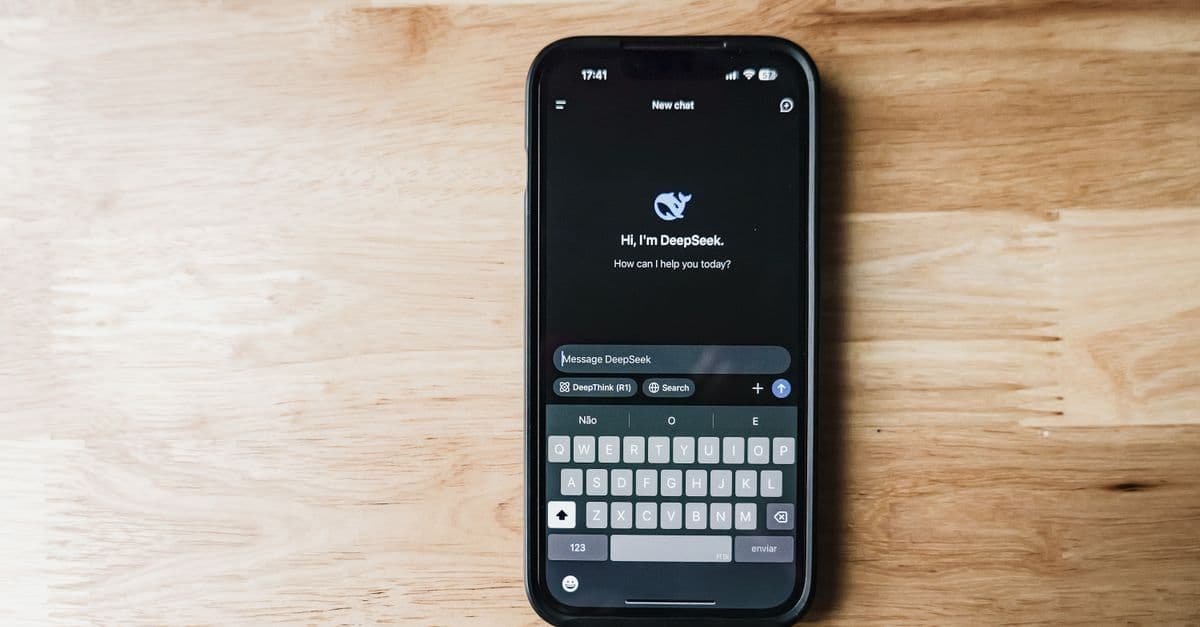
DeepSeek's training-cost headline made global news; what it enabled barely made the business press. In the eighteen months since Chinese frontier models went open-weight, a dense layer of vertical AI companies, ERP vendors, and industrial integrators has wired those models into payroll software, factory floors, and logistics networks serving hundreds of millions of small and medium businesses. The productivity gains in certain sectors are documented. How durable they are — and whether Western platforms can match the speed of deployment — remains genuinely open.
Start in Hangzhou, not because it is the most important city in Chinese AI — Beijing almost certainly is — but because it illustrates something the frontier-model coverage misses. The High-Flyer Capital team that built DeepSeek sits in the same city as Alibaba's cloud headquarters, which houses the Qwen team. Two of China's most significant open-weight model lines, from completely different institutional cultures, operating within a few kilometers of each other, neither resembling a Silicon Valley lab in structure or incentive.
DeepSeek's R1, released January 2025, achieved benchmark scores competitive with OpenAI's o1 on mathematical reasoning and code tasks, as documented in the published technical report and broadly reproduced by independent evaluators. What followed in Chinese enterprise software received almost no English-language coverage: ERP vendors Kingdee International and Yonyou, which collectively serve tens of millions of businesses, began integrating these models into workflow products within weeks. Not as a headline feature — as a background update to invoice processing, demand forecasting, and HR query resolution.
This is the layer the "AI race" framing consistently underweights. The frontier models are infrastructure. The actual transformation is happening three layers above them, in unglamorous enterprise software, logistics platforms, and industrial control systems that serve China's SME economy.
Chinese AI is not monolithic, and the regional distinctions matter for understanding what is actually being built and for whom.
Beijing is the policy and research hub. Zhipu AI (GLM series, AutoGLM agents) and Moonshot AI (Kimi) are both headquartered here, both university-adjacent, both with significant state-linked investors. Zhipu's security-oriented enterprise positioning — its work on AI-assisted cyber safety reflects this Beijing character, as covered in detail here — reflects an enterprise culture where government-client trust and compliance matter as much as benchmark performance.
Hangzhou is commercial AI at scale. Alibaba's Qwen is the most-deployed open-weight Chinese model internationally; DeepSeek's R1 changed the global cost conversation. Both emerged from Hangzhou's e-commerce and fintech DNA: efficient, business-focused, comfortable with open-source distribution as a growth strategy.
Shanghai is where multimodal and creative AI is clustering. MiniMax, best known in the West for its Hailuo video generation tool, is also building one of the longest-context models available — MiniMax-01 reportedly handles 4 million tokens, though real-world enterprise use of that full window remains limited. Shanghai's financial services sector is a primary early adopter.
Shenzhen is physical AI. Unitree Robotics has shipped quadruped and humanoid robots at prices that have no Western parallel. The G1 humanoid at $16,000 is not a research prototype — it is a factory-pilot product. When Shenzhen manufacturers run robot pilots, they are buying Unitree, not Boston Dynamics.
Let me be direct about the lines here.
Confirmed: DeepSeek-R1's benchmark scores on AIME 2024 and MATH-500 are documented in the public technical report and have been reproduced by independent evaluators. The training cost figure for V3 ($5.576 million in compute) is DeepSeek's own reported number — no third party has audited it, and it excludes researcher salaries, infrastructure overhead, and failed runs.
Confirmed: Alibaba's Qwen 2.5 series is genuinely open-weight and has been downloaded millions of times from Hugging Face. Enterprise adoption figures in China come from Alibaba Cloud's own metrics — promotional documents, but broadly consistent with developer activity visible in Chinese technical communities.
Confirmed: Unitree's G1 pricing is from the company's product announcement. Actual factory deployment numbers and delivery timelines are not publicly available.
Unconfirmed: Claims that Chinese AI models have reached "parity" with GPT-4o or Claude on general enterprise tasks. Benchmark performance on academic datasets does not map cleanly to business-task quality. Independent evaluations have found meaningful gaps on complex multi-step reasoning, English-language nuance, and code edge cases — though the gap has narrowed materially in the past 12 months.
Genuinely unknown: The actual penetration rate of AI tools among China's 50-million-plus SMEs. Government statistics on "AI adoption" in China count companies that have accessed an AI platform at least once — not companies that have meaningfully changed workflows.
| Platform | Developer & City | Primary B2B Use Case | Open-Weight? | Western Access? |
|---|---|---|---|---|
| DeepSeek R1/V3 | High-Flyer / Hangzhou | Reasoning, code generation | Yes | Yes — API and download |
| Qwen 2.5 | Alibaba / Hangzhou | Enterprise NLP, RAG, agents | Yes | Yes — Hugging Face |
| Doubao (豆包) | ByteDance / Beijing | Consumer + SME productivity | No | Limited — China-first |
| Kimi | Moonshot AI / Beijing | Long-document analysis | No | API, limited regions |
| GLM / AutoGLM | Zhipu AI / Beijing | Enterprise agents, compliance | Partial | API access available |
| MiniMax-01 | MiniMax / Shanghai | Long-context, multimodal | No | API access available |
No pricing column here. Pricing changes frequently and varies substantially by contract. Treat any published figure as a starting point, not a budget line.
The deployment speed is what to watch. Not the benchmark scores.
Chinese enterprise software companies are accustomed to thin margins, high feature velocity, and clients who will switch vendors for a 10% cost improvement. The incentive structure for embedding AI into existing software is different from the West, where incumbents have more pricing power and can afford to move slowly. When Kingdee or Yonyou ship an AI feature to millions of SME clients inside an existing subscription, they do not need to win a new sales cycle.
A Western founder building in logistics, HR, manufacturing, or supply chain is facing a competitor class that has access to open-weight frontier models with very low inference costs, an existing SME customer base, and is beginning to expand internationally — starting with Southeast Asia, the Middle East, and Africa. Doubao has global ambitions. Kimi has English-language products. MiniMax's Hailuo video tool already has Western users. The question is not whether Chinese AI products will compete in Western-adjacent markets — some already do.
Open-weight models are the great equalizer — for now. Qwen 2.5 and DeepSeek-V3 being available for download means any company, anywhere, can build on top of them without a supply chain dependency. The counter-move — restricting model weights, as Moonshot and ByteDance have done with their most capable models — is already visible. The window of full openness is not permanent.
Physical AI will move faster in manufacturing than most Western analysts expect. Unitree's pricing makes humanoid robot pilots economically feasible at SME scale in China. The iteration cycle — deploy, break, fix, redeploy — compresses when the hardware is cheap enough to risk. The companies watching this most carefully are not Western AI labs; they are Western industrial equipment manufacturers.
The international expansion wave is closer than it looks. ByteDance is not confining Doubao to China. MiniMax's Hailuo video tool is already international. The question is not whether Chinese AI products will compete in Western markets — it is which categories arrive first and whether EU and US regulatory environments can move fast enough to shape the terms.
Enterprise compliance will diverge, and that matters. Chinese enterprise AI is being shaped by domestic data localization rules and AI governance regulations with no direct Western equivalent. Companies that want to deploy Chinese AI tools in global enterprises will face compliance translation work that neither side has fully worked out.
The second-tier vertical companies are the ones to track. The $2–10 million Series A AI SaaS companies building on DeepSeek or Qwen in manufacturing, logistics, and HR are invisible to Western analysts today. Several of them will be competing in adjacent markets within 18 months. The visible frontier model race is the wrong signal to watch if you are building a business.
Isn't DeepSeek just optimized for benchmarks, not real tasks? That's a reasonable skepticism, and partly warranted. Independent evaluations have found that DeepSeek-R1's performance on math and code holds up under real-world testing reasonably well, while general instruction-following lags behind the latest GPT-4o and Claude 3.5 Sonnet on some dimensions. It is not a uniform story. The more useful question: for which specific tasks do you need frontier general performance, and for which can an efficient specialist model do the job at lower cost?
How do GPU export controls affect Chinese AI development timelines? Directly, in that Chinese labs have access to fewer H100-class chips and are training on older hardware at higher compute cost. Indirectly — and this is the more important point — it has accelerated research into efficiency. DeepSeek's mixture-of-experts architecture and training-efficiency innovations are partly a response to compute constraint. Restricting hardware imports has, counterintuitively, accelerated certain categories of AI research in China.
Should I worry about data security if I use Chinese AI APIs? The immediate practical concern for most Western companies is less espionage and more supply chain reliability: if an API goes down, gets restricted, or changes pricing terms, do you have a fallback? For sensitive data — health records, legal documents, personal data under GDPR — the answer is not to send it to any third-party API, Chinese or American, without a data processing agreement that satisfies your legal requirements. The open-weight option eliminates the API dependency entirely if you can run your own inference.
Is Unitree's G1 actually production-ready at $16,000? Not for most applications, yet. At that price and current capability level, the G1 is appropriate for structured, supervised tasks in controlled factory environments. General-purpose autonomous operation is years away. But "years away" in Chinese robotics has consistently meant shorter timelines than Western analysts predicted.
What is the actual difference between Zhipu AI and Moonshot AI? They are aimed at different markets despite both being Beijing-based. Zhipu AI has a strong enterprise and government client base, a compliance-oriented culture from its Tsinghua University roots, and has focused on agent frameworks (AutoGLM) for business task automation. Moonshot AI (Kimi) is more consumer-facing, with its reputation built on long-context document analysis and a product experience closer to ChatGPT. Which one matters to you depends on whether you are tracking enterprise deployments or consumer AI adoption patterns.
Why should Western founders care about the SME AI layer in China? Because the companies building it are not staying there. The Southeast Asian expansion has already started. The Middle Eastern and African markets are next. The question of whether a Chinese AI-powered logistics SaaS can undercut a Western competitor on price in an emerging market is not hypothetical — it is happening in specific verticals right now. Tracking the second tier is how you see the wave before it reaches your market.
Can I use Chinese open-weight models without the geopolitical exposure? Yes, within limits. Qwen 2.5 and some DeepSeek variants are available under open-weight licenses and can be self-hosted on your own infrastructure. That removes the API dependency and the data-transfer concern, at the cost of running your own inference stack. For many enterprise use cases, that is a reasonable trade — and one more Western companies are quietly making than they are publicly admitting.
ChatGPT and DeepSeek are two leading free AIs for beginners. This guide compares their features, writing skills, and ease of use to help you choose.

DeepSeek — the Hangzhou lab that trained a frontier model for a disclosed compute cost of roughly $5.5 million — has reportedly completed fine-tuning runs on Huawei's domestic Ascend 910C chips, extending China's AI...

DeepSeek confirmed that post-training of its V4-Pro model was completed on Huawei's Ascend 910C chip, bypassing Nvidia hardware for that phase of development. That's a real milestone in China's AI self-reliance push...
Three of China's dominant AI platforms — ByteDance's Doubao, High-Flyer Quant's DeepSeek, and Alibaba's Qwen — approached the 2026 FIFA World Cup with measurably different prediction philosophies, and the divergence...
DeepSeek and Zhipu AI are racing toward trillion-parameter scale using Huawei Ascend clusters and optimized mixture-of-experts architectures — precisely while US export controls have cut off access to Nvidia's H100...
Moonshot AI — whose Chinese name, 月之暗面, translates directly to "The Dark Side of the Moon" — has released Kimi benchmark results that set off a pattern familiar to anyone who watched AI stocks in January 2025: sharp...
DeepSeek didn't emerge from a venture-backed lab in Beijing's Zhongguancun district — it came from a quant trading firm in Hangzhou that decided to build the world's most efficient language models under compute...
DeepSeek — the Hangzhou AI lab that spent 2024 and 2025 forcing a serious rethink of what efficient model training actually costs — has taken a RMB 141 million strategic placement in Unitree Robotics as the...
Baidu is not going anywhere, but it is no longer the center of gravity in Chinese AI. Ernie Bot has genuine enterprise traction, and Apollo Go operates the world's largest commercial driverless robotaxi fleet by...
A Hangzhou hedge fund turned AI lab published a technical report in December 2024 claiming it trained a frontier language model for roughly $5.5 million — a figure that, if accurate, rewrites every assumption Western...
Nvidia's share of China's high-end AI training chip market has effectively collapsed since October 2023 — not from a Huawei performance breakthrough, but from a stroke of U.S. export law. Huawei's Ascend 910B is now...