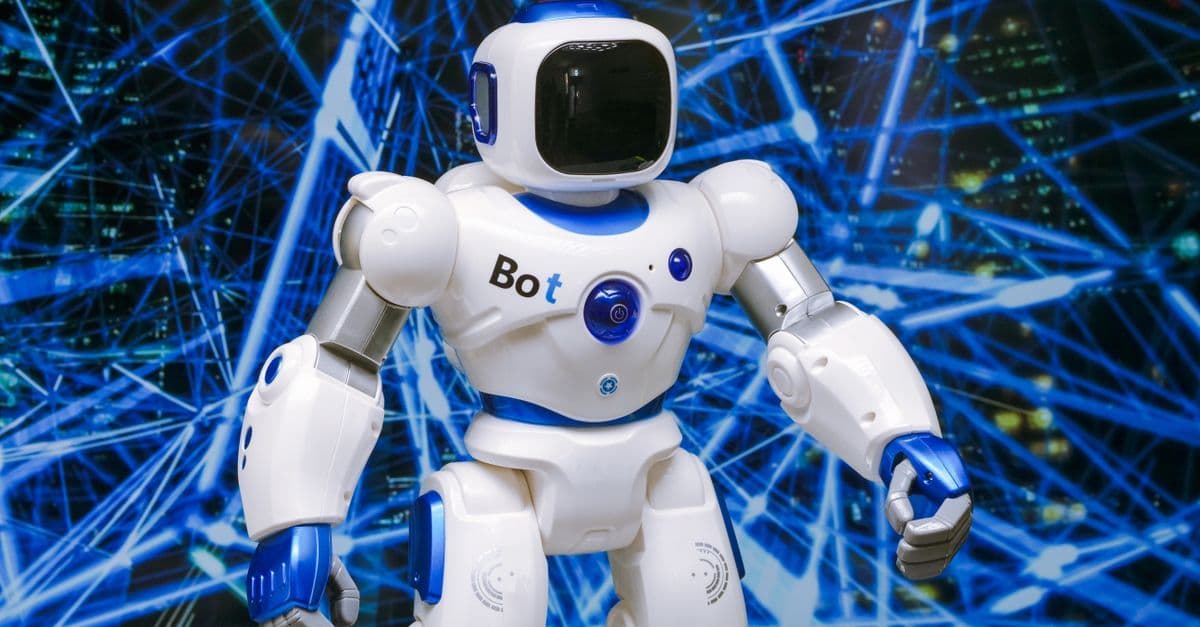
EngineAI, a Shenzhen robotics startup founded in October 2023, has switched on a factory it says can finish a humanoid robot every 15 minutes.
If you follow US robotics, you have the reference points already: Tesla's Optimus, Figure's warehouse humanoids, the demo reels of machines sorting parts and folding shirts. EngineAI is China's entry in that race. The difference is the pitch. It isn't a viral video — it's a 129,000-square-foot assembly line in Shenzhen's Nanshan district, built to push humanoids out the door the way the city already ships phones.
That framing is the part worth your attention. EngineAI is treating humanoids as a manufacturing problem, not a research problem. The "15 minutes" headline is marketing. What sits underneath it is more useful to understand.
What EngineAI actually announced
According to eWeek and Interesting Engineering, the company has commissioned an "intelligent manufacturing base" of about 129,000 square feet that folds component testing, assembly, logistics, and after-sales into one line.
The company says that line can complete one humanoid every 15 minutes, and that each unit passes 79 quality inspections and 46 simulation tests before it ships. Those are EngineAI's own figures, not independently verified production data.
The factory builds out a lineup that already exists: the T800 heavy-duty humanoid, the PM01, a lightweight SA02, and a JS01 quadruped. The expansion follows a $200 million Series B in April 2026 that, per the same reporting, valued the company at over 10 billion yuan (about $1.4 billion). Industry coverage from Humanoids Daily reports that electronics manufacturer Luxshare Precision joined the cap table — a detail that matters more than the throughput claim, and I'll come back to it.
The number that matters isn't 15 minutes
Run the arithmetic. One unit every 15 minutes is four an hour, or roughly 96 a day if the line never stops. Over a year that would be tens of thousands of robots.
EngineAI's own 2026 delivery target is 4,000 to 5,000 units, with a longer-term goal it describes as "ten-thousand-level" capacity. So the 15-minute figure is a line-rate claim — what the equipment can theoretically do — not what the company expects to deliver this year. Both numbers are real. They describe different things, and the gap between them is the story.
For scale, Tesla has talked about Optimus production in the six figures for 2026, with reported targets in the 100,000-plus range and a Fremont line it says is designed for up to a million units a year. By that yardstick EngineAI's near-term volume is small.
The point is not that EngineAI out-produces Tesla. It doesn't, and won't this year. The point is that it is building the same kind of cost-down, vertically integrated assembly line — and it has pulled a consumer-electronics supplier onto its balance sheet to do it. China industrialised laptops, phones, and EV batteries by driving assembly cost toward zero. EngineAI is running that playbook on humanoids.
Price is the real signal
When EngineAI released the PM01, it priced it at roughly $12,000 (about 88,000 yuan), with some launch pricing reported by The Robot Report and others closer to $13,700. Those are list prices for a specific model, not the blended cost of everything coming off the new line — but the order of magnitude is the news.
A research-grade humanoid has historically cost as much as a car. A humanoid that lists like a high-end workstation, built on a phone-style assembly line, changes the question a buyer asks. It moves from "can I afford to experiment" to "what would I actually use it for."
What this means for you
If you run manufacturing, warehouse, or logistics operations: track unit economics and real availability, not demo-reel dexterity. A $12,000 humanoid that can't yet do your specific task is still a data point about where 2027 pricing lands. Budget cycles are long; the cost curve isn't waiting.
If you're a founder or investor: the moat being built here is the supply chain and the assembly cost, not the AI model inside. That is the layer where Chinese hardware companies tend to win, and it's harder to replicate than a control algorithm.
If you're simply AI-curious: separate the claim from the delivery. "Every 15 minutes" is a capability statement. "4,000 to 5,000 units in 2026" is a forecast. Quoting the first as if it were the second is how hype gets made.
What I'm watching
- Actual 2026 deliveries versus the claim. If EngineAI reports real shipped units near its 4,000–5,000 target, the manufacturing story is credible. If it doesn't, the line rate was always theoretical.
- Whether units ship and get supported outside China. Buying and servicing one of these as a Western company is not turnkey today. Treat cross-border availability as possible, not easy.
- The second line in Zhengzhou. Reporting points to a planned facility with 10,000-unit capacity. If that comes online, the volume conversation changes — and so does the pricing.
Quick questions
Can a Western company buy an EngineAI robot today?
Models like the PM01 have sold for commercial and educational use at around $12,000, so the answer is a qualified yes. The friction is cross-border purchase, support, spare parts, and compliance — not the sticker price. Plan for "possible with effort," not "add to cart."
Is "one every 15 minutes" verified?
No. It's EngineAI's own line-rate claim. There is no independent production audit, and the company's stated 2026 delivery target is 4,000 to 5,000 units.
Does this mean China is ahead in humanoids?
Ahead on manufacturing intent and cost, not necessarily on capability. Those are two different races, and conflating them is the most common mistake Western coverage makes.
The demo videos will keep going viral. The number to write down is the price, and the line that builds it. That's the part China is quietly getting good at — and the part a Western professional can actually plan around.
 BestAIFor