Huawei's Chairman Just Thanked Washington — And the Compliment Was Sincere
TL;DR
Huawei's rotating chairman publicly credited US export restrictions with forcing China to build its own semiconductor supply chain — a chain that is now measurably deeper than it was in 2019. The gains at commercially relevant nodes are documented and real; the gap with TSMC and NVIDIA at the frontier remains wide and structurally constrained. The clean narratives on both sides — "controls are working" and "China has caught up" — are wrong in ways that matter if you're making decisions based on them.
Key Takeaways
- Huawei was added to the US Entity List in May 2019, severing access to American chip technology, software tools, and components, according to the US Department of Commerce's announcement.
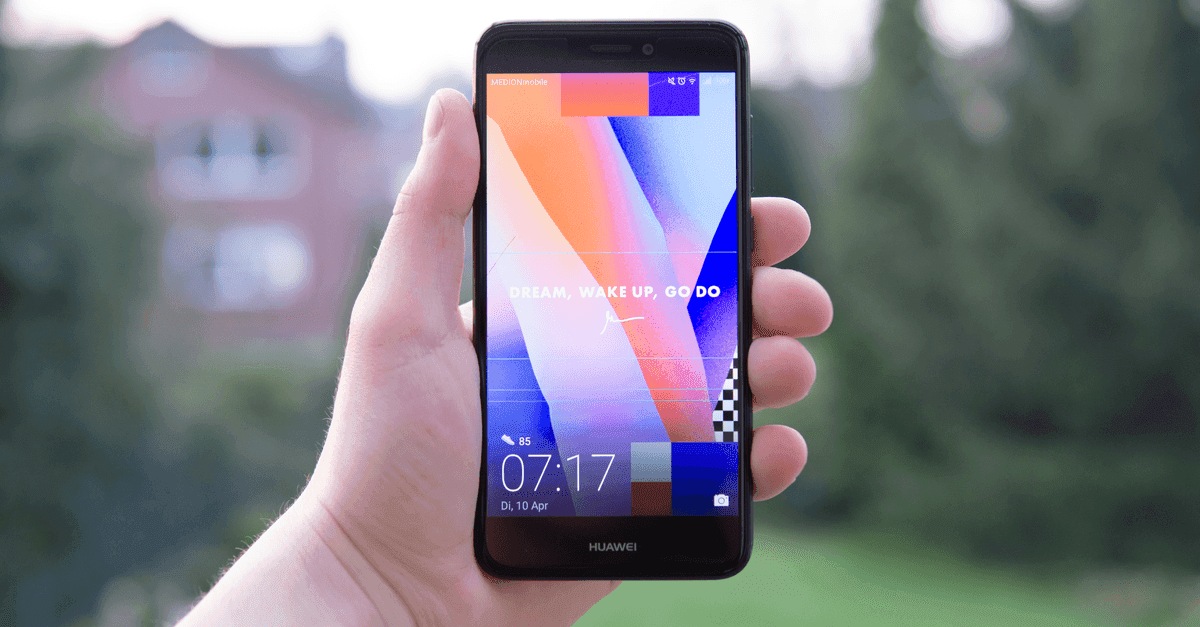
- SMIC produced a 7nm-class Kirin 9000s processor for the Huawei Mate 60 Pro, revealed in August 2023 — a milestone Western analysts had broadly placed years away — confirmed by TechInsights' hardware teardown.
- Huawei's Ascend 910B AI training chip has been deployed at scale by Chinese AI labs including Baidu and ByteDance as a domestic alternative to NVIDIA's restricted A100; independent benchmark comparisons remain limited and contested.
- Huawei's 2023 annual revenue exceeded 700 billion RMB, a significant recovery from the sharp post-2020 decline that followed the Entity List designation, according to Huawei's published annual results — evidence that domestic and non-US markets absorbed the shock.
- The October 2022 US export control package was the most sweeping chip restriction in decades, targeting advanced computing chips and chip-making equipment broadly, according to the Bureau of Industry and Security.
- China's CXMT (ChangXin Memory Technologies) has been ramping domestic DRAM production with urgency that predates but intensified after the 2022 controls — reducing dependence on Micron and SK Hynix for applications that do not require leading-edge memory.
- DeepSeek's R1 model, released in early 2025, matched or exceeded leading Western models on several published benchmarks despite being trained on a hardware stack that included restricted-generation NVIDIA GPUs and domestic accelerators — the most direct empirical test of chip restrictions' actual effect on Chinese AI output.
Here's the thing about forcing someone out of your supply chain: you don't get to decide what they build instead. When the US Commerce Department added Huawei to its Entity List in May 2019, the implicit theory was that cutting off access to American chips, tools, and licenses would cap Huawei's technical ceiling. It has done neither cleanly.
At a public event reported by the Wall Street Journal, Huawei's rotating chairman offered something close to a thank-you to Washington. The sentiment wasn't sarcastic. It was a description — blunt, accurate — of what external pressure actually produced: a state-backed, commercially motivated, and now partially successful effort to build domestic semiconductor capability that would not have existed otherwise.
What the Mate 60 Pro Actually Proved — and What It Didn't
In late August 2023, days before Apple's iPhone 15 event, Huawei quietly put the Mate 60 Pro on sale in Chinese retail stores. No press conference. No spec sheet. Just the phone, on the shelf.
TechInsights acquired one, tore it down, and found a Kirin 9000s chip manufactured by SMIC at what they characterized as a 7nm-class process node. This was not supposed to be achievable. The prevailing Western assessment had SMIC structurally capped at 14nm, and Huawei's smartphone division on a slow fade.
The actual picture was different. SMIC achieved something approximating 7nm using DUV (deep ultraviolet) lithography — equipment that predates the EUV export restrictions — through multi-patterning techniques that involve additional mask layers, additional process steps, and, presumably, lower wafer yields than TSMC's equivalent. The chips exist. They ship in commercial products. The yield rates and cost-per-chip are not publicly disclosed. Anyone citing specific yield figures in Western media is working from estimates, not primary data — treat those numbers accordingly.
What the Mate 60 Pro confirmed: China can produce 7nm-class chips domestically, at some yield, at some cost, using equipment already on the floor before controls tightened. What it did not confirm: that SMIC can match TSMC at 3nm, that 7nm volume production is cost-competitive with Taiwan's equivalent, or that the path to sub-5nm is near. The frontier gap is real. The mid-tier gap is narrower than the export-controls-as-ceiling narrative required.
The Ascend Question — What We Can and Cannot Verify
The more strategically important chip story for Western professionals isn't the Mate 60 Pro. It's Huawei's Ascend 910B.
The Ascend 910B is Huawei's AI training accelerator, designed by HiSilicon (the in-house chip design subsidiary Huawei refused to spin off when pressure mounted) and manufactured by SMIC. It has been positioned as a domestic substitute for NVIDIA's A100 — a chip that was restricted from Chinese sale in September 2022, along with the H800 and A800 variants that had briefly served as the legal workaround.
Multiple Chinese technology companies — Baidu, ByteDance, and others — have reportedly deployed Ascend 910B clusters at meaningful scale. Chinese media has reported large procurement volumes. The independent performance data is thin.
Here is what can be stated with reasonable confidence: the Ascend 910B is in production, in commercial deployment, and being used for real AI training workloads by companies that no longer have access to NVIDIA's latest generation. Here is what remains contested: whether it performs comparably to an A100 on production training runs, how the memory bandwidth and interconnect architecture perform at cluster scale, and what the all-in cost-per-FLOP looks like relative to alternatives Chinese buyers can source. Huawei's own benchmarks are marketing materials until independently replicated.
What is not contested: Chinese AI labs continued to train competitive large language models. DeepSeek's R1, released in early 2025, matched or exceeded leading Western models on multiple benchmarks, trained on a hardware configuration that included older NVIDIA generations and domestic accelerators. The Ascend 910B is part of the infrastructure story enabling this, even if the exact contribution cannot be verified from outside.
The Strategic Logic Behind the Thank-You
Before 2019, Huawei was buying Qualcomm chips for its mid-range phones, ARM licenses for processor design, and building on a global technology stack that was cheaper and higher-performing than anything HiSilicon could produce independently. The commercial incentive to invest heavily in domestic alternatives was limited — why pay a premium for slower? The Entity List eliminated that calculation.
The dynamic replicated across the ecosystem. CXMT launched domestic DRAM development with urgency that intensified as foreign memory supply looked politically fragile. Cambricon, the Shenzhen-listed AI chip company, found a captive market in Chinese AI buyers navigating NVIDIA restrictions. China's National IC Fund — the state-backed vehicle that has deployed two major capital tranches into domestic semiconductor players — runs on precisely this logic: subsidize the gap until the gap closes.
None of this produces TSMC. The equipment constraint is genuine and structural. ASML's EUV machines remain off the table; they require an optics supply chain that took decades and global industrial cooperation to build. EUV is necessary for leading-edge nodes at scale. The US-Dutch coordination on equipment export controls is the policy element with the most durable technical bite.
But the export control framework was implicitly designed to maintain a five-to-seven-year gap at commercially relevant nodes. The Mate 60 Pro was evidence that the gap had narrowed more than that framing admitted. The chairman's remark was a description of this, not a denial that the restrictions imposed costs. They did. They also produced something the architects of those restrictions didn't fully account for: a motivated, well-funded, and now partially successful domestic build-out.
What This Changes for Western Founders and Professionals
The "China can't do chips" shortcut is broken — selectively
If your competitive analysis, investment thesis, or product roadmap rests on the assumption that Chinese companies are hardware-constrained in ways that meaningfully cap their AI capabilities, that assumption needs revision. Not abandonment — revision.
At the frontier (sub-3nm logic, training accelerators at NVIDIA H100/H200 class performance), the constraint is real and structural. The equipment restrictions are binding. At commercially relevant mid-tier nodes — 7nm to 28nm, AI inference chips, edge computing hardware, robotics controllers — China has demonstrated domestic capability with a credible improvement trajectory.
The practical consequence: Chinese AI products built on domestic hardware are now credible in ways they weren't in 2022. Evaluating a Chinese AI platform by asking "can they get NVIDIA chips?" is no longer a sufficient quality proxy. The shortcut doesn't reliably work.
For a broader look at how China's leading tech companies are repositioning their AI stacks beyond pure LLM chatbots, the Alibaba and Tencent embodied AI pivot is worth reading alongside this chip story — the robotics buildout and the semiconductor independence narrative are connected at the infrastructure layer.
The Chinese AI tools that Western founders and consultants are increasingly evaluating — Kimi (Moonshot AI), DeepSeek, Qwen (Alibaba's model series), Doubao (ByteDance's consumer AI product), Ernie Bot (Baidu) — are training and running inference on a mix of older-generation NVIDIA hardware still in market and improving domestic alternatives. This matters because it shapes realistic performance trajectories and determines which Chinese AI players have hardware supply security versus ongoing exposure to further US policy escalation.
Evaluating these tools on their actual outputs — benchmark scores, latency, task completion quality — is more useful than inferring capability from assumed hardware inferiority. That inference is increasingly unreliable.
Before You Update Your China Chip Assumptions — A Checklist
Before treating "China is catching up on chips" as settled:
- [ ] Confirm whether the claim is about frontier nodes (sub-5nm) or commercially relevant nodes (7nm–28nm) — the situations are genuinely different
- [ ] Check whether benchmark data comes from independent sources or vendor materials
- [ ] Ask what yield rate and cost assumptions underpin any volume production claim
- [ ] Distinguish between "can produce" and "can produce at scale at competitive cost"
- [ ] Confirm whether the chip in question requires EUV (still blocked) or DUV (available)
Before treating "export controls are working, China is stuck" as settled:
- [ ] Note that the Mate 60 Pro shipped commercially at scale
- [ ] Note that Chinese AI labs trained competitive frontier models on restricted hardware
- [ ] Check whether the "stuck" analysis is specific about node and application
- [ ] Verify whether the analysis you're reading was produced before or after August 2023
Where This Heads Next
The equipment layer remains the durable constraint. ASML's EUV machines are the hard ceiling on China's path to leading-edge production. This constraint is structural, involves the coordination of multiple allied governments, and is unlikely to meaningfully erode in the next three to five years. Anyone projecting China at 2nm within that window is working from optimistic assumptions.
The mid-tier accelerates regardless. At 14nm to 28nm — where most of the world's chips by volume are manufactured — Chinese domestic capability is expanding and the trajectory is toward greater competence. This tier covers automotive chips, embedded controllers, consumer electronics, and industrial automation. The "China can't do chips" framing will become increasingly untenable for this segment, and that matters because it's where most of the actual economy runs.
The AI accelerator story is the unresolved variable. Whether Ascend and its successors can close the gap with NVIDIA at the training cluster level is genuinely unknown from outside. It depends on manufacturing quality at scale, software ecosystem maturity (CUDA has more than a decade's lead in developer tooling and library support), and how much the Chinese government is willing to subsidize hardware that may currently cost more than the equivalent at market rates. This is the most strategically important open question in the China AI hardware picture.
Policy escalation has diminishing marginal returns, not zero returns. The export control architecture continues to tighten, but the Huawei case is evidence that restrictions applied against a sufficiently motivated actor with sufficient state backing produce adaptation rather than capitulation. The controls impose real costs and slow the timeline on frontier capability. The framework of "controls as a permanent ceiling" is harder to defend empirically than it was in 2022.
FAQ
Did US export restrictions actually help China, or is the chairman just spinning a loss?
Both are true simultaneously, which is what makes the remark interesting rather than cynical. The restrictions imposed real costs — Huawei's consumer smartphone business collapsed after 2020, and the company restructured painfully. The chairman's point is that forced decoupling accelerated domestic investment that wouldn't have existed under normal commercial incentives. That's a defensible description of what occurred. It doesn't contradict the fact that the restrictions hurt.
Is the Kirin 9000s actually 7nm, or is that a marketing claim?
TechInsights characterized it as a 7nm-class chip produced via DUV multi-patterning — functionally comparable to 7nm but achieved through process optimization rather than EUV. Whether to call that "true 7nm" is partly definitional. What is not in dispute: it is substantially more advanced than the 14nm SMIC was expected to be limited to, and it works at commercial scale in a shipping consumer product.
Can Ascend chips actually train large AI models at competitive performance levels?
Chinese AI labs are deploying them for production training workloads and continuing to produce competitive models. Whether "competitive" means cost-parity and performance-parity with NVIDIA's current generation at cluster scale is unverified from outside. The functional answer — yes, serious AI work is happening on this hardware — is supported by the models that have shipped. The precise performance and economics are not independently confirmed.
Should Western companies stop assuming chip restrictions provide competitive insulation?
Update the assumption, don't discard it. At the frontier, the insulation is real and structural. At mid-tier nodes and for AI inference on existing model architectures, the assumption of Chinese hardware inferiority is less reliable than it was two years ago. Evaluate product by product. The blanket shortcut — they can't get NVIDIA chips so the AI must be worse — no longer holds.
What is the most important thing to watch in the next 12 months?
Whether independent benchmarks emerge for Ascend 910C at cluster scale. SMIC's reported progress toward sub-7nm using DUV (technically contested, actively being attempted). Any movement in Dutch or Japanese equipment export policy alignment with US controls. And whether Chinese AI labs continue producing frontier-class models on domestic hardware — that outcome is the most direct empirical measure of whether the export control regime is achieving its stated goal.
Is China's semiconductor industry genuinely independent now?
No. EDA tools, certain specialty materials, and leading-edge equipment supply chains retain significant foreign dependencies. "More independent than in 2019" is accurate. "Independent" is not. The rotating chairman's thank-you was about direction of travel and demonstrated capability at specific nodes — not a declaration of arrival.
What does this mean practically for evaluating Chinese AI tools?
It means the hardware constraint on Chinese AI companies is real but more porous than Western coverage typically conveys. Kimi, DeepSeek, Qwen, Doubao, and Ernie are built by teams with access to a mixed hardware stack. Their outputs should be evaluated on demonstrated performance, not assumed inferior because of hardware constraints or assumed equal because of stated hardware investments. Both shortcuts produce wrong conclusions.
 BestAIFor