 BestAIFor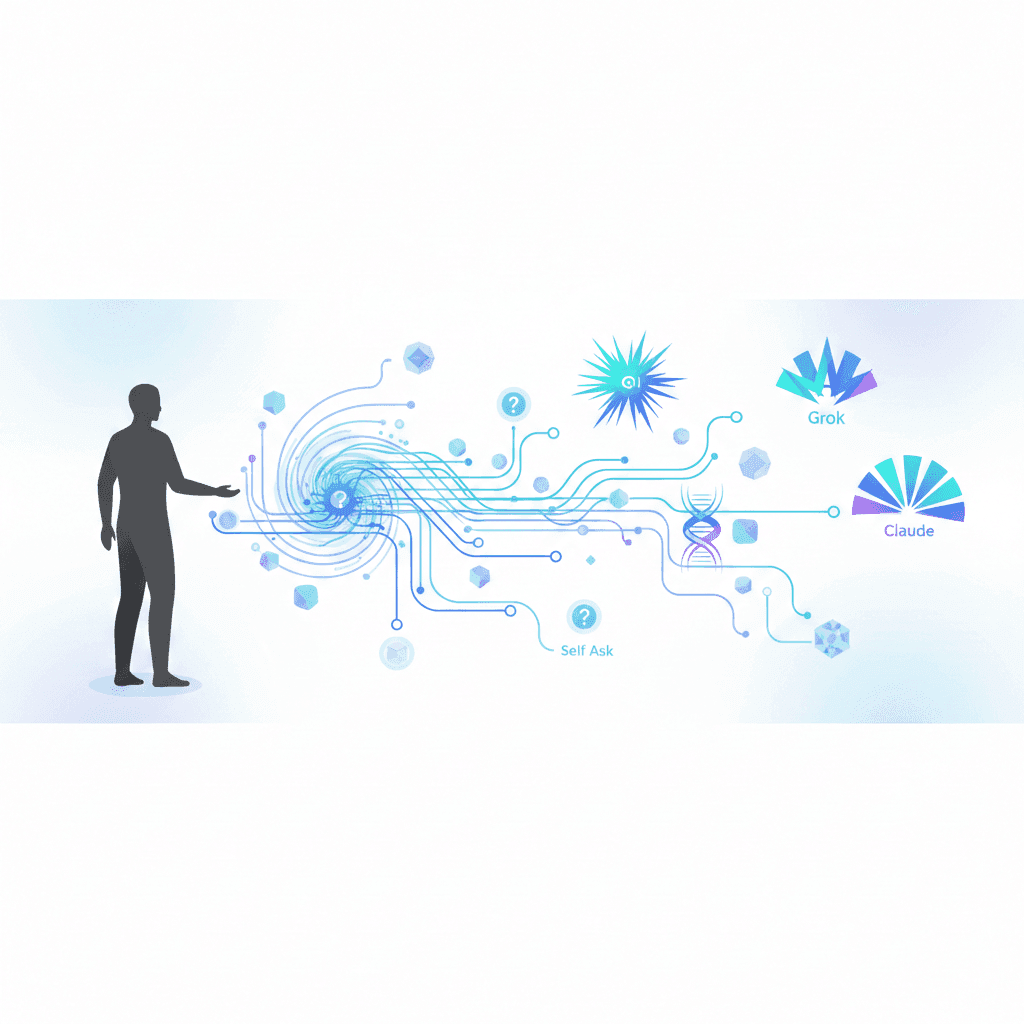
Advanced Prompting Techniques 2026 for ChatGPT, Grok, and Gemini
Advanced prompting techniques in 2026, including Chain of Thought and Self Ask prompting, help beginners and AI curious.
January 7, 2026•10 min read
If you’re exploring n8n AI workflows in 2026, pairing n8n with Gemini is one of the most flexible ways to move from idea to working automation without hiring a full engineering team. n8n provides a visual workflow canvas that non-developers can understand, while Gemini delivers reasoning, summarization, and generation inside those flows.
In practice, teams use n8n as the orchestration layer that connects tools, data sources, and business rules, while Gemini acts as the “thinking” component inside the pipeline. This separation of concerns is what makes the stack powerful and maintainable over time. You can explore n8n’s automation-first approach directly on the official site: https://n8n.io.
For founders, this setup turns messy, manual processes customer feedback triage, lead qualification, internal reporting into repeatable systems you can inspect and improve. For teams, it means operations, support, and marketing can prototype and iterate on AI-powered workflows without constantly waiting for developer bandwidth.
Many teams begin by dropping an LLM node into an existing automation. That works for demos, but production-grade reliability requires a different mindset.
In 2026, reliable n8n AI workflows share a few core principles:
Gemini is best treated as a decision-making or generation step inside a larger system, not as the system itself. Google’s AI Studio is where many teams prototype and test Gemini prompts before wiring them into automation pipelines, making it a natural companion during early workflow design: https://aistudio.google.com.
Most n8n + Gemini workflows start with a clear trigger:
The trigger defines when the AI should be involved and keeps Gemini from being invoked unnecessarily.
Inside the AI step, best practice is to:
This makes downstream automation predictable and easy to validate.
Once Gemini has produced a result, n8n routes it to concrete actions:
A key design principle is decoupling: your workflow should still make sense if you later swap Gemini for another model.
Goal: Turn unstructured feedback into prioritized, actionable insights.
A typical flow cleans incoming messages, sends them to Gemini for sentiment and topic classification, validates the output, and then routes high-risk feedback to the right team. This reduces noise while keeping humans in control of sensitive cases.
Goal: Help sales teams focus on leads that match your ideal customer profile.
Gemini provides a reasoning-based score and explanation, while n8n enforces deterministic rules for routing, notifications, and CRM updates. This balance keeps the system transparent and auditable.
Goal: Answer internal questions using only approved company documentation.
By combining document retrieval in n8n with Gemini constrained to provided context, teams can build internal assistants that are useful without becoming hallucination-prone.
Before scaling any workflow, add guardrails:
Testing patterns such as shadow mode and golden test cases help teams roll out AI automation safely, especially when workflows affect customers or revenue.
This stack is not always the right answer. Avoid it when:
In those cases, simpler or more opinionated tools may be a better starting point.
The real advantage of combining n8n and Gemini is not novelty it’s leverage. When Gemini is treated as one component inside a well-structured automation system, teams gain speed without sacrificing reliability. Use n8n to orchestrate, Gemini to reason, and clear guardrails to keep everything predictable as you scale.
Advanced prompting techniques in 2026, including Chain of Thought and Self Ask prompting, help beginners and AI curious.
This week in AI: regulators tighten scrutiny on Grok, Gemini expands, GitHub doubles down on AI agents, OpenAI pushes deeper into healthcare & more

Google released two AI memory migration tools on March 26, 2026 that let you move your ChatGPT or Claude context into Gemini as persistent memory. Here’s the workflow, the copy-paste prompt, and when to skip it.