Baidu Explained: China's AI Giant Behind Ernie, Robotaxis, and a Rough Quarter
TL;DR
Baidu is not going anywhere, but it is no longer the center of gravity in Chinese AI. Ernie Bot has genuine enterprise traction, and Apollo Go operates the world's largest commercial driverless robotaxi fleet by reported trip count. The harder question — whether Baidu can hold ground against Qwen, DeepSeek, Kimi, and Doubao simultaneously — does not have a clean answer. Watching Baidu closely right now tells you more about the structural pressure on Chinese AI incumbents than about which model wins.
Key Takeaways
- Baidu's AI Cloud division has been posting double-digit revenue growth in recent quarters while core advertising revenue declines — a split P&L that makes quarterly reports harder to read than most Western tech peers, according to filings on Baidu's investor relations site
- Apollo Go operates commercial driverless robotaxi service across at least six Chinese cities, with Baidu reporting more than one million fully driverless rides completed in Wuhan alone — the exact figure is self-reported and unaudited, but the Wuhan municipal government has confirmed the commercial licensing
- Ernie 4.0 Turbo benchmarks competitively with GPT-4 class on Chinese-language reasoning tasks according to Baidu's own evaluations; independent third-party replication of those scores remains limited
- Alibaba's Qwen 2.5 series, available as open weights on Hugging Face under permissive licensing, gives Western developers a directly testable alternative — making it the practical entry point for anyone trying to understand the actual capability of Chinese frontier models
- DeepSeek R1, released in January 2025, claimed training costs well below GPT-4 class models at comparable reasoning performance; independent researchers broadly confirmed the benchmark performance; the cost claims remain harder to verify because training cost accounting varies widely across organizations
- ByteDance's Doubao overtook Ernie Bot as China's most-used consumer AI assistant by monthly active users in 2024, according to QuestMobile data cited across multiple Chinese technology publications — a position Ernie held briefly after its 2023 launch
- Baidu's Wenku (document AI) and ERNIE Speed are embedded in enterprise workflows across Chinese mid-market firms; the user counts Baidu publishes are based on activations, not audited sustained active use
What Baidu Actually Is — and Why the Timing Is Interesting
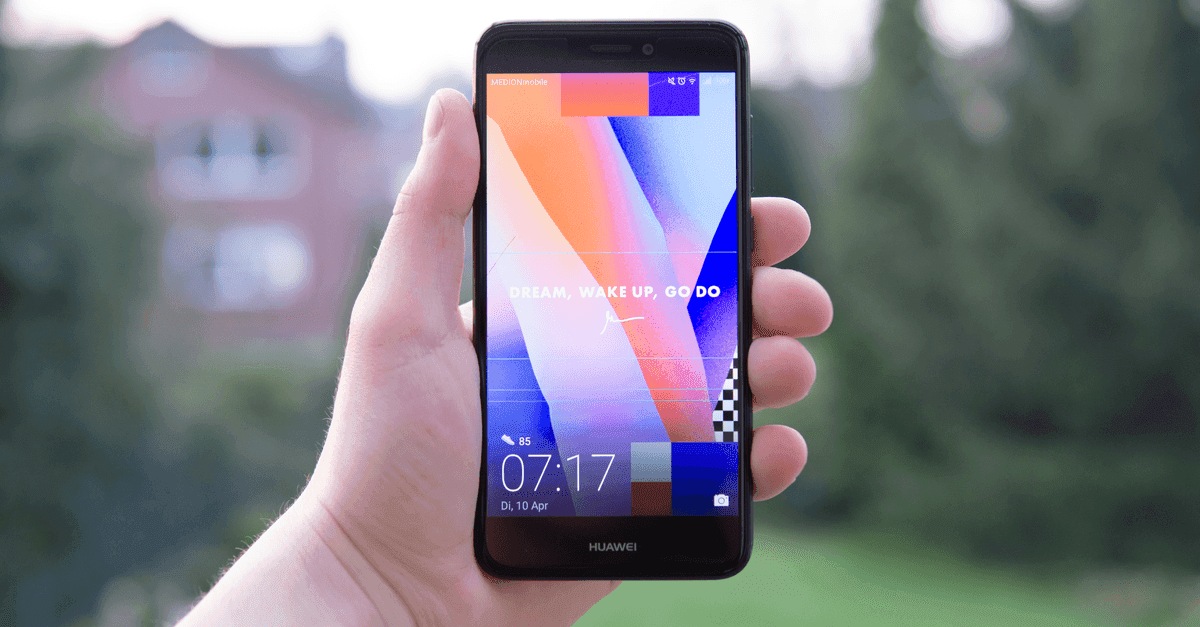
Robin Li stood on stage in Beijing in March 2023, held up a phone showing Ernie Bot's chat interface, and announced that Baidu had arrived in the generative AI era. The livestream briefly stuttered. Chinese social media noticed. The demo was judged, fairly or unfairly, as thin compared to what OpenAI had shown the month before.
That moment matters not because it was embarrassing — demos fail — but because it set the frame for how Western observers have read Baidu's AI story ever since: behind, catching up, straining. That frame is partially correct and substantially incomplete.
Baidu's AI investment predates ChatGPT by a decade. The company brought Andrew Ng on to run its AI lab in 2014, built one of the world's largest Chinese-language NLP research operations, and poured capital into autonomous driving through Apollo before "large language model" was a term anyone said at dinner. The 2023 stumble was not a late start. It was a company that had been building foundational infrastructure for ten years suddenly trying to turn that investment into a consumer chatbot in six months, because the market had moved overnight.
For Western founders and consultants tracking China's AI ecosystem, that distinction matters. Baidu is not a startup trying to build AI from scratch. It is a legacy technology platform navigating a paradigm shift, in a situation structurally similar to the pressure Google faces from AI-native search competitors. The parallel is imperfect — Baidu's relationship with the Chinese government is a variable that Google does not have — but it is instructive.
The Evidence: What Baidu Has Actually Shipped
Where Ernie Stands Against Qwen, DeepSeek, Kimi, and Doubao
The Chinese AI assistant market in 2026 looks nothing like it did in 2023. Baidu had a first-mover advantage when Ernie Bot launched. It does not hold that advantage anymore.
ByteDance's Doubao, distributed through the Douyin ecosystem with over 700 million daily active users, became the dominant consumer AI application in China by monthly active users. Kimi, from Beijing-based Moonshot AI, built a loyal research and knowledge-worker base on long-context capability. And then there is Qwen.
Alibaba's Qwen 2.5 series deserves particular attention from Western practitioners because it is actually downloadable and testable. Qwen models ranging from 0.5B to 72B parameters are on Hugging Face with Apache 2.0 licensing across most sizes. That means you can run your own evaluations rather than trusting benchmark screenshots from a vendor slide deck. In independent testing, Qwen 2.5 72B performs competitively with Llama 3 70B on English-language reasoning tasks and shows a clear advantage on Chinese-language benchmarks. Ernie, by contrast, remains a closed model — Baidu has released lighter ERNIE Speed variants, but the flagship product is API-only with limited external auditability.
DeepSeek's January 2025 release changed the Chinese AI landscape in a way that is still settling. The claimed training efficiency — costs significantly below what US labs were reporting for comparable reasoning performance — turned out to be reproducible in benchmark terms. Independent researchers confirmed much of the performance; the cost claims are harder to verify because training cost accounting is inconsistent across the industry. What is clear: DeepSeek demonstrated that frontier-class reasoning did not require US-level compute budgets, and that demonstration hit every Chinese AI lab — including Baidu — with an uncomfortable question about whether a closed, expensive model development strategy was still viable.
| Model | Developer | Open-weight? | Primary strength | Benchmarks independently verified? |
|---|
| Ernie 4.0 Turbo | Baidu | No | Chinese enterprise, regulatory compliance | Baidu-internal evaluations only |
| Qwen 2.5 (72B) | Alibaba | Yes — Apache 2.0 | Multilingual, coding | Yes — Hugging Face + peer review |
| DeepSeek R1 | DeepSeek | Yes | Reasoning, cost efficiency | Partially — peer-reviewed |
| Kimi | Moonshot AI | No | Long context, research tasks | Limited external verification |
| Doubao | ByteDance | No | Consumer distribution, response speed | Limited public benchmarks |
Baidu's answer to DeepSeek's disruption appears to be: play the enterprise compliance card. Ernie 4.0 Turbo is positioned as a product with Chinese regulatory certifications built in, integration with Baidu's existing search and cloud products, and a sales motion aimed at large Chinese organizations that need vendor accountability and on-premise deployment options. Whether that is a winning strategy or a retreat to a defensible niche depends on how enterprise AI procurement in China evolves. Both readings are defensible right now.
Apollo Go: The One Place Baidu Is Legitimately Ahead
Autonomous driving is where Baidu's decade of infrastructure investment is most visible and most verifiable. Apollo Go is not a pilot program or a regulatory-approval waiting game. It is a commercial operation with fare-paying passengers, running fully driverless — no safety driver in the vehicle — across expanding geofenced areas in multiple Chinese cities.
Wuhan is the flagship. Baidu's reported figures put Apollo Go past one million fully driverless rides completed in Wuhan, with commercial operations also running in Shenzhen, Beijing, Guangzhou, Chongqing, and Chengdu. Those trip counts are self-reported and not audited by a third party. But Wuhan's municipal transport authority has confirmed the commercial licensing, which is a meaningful cross-check — the operational reality is not in dispute, only the precise numbers.
The structural difference from Western AV deployment is regulatory. China's city-level transport authorities have granted commercial operating licenses in stages, with each stage expanding the geofence and removing safety driver requirements progressively. This model has moved faster than anything the NHTSA or California Public Utilities Commission has managed for Waymo, Cruise, or any other Western AV operator. Whether that pace reflects a more permissive risk tolerance, a different institutional structure, or something specific to Baidu's relationships with these municipal governments is genuinely unclear — probably all three, in proportions that vary by city.
For Western AV developers and investors, Apollo Go is worth watching for one specific reason: it is demonstrating that fully commercial, driverless, fare-paying operation at meaningful scale is a 2025 reality in specific geofences, not a 2030 projection. That is going to change how timeline conversations happen with investors and regulators in the US and Europe.
The Revenue Problem, Stated Plainly
Baidu's financial results over recent quarters illustrate the core tension without requiring a detailed income statement. AI Cloud — API access to Ernie, cloud compute, and enterprise AI services — is growing at double-digit rates. That is real revenue from real paying customers.
Core advertising, which has been Baidu's profit engine since the early 2000s, is declining. The shift is structural. Chinese users increasingly discover products through Douyin's recommendation algorithm, WeChat mini-programs, and Pinduoduo's integrated commerce search rather than through web search. Advertisers follow distribution. Baidu's search market share in China has fallen substantially from its peak, by any measurement methodology you choose, as user behavior has shifted to platforms it does not own.
The implication: Baidu is running a growing business attached to a shrinking one, with autonomous driving as a long-horizon bet that has not yet produced meaningful revenue. That is not a crisis, but it explains why quarterly results feel ambiguous even when the AI Cloud headline looks positive.
What This Changes for Western Founders and Professionals
The practical read depends on what you are actually trying to do.
If you are evaluating Chinese AI models for your own stack, start with Qwen — not Ernie. Qwen 2.5 is open-weight, independently testable, and carries licensing that makes enterprise legal review manageable. Ernie's closed architecture, combined with Chinese data-residency questions that US legal teams will flag on first review, makes it a difficult procurement conversation inside most Western organizations. DeepSeek R1 is similarly open and increasingly available through Western inference providers.
If you are watching Baidu as a market signal — which technologies China's AI infrastructure layer is betting on, which enterprise verticals are receiving AI tooling first — Apollo Go is more informative than Ernie Bot. Autonomous driving is where Baidu's compute, mapping, and sensor-fusion investments compound in ways that are not easily replicated on a short timeline.
For those building products or services for the Chinese enterprise market: Baidu's Wenku and its enterprise Ernie offerings are worth tracking as the incumbent position, but not as the only option. The enterprise AI embedding across Chinese mid-market firms over the next few years will likely be a mix of Baidu's products, Alibaba's Tongyi suite, and Huawei's ModelArts, not a single-vendor story. The pattern running underneath all of this is what China's overlooked internet army is quietly embedding into everyday businesses — adoption is happening at the operations layer, not the frontier-model layer, and it is moving faster than most Western analysts have priced in.
For teams that need to monitor competitive signals from Chinese AI players without manually parsing Mandarin press releases and earnings call transcripts, Avowd is worth adding to your intelligence workflow — it surfaces structured developments across language and geography in a format Western practitioners can act on directly.
Checklist: How to Evaluate Baidu's Relevance to Your Work Before Committing Time to It
- Identify which layer you actually care about. Ernie (consumer and API), Apollo (AV infrastructure), Wenku (enterprise document AI), and ERNIE Speed (lightweight inference) are four distinct products with different competitive positions and different Western equivalents.
- Run Qwen 2.5 benchmarks yourself before forming a view on Chinese model capability. Pull a Qwen model from Hugging Face and test it on your specific tasks. Vendor-published benchmark charts from any AI company — Chinese or American — are curated.
- Check whether Chinese regulatory compliance matters to your use case. If you serve Chinese enterprise customers, Ernie's certifications are relevant. If you do not, they are largely irrelevant to your procurement decision.
- Treat Apollo Go trip counts as directional, not audited. The operational scale is real and verifiable through city licensing records. The specific numbers are self-reported.
- Track AI Cloud revenue trajectory quarter-over-quarter, not just year-over-year. Double-digit growth on a still-small base can mask deceleration in a fast-moving market.
- Separate Chinese consumer AI dominance from global relevance. Doubao being China's top AI assistant does not mean it competes with ChatGPT for your users. These are currently separate markets.
- Ask who ran any benchmark before treating it as ground truth. Chinese AI labs — like US AI labs — publish curated evaluation sets. Look for independent replication before forming strong views on capability rankings.
Where This Is Heading
Apollo Go will resolve Baidu's strategic thesis one way or another. If commercial driverless operation scales to profitability and demonstrates replicability across more cities, Baidu's argument — that foundational AI infrastructure investment compounds over time in ways that are hard to catch up to — holds. If AV deployment stalls through safety incidents, regulatory pressure, or Chinese OEMs integrating their own autonomous systems directly into their vehicles, the thesis weakens significantly and Baidu becomes harder to value.
The open-weight model shift is a structural problem for Baidu's core AI business. Qwen and DeepSeek being publicly available means Baidu's closed-model strategy has to justify itself on enterprise compliance, integration depth, and service quality — not on capability access. That is a viable position but requires a sales and support infrastructure that Baidu is still building out. The model that justifies closed-source products in enterprise software is well understood; executing it in a market moving as fast as Chinese AI is genuinely hard.
Hardware constraints are shifting faster than Western policy expected. US export controls have limited Baidu's access to NVIDIA H100 and A100 chips, pushing the company toward Huawei's Ascend 910B series and its own Kunlun AI chips. Baidu has been developing custom AI silicon since 2018 — the Kunlun line is deployed in its data centers. The performance gap versus NVIDIA hardware is real but has narrowed. If Huawei's next-generation Ascend chips or Baidu's Kunlun architecture reach adequate throughput for frontier model training, the compute-restriction lever weakens as a policy tool.
Chinese enterprise AI adoption is happening below the visibility line. Frontier model rankings get the attention. Revenue over the next three years will come from mid-market Chinese firms embedding AI into document processing, code assistance, customer service, and procurement workflows. Baidu is in that market through Wenku and its Qianfan platform. So are Alibaba, Huawei, Tencent, and a long tail of vertical-specific startups. No single winner is obvious yet.
Robotaxi timelines will compress Western benchmarks. Apollo Go has already demonstrated what Western AV developers are still projecting. That has implications not just for autonomous driving investment theses but for how regulators in the US and Europe calibrate their own approval timelines when commercial precedent exists at scale in a major market.
FAQ
Is Ernie Bot actually competitive with GPT-4?
On Chinese-language benchmarks, Baidu's published Ernie 4.0 Turbo scores are competitive. On English-language tasks and independently verified evaluations, the picture is less settled — Baidu does not publish model weights or methodology in enough detail for rigorous external comparison. If Chinese-language performance on your specific tasks matters, test the API. If English is your primary requirement, Qwen 2.5 72B or DeepSeek V3 are more accessible starting points that you can benchmark yourself.
Why does Baidu trade at a discount to US AI companies?
Several things compound. Core advertising revenue is declining as Chinese users shift to short-video and commerce-native discovery. AI Cloud growth is real but has not yet offset that decline. Apollo Go's path to profitability is long and difficult to model. And Western investor sentiment toward China tech has been cautious since the 2021 regulatory cycle. The low multiple reflects structural uncertainty more than a simple judgment about the quality of the underlying AI work.
Should I use Qwen instead of Ernie for a Chinese-market product?
It depends on your deployment model. If you need API-connected infrastructure with Chinese compliance certifications and local support, Ernie's ecosystem may matter. If you are running your own inference — cloud or on-premise — Qwen's open weights give you control and avoid single-vendor dependence. Most Western teams that have evaluated both end up preferring Qwen for the auditability alone.
Is DeepSeek a threat to Baidu or a separate story?
Both. DeepSeek is a separate organization, but its R1 release accelerated pressure on every Chinese closed-model strategy, including Baidu's. It removed the "you need to pay for API access to get frontier-class reasoning" argument. It does not affect Apollo Go, and it does not eliminate Baidu's enterprise integration advantages. The competitive threat is real and specific to Ernie's commercial positioning.
Can Western companies actually use Baidu's AI products?
API access to Ernie is technically available outside China, but in practice: Chinese data-residency requirements, US dual-use AI export considerations, and legal review complexity make it a difficult enterprise procurement conversation. Most Western organizations tracking Chinese AI capabilities do so through Qwen on Hugging Face or via DeepSeek's open weights, rather than through Baidu's API.
What does Baidu's rough financial period mean for its AI credibility?
The two are separable. Declining search advertising revenue is a distribution problem — user behavior has shifted away from web search. It does not directly indicate that Ernie's capabilities or Apollo's technical progress are weaker than they appear. Conflating financial pressure with technical regression is a common misread. Baidu's infrastructure investments are real. Its monetization challenge is also real. Both things are true at the same time.
What is the single most useful thing to watch if I follow Baidu quarterly?
Apollo Go city expansion pace and safety incident records. The AV business is where Baidu's competitive moat is either built or isn't. Ernie's model ranking will shift with every new release cycle — that is noise. Whether Apollo Go can expand from six cities to twenty without a serious incident that prompts regulatory rollback is signal.
 BestAIFor