 BestAIFor
Weekly AI Buzz: Key Breakthroughs and Trends Shaping 2026
Dive into the latest AI developments from the past week, highlighting new models, innovative tools, prompting techniques, and emerging career paths.
January 6, 2026•4 min read

TL;DR: Muck Rack’s 2026 State of Journalism report surveyed 897 journalists through early March 2026 and found 82% use at least one AI tool — up from 77% last year. But concern about unchecked AI also rose, by 8 percentage points, to 26%. High adoption numbers rarely tell you what’s actually changing in the work. This one is no exception.
The number sounds like a verdict. 82% of journalists use AI — surveyed by Muck Rack across 897 respondents through the first week of March 2026. If you read the headline and move on, that’s the takeaway: adoption is mainstream, the debate is settled, figure out which tools to buy. That framing is not wrong, exactly. It just is not particularly useful for anyone deciding how to structure their team’s actual work around these tools.
I’ve been watching survey data on AI in newsrooms since 2023. The structure of the findings tends to be the same each year: more people using AI, similar uncertainty about outcomes, persistent concerns from a minority that keep growing. What’s different in this report is that the concern number moved meaningfully — up 8 percentage points in one year. That’s worth sitting with before moving to the tool recommendations.
At 82%, AI use is no longer a differentiator — it’s closer to a baseline. But the survey does not break down how frequently respondents use AI tools, for what tasks, or whether the tools are integrated into regular workflows or used occasionally for specific problems. ChatGPT is the most commonly used tool in the survey, which tracks with what I hear in conversations with editorial teams: it’s where most people start, often for research assistance, summarizing documents, or generating first-draft structures.
The limitation is that use of at least one AI tool covers everything from a single Perplexity search per week to Claude handling draft review before every publication cycle. Those are not the same thing. When newsrooms make resource decisions — which tools to pay for, which workflows to redesign — the headline adoption number does not tell them much. What matters is frequency, integration depth, and whether the output is going through substantive editorial review or being published after a quick scan. The report does not cover those questions. Most of them do not.
26% of journalists say they’re concerned about unchecked AI — up 8 percentage points from 2025. In absolute terms, it’s still a minority position. But the direction of movement is unusual. Normally, as a technology becomes more familiar, anxieties about it level off or decline. Here, adoption is rising and concern is rising at the same time. The most plausible explanation is that more journalists are now using these tools long enough to notice the specific ways they fail.
AI transcription tools have gotten significantly better at converting audio to text — but they still struggle with multi-speaker meetings, accented speech, and domain-specific terminology. Summarization tools can compress 10,000 words to 500 reasonably well for straightforward documents, but they flatten nuance and occasionally introduce confident errors in technical content. Journalists who have been using these tools daily for six months know this from experience. The concern number going up likely reflects that growing familiarity, not panic about the abstract idea of AI.
Across the Muck Rack data and the Reuters Institute’s 2026 survey of 218 news leaders, AI use in newsrooms breaks into roughly three categories. Back-end automation — transcription, metadata generation, copyediting assistance — is the most widely adopted use case, cited by 64% of newsrooms in the Reuters Institute survey. Research assistance and document analysis are growing fast. Content generation for finished editorial work remains limited and heavily reviewed where it exists at all.
Google’s NotebookLM has picked up significant adoption in research-heavy newsrooms over the past year — it handles large volumes of mixed-format documents in a way that most chat interfaces do not. Deep research modes in ChatGPT, Claude, and Gemini have changed how some journalists approach initial source gathering for longer investigations. The tools saving time in 2026 tend to handle the preparatory and administrative layer of the work, not the editorial judgment layer. That is consistent with where the tools are genuinely reliable and where human oversight remains practical.
| Tool | Best for in newsroom context | Notable limitation | Cost (2026) |
|---|---|---|---|
| ChatGPT (GPT-4o) | Research drafts, meeting transcript summaries, structured outlines | Confident errors in specialized content; limited source citation | $20/mo (Plus) |
| Claude (Sonnet/Opus) | Long-document analysis, editorial tone review, nuanced summarization | Slower on complex multi-step workflows; no real-time web access by default | $20/mo (Pro) |
| Gemini Advanced | Google Workspace integration, multi-modal inputs, deep research mode | Less consistent on complex editorial tasks than GPT-4o or Claude | $20/mo (Advanced) |
| NotebookLM | Probing large document collections — PDFs, transcripts, mixed sources | Read-only; does not generate publishable output or support a writing workflow | Free / Plus $20/mo |
| Perplexity Pro | Quick research with citations, real-time web sourcing | Inconsistent citation accuracy; not reliable for attribution-sensitive work | $20/mo (Pro) |
All five tools have improved meaningfully in the past twelve months. None of them are at the point where editorial output can skip human review without real risk.
If your team is already stretched across existing tools and workflow changes, adding new AI tools rarely helps. The productivity benefit of most AI tools requires a period of regular use to understand where they are reliable and where they are not — and that period costs time you may not have. If there is no one available to absorb that learning curve and translate it into guidance the rest of the team can act on, the tool will likely be used inconsistently and quietly abandoned.
The same applies if your accuracy requirements are high and your editorial review capacity is thin. AI summarization and research tools produce errors confidently. In a newsroom where every output needs to be attribution-ready before publication, adding a tool that requires fact-checking of its own output can add steps rather than remove them. The efficiency case for AI is real in many contexts — but it depends on having enough review capacity to catch the cases where the tool is wrong, which happens more than the demos suggest.
The Muck Rack survey included 897 journalists primarily based in the US, with additional representation from the UK, Canada, and India. The report does not break down adoption by newsroom size or beat. Adoption rates likely vary significantly between large outlets with dedicated product teams and smaller local newsrooms with fewer resources for tool evaluation.
Researchers testing LLMs on local government meeting transcripts found ChatGPT-4o delivered the most reliable summaries among tools tested. All tools underperformed against human benchmarks on longer summaries. For short summaries of structured content, ChatGPT-4o is a reasonable starting point — with the caveat that speaker attribution is still unreliable across all tools.
No — the report focuses on AI adoption levels and journalist concerns, not disclosure. Separate reporting from the Reuters Institute’s 2026 survey found that editorial transparency around AI use remains inconsistent across newsrooms, with few organizations having formal disclosure policies in place.
The Muck Rack report does not define the term or probe what respondents mean by it specifically. Based on adjacent reporting, concerns cluster around AI-generated misinformation, AI replacing journalists without equivalent quality, and the absence of editorial oversight in AI-assisted publishing workflows.
The Muck Rack 2026 report is useful data, not a decision framework. 82% adoption tells you the tools have become part of the professional landscape. The 8-point jump in concern tells you that familiarity with these tools is also producing more specific skepticism — which is probably the healthiest thing in the report. The social media number is the one worth watching most carefully: only 21% of journalists say it is very important to their work now, down 12 points since 2024. If journalists are pulling back from social distribution, that has implications for where editorial resources go next that have nothing to do with AI.
If you are an editor or content lead trying to figure out what to actually do with this: read the Reuters Institute’s parallel 2026 analysis alongside the Muck Rack data. The two together give you a more complete picture than either does alone. Then look at what your team is already using — the 82% adoption rate suggests they are probably already using something, with or without a formal policy in place. That is the more urgent question for most editorial leaders right now.
Dive into the latest AI developments from the past week, highlighting new models, innovative tools, prompting techniques, and emerging career paths.
This week in AI: regulators tighten scrutiny on Grok, Gemini expands, GitHub doubles down on AI agents, OpenAI pushes deeper into healthcare & more

AI Model Benchmarking: What Claude Sonnet 4.6's Token Surge Reveals

Nemotron 3 Super vs Qwen 3.5: Speed or Accuracy?

EU Commission missed its February 2026 AI Act guidance deadline. EU Council now proposes pushing high-risk AI enforcement to December 2027. Only 8 of 27 member states have enforcement authorities in place.

Z.ai’s GLM-5 scores 77.8% on SWE-bench Verified and 62.0 on BrowseComp, nearly doubling Claude Opus 4.5’s 37.0. First open-weights model above 50 on the Artificial Analysis Intelligence Index.
The News/Media Alliance signed a 50/50 AI licensing deal with Bria covering 2,200 publishers on enterprise RAG queries. The split sounds equitable. Bria controls the attribution algorithm.
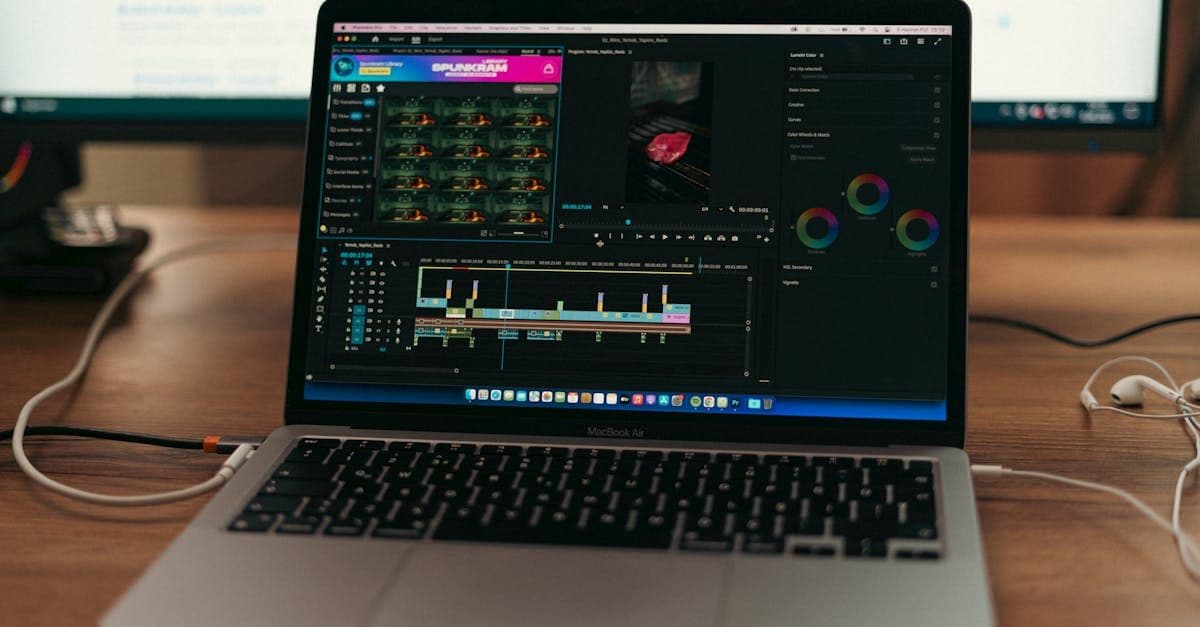
Google released two AI memory migration tools on March 26, 2026 that let you move your ChatGPT or Claude context into Gemini as persistent memory. Here’s the workflow, the copy-paste prompt, and when to skip it.
The Dallas Fed's February 2026 analysis shows entry-level positions fell 16% in top AI-exposed industries while experienced workers' wages rose 16.7%. The split is structural, not temporary.

ARC-AGI-3 launched March 26, 2026. Every frontier model scored below 1%: Gemini 3.1 Pro Preview led at 0.37%, GPT-5.4 at 0.26%. Here’s what the interactive agentic benchmark reveals about current AI reasoning limits.

Newsquest runs up to 30 AI-drafted stories a day via 30 AI-assisted reporters. Reuters Institute: 67% of publishers haven't saved jobs from AI yet. Here's what the workflow actually looks like.

Z.AI's GLM-5.1 scored 58.4 on SWE-Bench Pro, edging GPT-5.4 and Claude Opus 4.6 by less than 1.1 points. The benchmark lead is real — the hardware requirement to run it locally is not consumer-grade.

EU Digital Omnibus removes mandatory risk assessments for high-risk AI — including hiring tools — and delays August 2026 compliance with no fixed date. Amnesty calls it an unprecedented rollback of EU digital rights.
AI-generated disinformation is hitting journalism at its most economically fragile moment in decades. The documented damage — contracting newsrooms, collapsing audience trust, synthetic content that outpaces...