 BestAIFor
ChatGPT vs DeepSeek: Which Free AI for Beginners is Smarter?
ChatGPT and DeepSeek are two leading free AIs for beginners. This guide compares their features, writing skills, and ease of use to help you choose.
January 20, 2026•8 min read

TL;DR: Q1 2026 tech layoffs hit 78,557, with 47.9% attributed to AI in corporate announcements. A 6,000-executive NBER survey found 90% reported no measurable AI impact on employment over three years. A pending federal bill would force quarterly AI-layoff reporting to the Department of Labor.
Tech companies attributed nearly half of their Q1 2026 layoffs to AI. A Federal Reserve-backed survey of almost 6,000 executives says 90% of them saw no workforce impact from AI at all. Both cannot be true.
The phrase "AI replaced my job" now shapes severance negotiations, unemployment eligibility interviews, and retraining pathways. It also shapes how investors price firms and how policymakers write rules. But no regulator today has the authority to verify whether a single layoff was actually caused by AI adoption. That gap is what this piece is about.
Between January 1 and April 2026, 78,557 U.S. tech workers were laid off, according to industry aggregators. Of those cuts, 37,638 (47.9%) were attributed to reduced need for human workers because of AI and workflow automation. The attribution came from company statements and analyst trackers counting those statements.
In the same quarter, the National Bureau of Economic Research published working paper w34984, Artificial Intelligence, Productivity, and the Workforce: Evidence from Corporate Executives. The paper surveys roughly 6,000 senior executives across U.S., U.K., German, and Australian firms. More than 90% of managers reported no AI impact on employment over the past three years. 89% reported no change in productivity. Looking forward, the same executives predicted only a 0.7% AI-driven cut to employment over the next three years.
The gap between "47.9% of tech layoffs were AI" and "90% of executives saw no AI workforce impact" is not a rounding error. It is two incompatible accounts of the same quarter, one from press releases and one from a confidential executive survey. Which one describes reality matters for every downstream policy response.
Framing a layoff as AI-driven changes three things at once. It repositions the company as modern rather than declining. It reduces public sympathy for displaced workers, because "technology moved on" reads as inevitable rather than managerial choice. And it shifts scrutiny away from weaker fundamentals, like failed product bets, overhiring during 2021 and 2022, or end-of-cycle cost cuts.
OpenAI CEO Sam Altman said at the India AI Impact Summit: "I don't know what the exact percentage is, but there's some AI washing where people are blaming AI for layoffs that they would otherwise do, and then there's some real displacement by AI of different kinds of jobs." The admission from the CEO of the most valuable AI company in the world is worth reading twice. He did not deny displacement. He said some fraction of the attribution is narrative.
So the question worth asking in 2026 is not "is AI replacing workers?" It is "which layoffs does AI actually explain, and which layoffs just needed a more defensible headline?"
On November 19, 2025, Senators Josh Hawley (R-Mo.) and Mark Warner (D-Va.) introduced S.3108, the AI-Related Job Impacts Clarity Act. The bill would require covered employers to file quarterly reports with the U.S. Department of Labor. The reporting categories are specific.
| Reporting category | What must be disclosed |
|---|---|
| AI-driven layoffs | Number of employees terminated because job functions were automated or replaced by AI. |
| AI-driven hiring | Number of positions created as a result of AI adoption. |
| AI-driven vacancies | Open positions not filled for AI-related reasons. |
| AI-driven retraining | Employees retrained because of AI-related role changes. |
The bill sits in the Senate Committee on Health, Education, Labor, and Pensions. It has bipartisan authorship but no scheduled markup as of this writing. Its passage is uncertain. What matters for this discussion is the category of data it would create: a comparable, quarterly, employer-filed record of AI employment impact, held by a federal labor regulator.
Today, no such record exists. Every claim about AI-driven layoffs is either self-reported by the firm in a press release or estimated by a third party counting those press releases. The NBER paper is the closest thing to an independent baseline, and it contradicts the press-release aggregation directly.
Nearly 75% of Americans who lose their jobs do not apply for unemployment insurance benefits. One of the strongest predictors of whether a laid-off worker files is union membership, because unions walk members through the process. Union density in the U.S. reached a historic low of 9.9% in 2024, according to Bureau of Labor Statistics data.
The labor-rights consequence is concrete. When a layoff is publicly framed as AI-driven, a displaced worker interviewing for unemployment does not have a union representative cross-checking the framing against what the employee actually did. If the official narrative says "your job was automated," the administrative record often ends there. This is not theoretical. States with the highest proportion of unclaimed benefits are also states with the lowest union density.
So the reporting gap is not just an academic dispute between NBER and corporate press teams. It is a structural asymmetry in who gets to describe a job loss, and what that description does to the worker's next six months.
The same NBER survey that found 90% of executives reporting no past AI impact also found those executives expect roughly 0.7% AI-driven employment cuts over the next three years. That is a small number. It is also a planning assumption that would not, on its own, justify the scale of Q1 2026 cuts.
The Harvard Business Review put it plainly in January 2026: companies are laying off workers because of AI's potential, not its performance. This is the trap. "We had to cut now because AI will replace the function soon" is a defensible management narrative, but it is non-falsifiable in the short term. Investors accept it. Boards accept it. Labor regulators have no standing to question it. And when the three-year window closes and the projected AI displacement is smaller than the actual layoff count, no one reopens the original attribution.
Not every 2026 layoff is AI washing. Some job functions are genuinely being absorbed. Pattern recognition for customer support routing, first-pass legal document review, low-complexity image editing, formulaic copy production: these categories have real automation exposure. A worker in one of these roles reading this piece should not walk away thinking their displacement was fake.
But the categories where AI actually replaces labor are narrower than the current coverage suggests, and the concentration is uneven. The cases where "AI replaced this role" is a defensible claim share three markers.
If any of those three are missing, the "AI did it" framing is doing narrative work, not descriptive work. That distinction is what the Clarity Act would force into public disclosure.
The NBER paper (w34984) covers roughly 6,000 senior executives across U.S., U.K., German, and Australian firms, weighted toward mid-and-large enterprises. It is the largest executive-level AI impact survey published in 2026. It is not tech-sector-exclusive, which is both a caveat and a reason its finding matters: even including sectors most likely to claim AI impact, 90% saw no workforce effect.
No. As of April 2026, the bill (S.3108) sits in the Senate Committee on Health, Education, Labor, and Pensions. No markup has been scheduled. Bipartisan authorship improves its odds but does not guarantee passage.
Real displacement can be traced to a specific deployed system, a measurable change in output, and a headcount change concentrated in the team using that system. AI washing applies the AI label to layoffs that share none of those markers and would have happened regardless.
The framing of a layoff affects unemployment filing rates, retraining eligibility, and severance negotiation leverage. Workers laid off under an "AI automation" justification face a harder time contesting the decision than those laid off for documented performance or redundancy reasons, even when the underlying facts are identical.
The honest summary of 2026 so far is that the AI layoff narrative is running well ahead of the workforce data. Aggregated tech layoff trackers report 47.9% of cuts as AI-driven. An NBER executive survey covering 6,000 firms says 90% saw no workforce impact. Federal reporting does not yet exist to reconcile the two. Workers pay the cost of the gap.
If you are a policy analyst, labor researcher, or journalist covering this beat, the concrete action this quarter is to read the NBER working paper directly before citing any layoff aggregator that attributes cuts to AI. If you are an HR leader or workforce strategist inside a company currently considering AI-attribution framing for a restructuring, the question worth putting to your general counsel is what the Clarity Act's quarterly reporting regime would require you to disclose if it passed in the next session. Assume it will pass, and check whether your attribution survives the audit trail.
ChatGPT and DeepSeek are two leading free AIs for beginners. This guide compares their features, writing skills, and ease of use to help you choose.
Master advanced prompting techniques 2026 like Chain-of-Thought and Self-Ask to get better results from ChatGPT, Grok, and Gemini.
An accessible overview of the history of artificial intelligence, from early theoretical ideas to modern deep learning.

In 2026, mainstream content creators and new AI adopters have powerful AI video tools at their fingertips.
Discover the most powerful AI productivity tools for 2026, including Gemini, Claude, and top emerging alternatives.
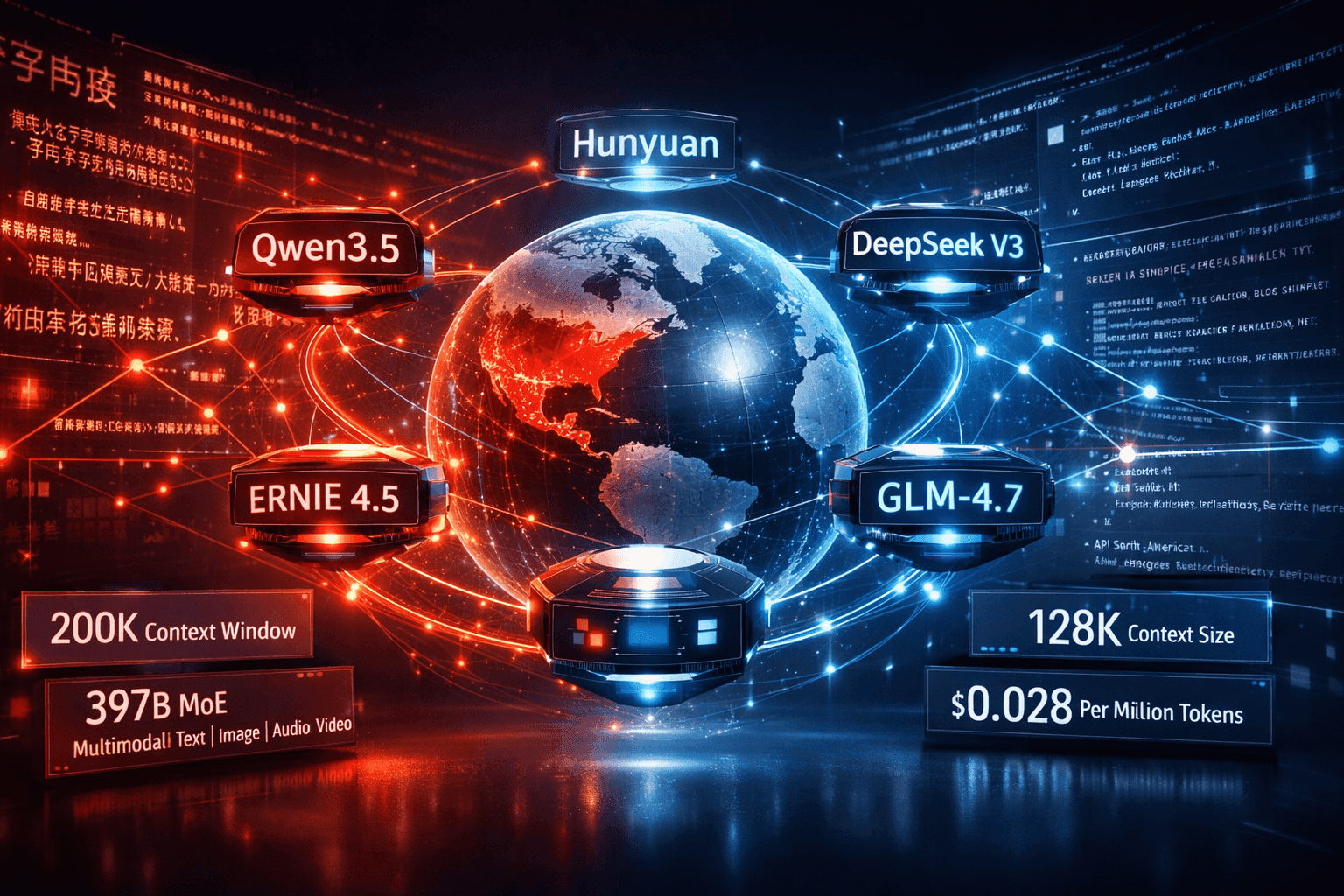
China LLMs 2026: Qwen vs DeepSeek vs ERNIE vs Hunyuan Compared
Machine learning vs deep learning explained with clear differences, real world use cases, and guidance for beginners and professionals

Stop collecting AI tools. Start building a system that works like a fractional employee-automate smarter, not harder.
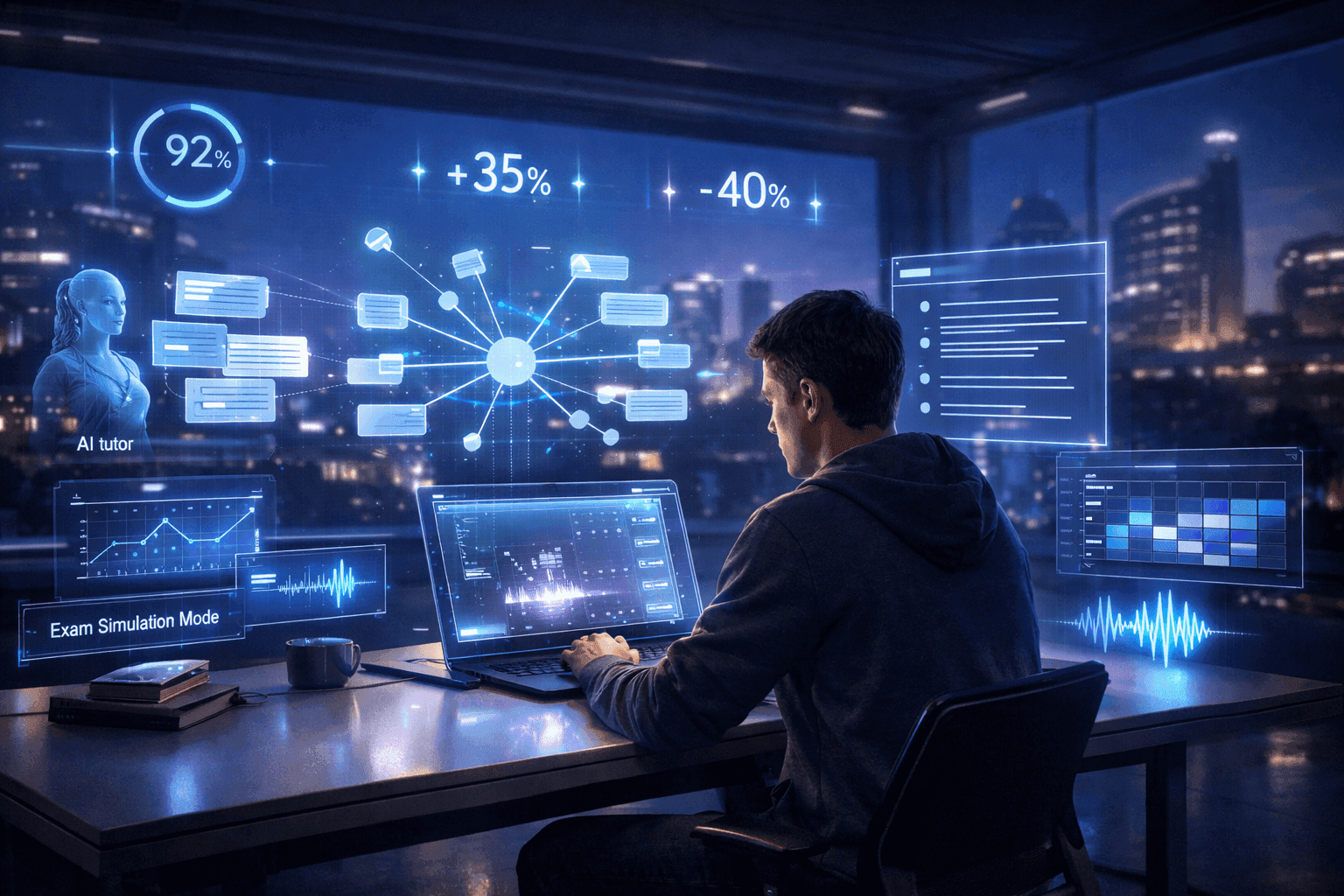
Explore 12 hands-on AI for Students hacks in 2026—from flashcard tutors to auto-lit reviews—to boost focus, save time, and learn smarter
Muck Rack's 2026 journalism survey found 82% of journalists use AI, up from 77%. But concern about unchecked AI rose 8 points to 26%. Here is what the numbers mean for editorial teams.

The News/Media Alliance signed a 50/50 AI licensing deal with Bria covering 2,200 publishers on enterprise RAG queries. The split sounds equitable. Bria controls the attribution algorithm.
The Dallas Fed's February 2026 analysis shows entry-level positions fell 16% in top AI-exposed industries while experienced workers' wages rose 16.7%. The split is structural, not temporary.

ARC-AGI-3 launched March 26, 2026. Every frontier model scored below 1%: Gemini 3.1 Pro Preview led at 0.37%, GPT-5.4 at 0.26%. Here’s what the interactive agentic benchmark reveals about current AI reasoning limits.

Newsquest runs up to 30 AI-drafted stories a day via 30 AI-assisted reporters. Reuters Institute: 67% of publishers haven't saved jobs from AI yet. Here's what the workflow actually looks like.
Most AI users are still doing prompt engineering in 2026. Context engineering — feeding the right information at the right time — is the upgrade your workflow needs. Two copy-paste patterns included.

The early-user problem in B2B SaaS is solved by manual work, direct relationships, and ruthless prioritization — not marketing funnels or growth hacks. The tactics are well-documented and consistently replicated....

A beginner-friendly look at how AI may reshape work, health, education, and governance from 2026 to 2031

AI Model Benchmarking: What Claude Sonnet 4.6's Token Surge Reveals

EU Commission missed its February 2026 AI Act guidance deadline. EU Council now proposes pushing high-risk AI enforcement to December 2027. Only 8 of 27 member states have enforcement authorities in place.

Z.ai’s GLM-5 scores 77.8% on SWE-bench Verified and 62.0 on BrowseComp, nearly doubling Claude Opus 4.5’s 37.0. First open-weights model above 50 on the Artificial Analysis Intelligence Index.

EU Digital Omnibus removes mandatory risk assessments for high-risk AI — including hiring tools — and delays August 2026 compliance with no fixed date. Amnesty calls it an unprecedented rollback of EU digital rights.

Three Chinese LLMs — DeepSeek-V3, Qwen2.5-Coder, and Kimi k1.5 — have each made distinct training bets, and the benchmark divergence is now large enough to matter when selecting a model for production. Coding...

Frontier model benchmark scores climbed between 8 and 45 percentage points across MMLU, SWE-bench, and ARC-AGI over the past 12 months. Workflow impact is real but concentrated — reasoning tasks and agentic code...

SWE-bench scores for top coding agents now clear 70%. Inside Databricks' production codebase—millions of lines spanning distributed systems, Scala runtime code, and internal APIs built over a decade—those numbers...
AI-generated disinformation is hitting journalism at its most economically fragile moment in decades. The documented damage — contracting newsrooms, collapsing audience trust, synthetic content that outpaces...
![Elastic Attention Cores for Scalable Vision Transformers [R] image](/_next/image?url=https%3A%2F%2Fbestaifor.s3.eu-west-1.amazonaws.com%2Felastic_attention_cores_for_scalable_vision_transf_featured_7a30bc1faf.jpg&w=3840&q=75)
This paper introduces VECA (Visual Elastic Core Attention), a vision transformer that eliminates direct patch-to-patch attention entirely, replacing it with a fixed set of learned core tokens that mediate all...

memoket-kite is an open-source long-term memory engine for AI agents that eliminates the embedding stack entirely and reports state-of-the-art results on the LoCoMo benchmark. The case against vector-based memory at...

DeepSeek's DSec paper lays out a sandbox execution layer built specifically for reinforcement learning over code agents — a problem most academic labs skip because they don't train at the scale where it becomes...

A quantized 27B open model achieves performance parity with frontier AI systems on a single, specific code generation task within a standard coding benchmark—not the full benchmark, not reasoning, not multi-file...