 BestAIFor
ChatGPT vs DeepSeek: Which Free AI for Beginners is Smarter?
ChatGPT and DeepSeek are two leading free AIs for beginners. This guide compares their features, writing skills, and ease of use to help you choose.
January 20, 2026•8 min read

The early-user problem in B2B SaaS is solved by manual work, direct relationships, and ruthless prioritization — not marketing funnels or growth hacks. The tactics are well-documented and consistently replicated. What the conversation consistently skips: media companies launching editorial tools, data intelligence products, and content platforms face the exact same cold-start problem, and they're often sitting on acquisition assets that pure-play startups would trade their runway to have.
The thread this question generates every few weeks on r/SaaS, r/entrepreneur, and Hacker News follows a predictable arc: a founder built something, launched it, watched nothing happen, and now wants tactical help. The replies are always the same. They are always correct. Almost nobody actually does them.
Stripped to the bones, the early-user playbook looks like this:
That's the full playbook. Lenny Rachitsky's research validates it consistently across cohorts of high-growth companies. Direct outreach to existing relationships is the modal path to the first cohort — not content marketing, not paid acquisition, not a viral Product Hunt launch.
What this conversation rarely surfaces: media executives launching editorial products face this exact cold start every time. A new B2B intelligence feed. A data licensing platform. An AI-assisted content workflow tool. An enterprise media analytics dashboard. These are SaaS products with SaaS cold-start problems. They need first users, not first readers. Media teams almost never solve them with SaaS tactics.
Cold email as a channel is not dead. It is precisely as effective as the targeting and personalization behind it. The benchmark gap tells the story: 1–5% reply rate for fully cold, spray-and-pray sequences; 15–25% for outreach preceded by real contextual signals — a prospect recently posted about a workflow problem you solve, your target account just posted a job listing for "head of AI editorial," someone you've engaged with on LinkedIn forwarded a relevant thread.
The tools that make this targeting achievable at scale have matured considerably. Clay pulls data from 75+ enrichment sources to build highly personalized outreach sequences: you can tell a prospect you noticed their company is hiring for a content operations manager, that their editorial team just published a piece on AI fact-checking, and that you're building something directly relevant to that gap. That specificity converts. Blanket sequences do not.
For media companies, the targeting is often largely done. Editorial analytics show exactly which organizations are reading your B2B coverage. Event registration data shows which companies keep showing up. Your reporters know, from source interviews, which editorial directors are struggling with specific workflow problems. That signal is an acquisition asset that almost never gets used for product outreach.
The second most common early traction path across documented B2B early stages is community seeding — identifying where the target user already congregates and becoming genuinely useful there before the product comes up.
For editorial teams, this is a structural advantage they typically squander. Editorial staff regularly inhabit the professional communities their target B2B buyers live in — trade publication comment sections, specialist Slack groups, journalism and media LinkedIn networks, industry conference circuits. The problem is that these relationships exist inside the "editorial" silo and never touch the "product" silo.
A media company launching a B2B competitive intelligence tool has reporters who interview the exact job titles they'd want as paying customers. Those source relationships, offered structured early access to a pilot program, represent a conversion probability that no cold email sequence can replicate.
HubSpot built its entire early traction on content that answered the exact questions its target buyers were searching for. Every article indexed, readers became trial users, some converted. The model has been replicated across thousands of B2B SaaS companies since. What it requires: editorial infrastructure and a publishing cadence.
Media companies have that infrastructure. They do not use it for product acquisition.
The execution gap is structural: the editorial team optimizes for readership and engagement, while the product team has its own separate acquisition strategy. There's no mechanism for "readers who are enterprise content directors" to flow into "pilot program for our B2B editorial analytics tool." Content-led growth requires that the content team and the product team share a demand generation view of the editorial calendar, not just a readership view.
Every article your team publishes on a B2B workflow, AI adoption, or industry shift topic is a potential top-of-funnel asset for a product you have — or could build. The editorial team writing about AI in newsrooms is generating a live prospect list of digital leaders who self-selected into that content. The problem is that most media companies can't see who those readers are at the organizational level.
Account-level analytics tools — Clearbit (now integrated into HubSpot), Albacross, Factors.ai — de-anonymize that traffic at the company level, turning article visitors into a named list of target accounts. The workflow becomes: editorial calendar drives content → account-level analytics identifies the organizations consuming it → product or B2B sales uses that signal for outreach. The loop closes.
Without that instrumentation, you're generating awareness with no path to product acquisition. The SaaS startup with a Clay-enriched prospect list and a targeted 200-email sequence is often outperforming the media company with a 500,000-reader archive on the same topic.
The B2B SaaS playbook is unambiguous: talk to your first 10 users every week. For a media company with an existing audience, this means creating a formal pilot structure — not a "contact us for more information" CTA at the bottom of a product page.
Practically, this looks like: identify 10–20 target organizations from existing readership data, offer structured early access in exchange for monthly 30-minute calls, and have editorial staff — not just a product manager — attend some of those sessions. The creative director who hears directly from an enterprise content buyer about their B2B workflow frustrations walks away with material for both a product brief and a month of editorial coverage. That feedback loop, when intentionally built, is one of the few genuine competitive advantages media companies have over pure-play SaaS startups.
The early-stage "do things that don't scale" phase no longer requires weeks of manual research and email personalization. The tooling has changed the economics without changing the underlying approach.
| Tool | Primary use | Practical application for media teams |
|---|---|---|
| Clay | B2B enrichment + outreach personalization | Building prospect lists from article engagement and event registration data |
| Apollo.io | Contact database + email sequencing | Finding verified contacts at target accounts identified via account-level analytics |
| Instantly.ai | Cold email automation + deliverability | Scaling outreach sequences once targeting and messaging are validated |
| Taplio | LinkedIn outreach + content scheduling | Warming up target accounts through LinkedIn engagement before cold email |
| Factors.ai | Account-level website analytics | De-anonymizing B2B content readers to named organizations |
| Intercom | In-product messaging + onboarding | Activating and retaining pilot users through structured onboarding flows |
The combination that works for a media company launching a B2B product: Factors.ai to surface which companies are consuming relevant editorial content, Clay to enrich those signals and identify the right contacts, Apollo to verify emails, and Instantly to run the outreach sequence. The full stack can be operational in under a day and replaces weeks of manual research.
Don't run outreach before the product can actually onboard a user. The purpose of the early acquisition phase is to get feedback, not to build a pipeline. Reaching out to 200 prospects for a product that isn't ready to onboard creates churn and permanent reputational damage in professional communities that are smaller and more connected than they appear.
Don't build a PLG motion before you know the aha moment. Product-led growth only works when users can independently discover the product's core value without hand-holding. If you cannot describe the aha moment in a single declarative sentence, the product is not ready for self-serve. Most B2B editorial products need white-glove onboarding for the first cohort — the PLG motion comes later, once the aha moment is clearly understood and the onboarding path to it is engineered.
Don't mistake newsletter scale for product distribution. A 300,000-subscriber newsletter is a meaningful asset. It does not translate cleanly into users for a separate B2B product. Editorial audiences are built around content consumption, not product intent. A blast email to a general readership for a niche enterprise content tool will almost always underperform 50 direct outreach messages to qualified targets.
Don't skip the distinction between buyer and user. In B2B, the person who approves the purchase and the people who use the tool are often different. Getting a content director interested without getting the editorial producers actively engaged is how B2B products "land" and fail to expand. Early acquisition strategy needs to account for both roles.
AI is raising the quality floor for cold outreach, which pushes advantage back to relationships. As personalization tools become standard infrastructure, the differentiation shifts to genuine community presence and existing credibility. Media companies with deep editorial networks in specific verticals will have structural advantages over pure-play SaaS startups as this dynamic plays out.
Product-led growth is arriving in editorial software. Canva, Notion, and Figma established PLG in creative and content workflows. Purpose-built editorial AI tools — AI research assistants, automated fact-checking platforms, content workflow systems — are beginning to adopt the same motion. The window for first-mover advantage in editorial PLG is open.
The content-to-product pipeline is becoming an explicit strategy. A handful of media companies — The Information, Puck, Axios Pro — have built B2B intelligence products that convert editorial readers into paying subscribers without a separate enterprise sales motion. Expect more media companies to attempt this, with very different outcomes depending on whether they've instrumented the content-to-acquisition loop or are relying on organic conversion.
Account-level analytics will become table stakes for editorial operations. The technology to identify which organizations are consuming B2B content is affordable and accessible. The editorial teams that adopt it first will have a two-to-three-year compounding advantage in audience-to-product conversion before it becomes a standard line item in every media company's analytics stack.
The community-led growth moment in B2B is real. Communities built around specific professional pain points — not around a brand — are generating outsized early-user cohorts for B2B tools. For media teams, building or sponsoring a practitioner community around a specific editorial or creative workflow is a durable acquisition channel, not a branding exercise.
Isn't cold email basically dead for B2B outreach now? Not dead — the bar has moved. Generic sequences get ignored. Outreach that demonstrates genuine contextual research — a specific reason why you're reaching out to this person at this company right now — still converts at meaningful rates. The tooling to build that context at scale exists and is affordable. What's dead is spray-and-pray volume as a primary strategy.
How many outreach messages do I realistically need to send to get my first 10 users? From your existing professional network where you have genuine relationships, expect 5–15% conversion to an active conversation. From warm community-based outreach, 5–10%. From cold sequences, 1–3% to a demo or call. To get 10 committed beta users, plan for 50–200 personalized touchpoints — not 2,000 automated emails.
Doesn't a media company's existing audience make this significantly easier? It should, and it rarely does — because editorial audiences are built around content consumption, not product intent. Treating your newsletter list as a ready-made product user base will underperform every time. The asset becomes actionable when you instrument it to identify which organizations have demonstrated product-relevant intent, then do targeted outreach to those specific contacts.
What's the biggest mistake media companies make when launching a B2B product? Launching to the full editorial audience first, getting minimal uptake, and treating that as a verdict on product-market fit. A mass-channel launch to a general readership tells you almost nothing about demand for a niche B2B tool. Fifty qualified direct conversations with people who match the ICP tell you nearly everything you need to make a real decision.
Do these same tactics apply to AI-powered editorial products? Yes, with one additional complication: AI products require users to understand what the product does before they can experience the value. The educational burden is higher than for traditional SaaS. This makes the early direct-relationship approach more critical, not less — users who arrived through a warm referral will give the product enough runway to demonstrate value; users who arrived through a marketing funnel and hit friction will not.
When should media teams stop doing things manually and invest in scalable acquisition? When two conditions are both met: you can describe the ideal customer profile in enough specific detail that your direct outreach converts reliably, and that profile is large enough to justify automated channels. For most B2B editorial products, that inflection point comes after 50–100 active users with documented outcomes — not before. Scaling before you have that clarity is how you build an efficient machine that acquires the wrong users.
How should editorial leadership think about "doing things that don't scale" when resources are tight? Reframe it as primary research, not business development. Every 30-minute call with a potential pilot user is a source interview that shapes the product and generates three months of editorial ideas. The instinct to "talk to sources" that editorial teams already have maps directly to the SaaS instinct to "talk to customers." The work isn't extra — it's the same work, pointed at a different outcome.
ChatGPT and DeepSeek are two leading free AIs for beginners. This guide compares their features, writing skills, and ease of use to help you choose.

Master advanced prompting techniques 2026 like Chain-of-Thought and Self-Ask to get better results from ChatGPT, Grok, and Gemini.

An accessible overview of the history of artificial intelligence, from early theoretical ideas to modern deep learning.

In 2026, mainstream content creators and new AI adopters have powerful AI video tools at their fingertips.
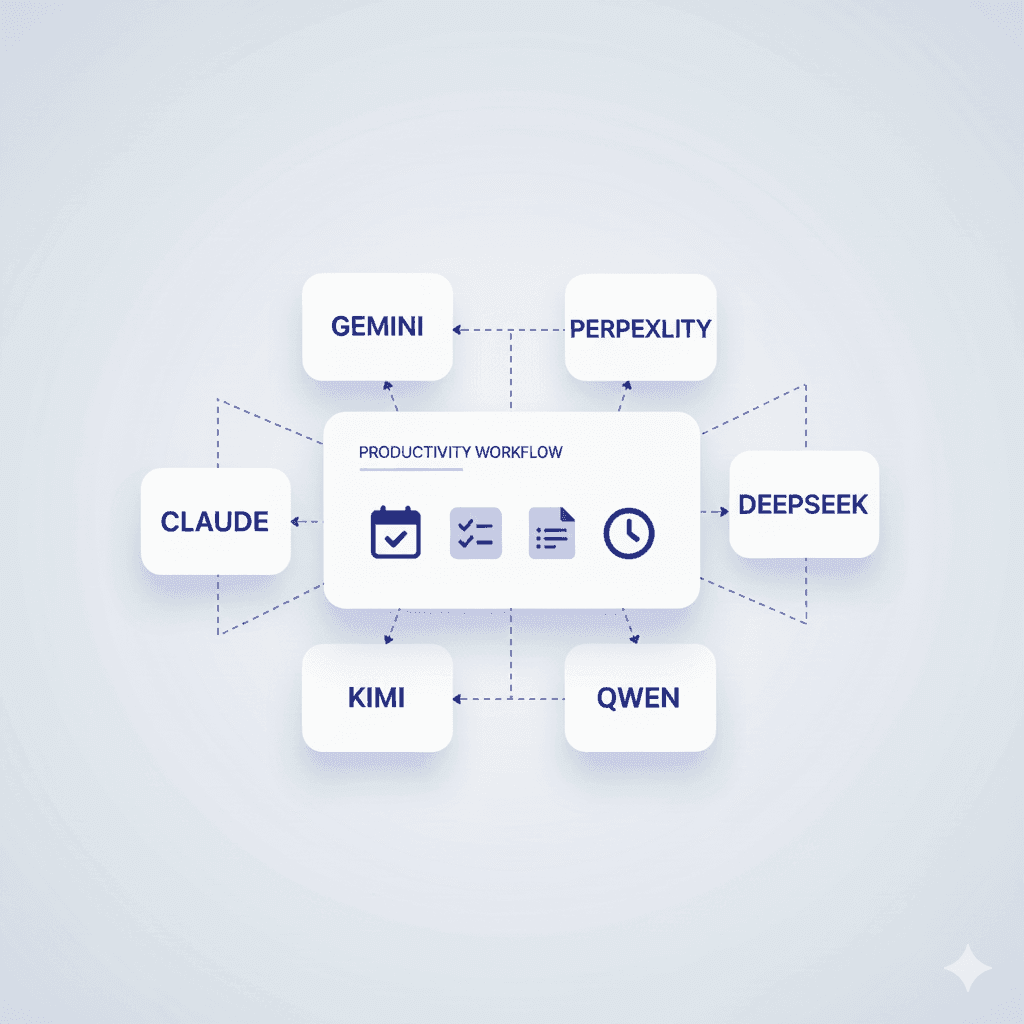
Discover the most powerful AI productivity tools for 2026, including Gemini, Claude, and top emerging alternatives.

China LLMs 2026: Qwen vs DeepSeek vs ERNIE vs Hunyuan Compared

Machine learning vs deep learning explained with clear differences, real world use cases, and guidance for beginners and professionals

Stop collecting AI tools. Start building a system that works like a fractional employee-automate smarter, not harder.

Explore 12 hands-on AI for Students hacks in 2026—from flashcard tutors to auto-lit reviews—to boost focus, save time, and learn smarter

Muck Rack's 2026 journalism survey found 82% of journalists use AI, up from 77%. But concern about unchecked AI rose 8 points to 26%. Here is what the numbers mean for editorial teams.

The News/Media Alliance signed a 50/50 AI licensing deal with Bria covering 2,200 publishers on enterprise RAG queries. The split sounds equitable. Bria controls the attribution algorithm.

The Dallas Fed's February 2026 analysis shows entry-level positions fell 16% in top AI-exposed industries while experienced workers' wages rose 16.7%. The split is structural, not temporary.

ARC-AGI-3 launched March 26, 2026. Every frontier model scored below 1%: Gemini 3.1 Pro Preview led at 0.37%, GPT-5.4 at 0.26%. Here’s what the interactive agentic benchmark reveals about current AI reasoning limits.

Newsquest runs up to 30 AI-drafted stories a day via 30 AI-assisted reporters. Reuters Institute: 67% of publishers haven't saved jobs from AI yet. Here's what the workflow actually looks like.

Most AI users are still doing prompt engineering in 2026. Context engineering — feeding the right information at the right time — is the upgrade your workflow needs. Two copy-paste patterns included.

Tech firms blamed 47.9% of 78,557 Q1 2026 layoffs on AI. An NBER survey of roughly 6,000 executives found 90% reported no workforce impact. The gap matters, and this piece explains why.

A beginner-friendly look at how AI may reshape work, health, education, and governance from 2026 to 2031

AI Model Benchmarking: What Claude Sonnet 4.6's Token Surge Reveals

EU Commission missed its February 2026 AI Act guidance deadline. EU Council now proposes pushing high-risk AI enforcement to December 2027. Only 8 of 27 member states have enforcement authorities in place.

Z.ai’s GLM-5 scores 77.8% on SWE-bench Verified and 62.0 on BrowseComp, nearly doubling Claude Opus 4.5’s 37.0. First open-weights model above 50 on the Artificial Analysis Intelligence Index.

EU Digital Omnibus removes mandatory risk assessments for high-risk AI — including hiring tools — and delays August 2026 compliance with no fixed date. Amnesty calls it an unprecedented rollback of EU digital rights.

Three Chinese LLMs — DeepSeek-V3, Qwen2.5-Coder, and Kimi k1.5 — have each made distinct training bets, and the benchmark divergence is now large enough to matter when selecting a model for production. Coding...

Frontier model benchmark scores climbed between 8 and 45 percentage points across MMLU, SWE-bench, and ARC-AGI over the past 12 months. Workflow impact is real but concentrated — reasoning tasks and agentic code...

SWE-bench scores for top coding agents now clear 70%. Inside Databricks' production codebase—millions of lines spanning distributed systems, Scala runtime code, and internal APIs built over a decade—those numbers...
AI-generated disinformation is hitting journalism at its most economically fragile moment in decades. The documented damage — contracting newsrooms, collapsing audience trust, synthetic content that outpaces...
![Elastic Attention Cores for Scalable Vision Transformers [R] image](/_next/image?url=https%3A%2F%2Fbestaifor.s3.eu-west-1.amazonaws.com%2Felastic_attention_cores_for_scalable_vision_transf_featured_7a30bc1faf.jpg&w=3840&q=75)
This paper introduces VECA (Visual Elastic Core Attention), a vision transformer that eliminates direct patch-to-patch attention entirely, replacing it with a fixed set of learned core tokens that mediate all...

memoket-kite is an open-source long-term memory engine for AI agents that eliminates the embedding stack entirely and reports state-of-the-art results on the LoCoMo benchmark. The case against vector-based memory at...

DeepSeek's DSec paper lays out a sandbox execution layer built specifically for reinforcement learning over code agents — a problem most academic labs skip because they don't train at the scale where it becomes...

A quantized 27B open model achieves performance parity with frontier AI systems on a single, specific code generation task within a standard coding benchmark—not the full benchmark, not reasoning, not multi-file...