
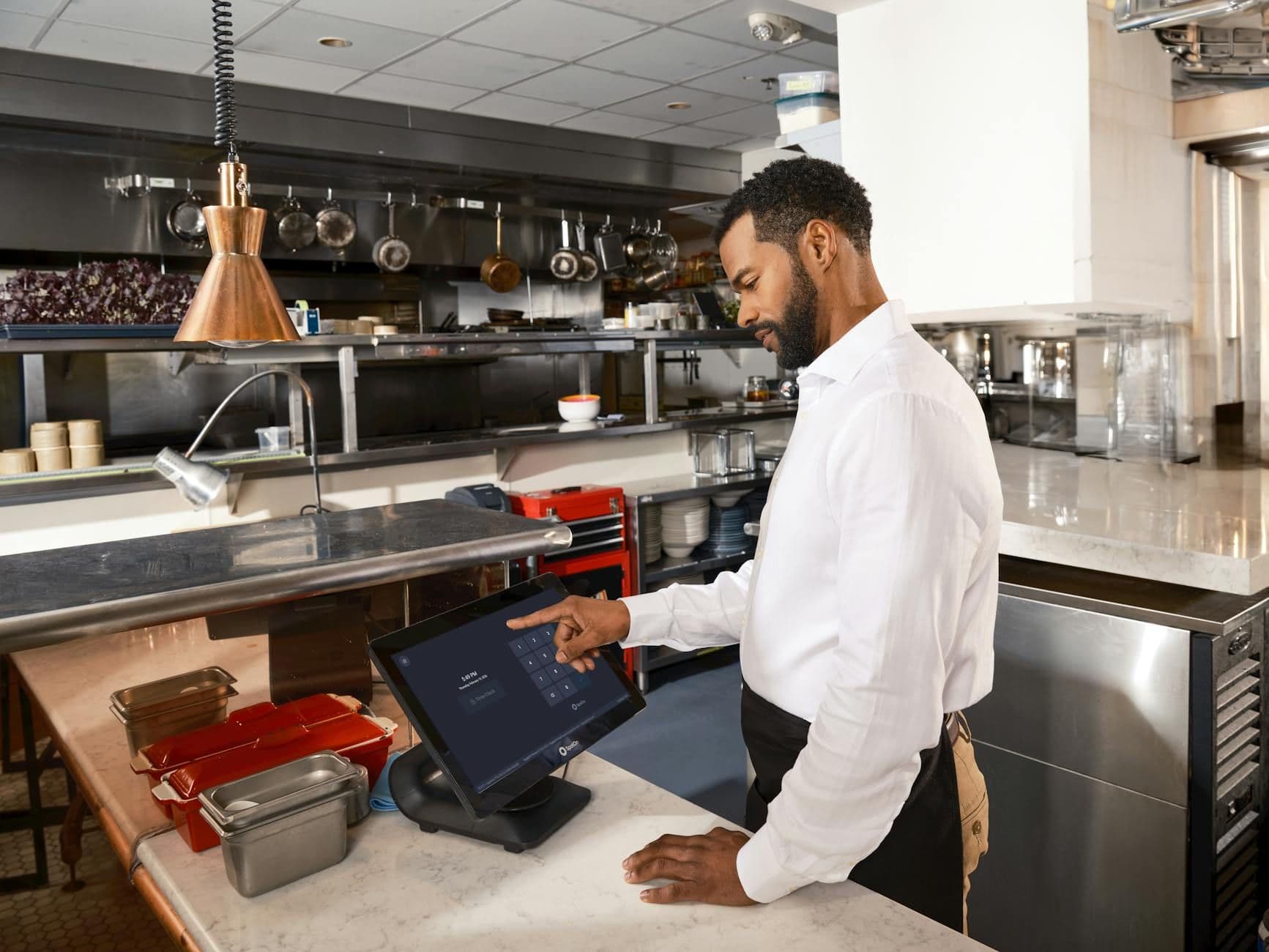
Restaurant operators face a specific kind of software sprawl problem. There's a POS for transactions, a separate scheduling tool for labor, a third platform for online ordering, and a fourth for reservations — and none of them talk to each other without custom work. AI doesn't fix that consolidation problem on its own, but it does start to fill the gaps: predictive scheduling that looks at your historical covers to build next week's shift, voice agents that answer the phone so your floor staff don't have to, and order platforms that learn which upsells actually convert for your guests.
In 2025, two deals changed the independence calculus for restaurant operators. DoorDash acquired SevenRooms — guest CRM and reservations — for approximately $1.2 billion, moving a delivery platform directly into the guest-relationship layer. Separately, Olo, the digital ordering platform, was taken private by the software investment firm Thoma Bravo in a deal valuing it at about $2 billion. One of the 15 tools on this list (SevenRooms) is now a DoorDash company; another (Olo) is now private-equity-owned. That context shapes which tools make sense for operators who want to build a direct relationship with their guests — and how much dependency they take on platforms like DoorDash that already charge 25–40% per third-party order.
How we picked these tools
We started with a 30-candidate longlist drawn from domain knowledge of the restaurant tech category, press signal checks on vendor PR activity, and enrichment scrapes of pricing pages and product features. We scored each candidate on five dimensions: estimated domain authority, active press or newsroom presence, funding and news signal, depth of actual AI capability (not just AI-branded marketing), and fit with the practical workflows restaurants run every day.
The final 15 were validated by the BestAIFor founder. We prioritized tools with public pricing, documented customer counts or case studies, and integrations with the core stack most restaurants are already running — Toast, Square, Lightspeed, OpenTable, and Google Business Profile. Tools that demo well but require six-week implementations were downweighted. So were tools that label basic automation as "AI" without meaningful predictive or generative capability underneath.
At-a-glance comparison
| Tool | Best for | Pricing | Free trial | Integrates with |
|---|---|---|---|---|
| Toast | All-in-one POS + AI analytics | Free–custom | No | 7shifts, OpenTable, third-party delivery |
| 7shifts | AI labor scheduling | Free–$135/mo/location | Yes (free plan) | Toast, Square, Lightspeed |
| Olo | Digital ordering for chains | Enterprise (custom) | No | 750+ restaurant brands' existing POS |
| SevenRooms | Guest CRM + reservations + Voice AI | Enterprise (demo) | No | Slang.ai, OpenTable, Tripleseat |
| Lightspeed | Multi-location POS + insights | $69–$189/mo | Yes | 7shifts, OpenTable, Deliverect |
| Slang.ai | AI phone answering (reservations, FAQs) | Demo-gated | No | OpenTable, SevenRooms, Tripleseat, Yelp |
| Owner.com | AI website + marketing for independents | $249–$499/mo | No | Google Business, Meta Ads, email/SMS |
| Crunchtime | Enterprise labor + food cost ops | Enterprise (custom) | No | Toast, Oracle, multiple POS |
| Square for Restaurants | SMB POS + AI reporting | Free–$60/mo | Yes (free plan) | 7shifts, DoorDash, Uber Eats |
| OpenTable | Reservations + AI guest discovery | $39–$649/mo | No | Most major POS systems |
| Restaurant365 | AI accounting + inventory for chains | ~$249/mo/location | No | Toast, Square, Lightspeed |
| Winnow | AI food waste reduction (computer vision) | Custom (hardware + SaaS) | No | Standalone kitchen install |
| MarketMan | Inventory + food cost automation | $239–$439/mo | Yes | Toast, Square, Lightspeed |
| Lunchbox | Digital ordering + loyalty for chains | Enterprise (custom) | No | Major POS systems |
| Presto Automation | AI voice drive-through ordering (QSR) | Enterprise per-lane | No | Existing QSR POS systems |
How to choose the right AI tool for your restaurant
The most common mistake restaurant operators make when evaluating AI tools is solving the wrong problem first. Most category listicles start with POS, but if your POS is working and your labor cost is running 5 points above target, a scheduling tool returns more value faster than a POS switch.
Start by identifying where your highest-cost friction actually lives. Four patterns cover most operators:
Independent restaurant (under 3 locations): Your first AI win is usually labor scheduling or online ordering. 7shifts' free plan covers up to 15 staff — that's a real test without a credit card required. Owner.com at $249/month replaces your website, email marketing, and Google ordering in one place and removes the 25–40% delivery app fees that eat margin.
Growing chain (3–20 locations): Labor scheduling and food cost analytics start to matter at scale because small variances compound across locations. Lightspeed's $189/month Advanced plan covers analytics across sites. Restaurant365 is the purpose-built accounting layer for multi-location operators — it connects directly to your POS and flags food cost variances automatically.
Quick service and drive-through: AI voice ordering is the active frontier here. Presto deploys lane-by-lane. SevenRooms and Slang.ai address phone ordering more broadly. If you run heavy drive-through volume, a trial of one voice AI system is worth the implementation friction.
Enterprise and franchise: At 50+ locations, you're evaluating Crunchtime and Olo — both enterprise-only, both require sales conversations, both built for multi-brand and franchise complexity. Olo's shift to private-equity ownership under Thoma Bravo is worth understanding before you sign a multi-year contract — roadmap and pricing can move under a new owner.
Don't buy the tool with the most features. Buy the cheapest one that solves your highest-volume problem. You'll know within 30 days whether you need to upgrade. If you're not sure where to start, start with the tool that has a free plan or public pricing. Vendors who require a demo before revealing price have usually priced themselves above the SMB market — even when their landing page implies otherwise.
The 15 best AI tools for restaurant management
1. Toast
Toast is the US restaurant POS used by 125,000+ restaurants, and its AI layer has grown from basic reporting to predictive analytics that flag labor cost trends and menu item performance before they become visible in a monthly P&L.
The free Starter plan gives independent operators a working POS with no monthly software cost — you pay on the hardware side instead. Paid plans unlock labor forecasting, marketing automation, and loyalty features. The strength here is breadth: Toast integrates with most of the other tools on this list, functioning as the operational backbone you layer everything else onto.
Best for: All-size restaurants wanting a single-vendor POS with built-in analytics
Pricing: Starter free; full platform custom
Pros: Largest US restaurant tech ecosystem; predictive labor and menu analytics; integrates with 7shifts, OpenTable, third-party delivery
Cons: Hardware is Toast-proprietary; full analytics require paid plans; full feature and cost comparisons require a sales call
If it doesn't fit: Square for Restaurants offers comparable SMB feature depth with no hardware lock-in
2. 7shifts
7shifts is the scheduling-first AI platform most widely used among independent and mid-size restaurant operators. Its core value is simple: instead of building next week's schedule by guessing, 7shifts looks at your past sales data, factors in your labor cost targets, and surfaces a shift plan that keeps you at budget. It also handles time-off requests, team communication, and manager log books.
At 55,000+ restaurants, it has the breadth of integrations that matters — Toast, Square, Lightspeed, Clover, and most major POS systems all connect. The free plan covers up to 15 staff with no time limit, which means most small operators can use the core scheduling features without paying.
Best for: Scheduling-focused operators from single-location independents to regional chains
Pricing: Free (up to 15 staff); Essentials $29.99/mo/location; Pro $69.99; Premium $135
Pros: AI-driven schedule optimization cuts labor cost variance; free tier is genuinely useful; deep POS integrations
Cons: Advanced analytics require Pro or Premium; the free tier limits some communication features
If it doesn't fit: Fourth (HotSchedules) for enterprise hospitality groups running hotel F&B alongside restaurants
3. Olo
Olo built its business on digital ordering for restaurant chains — it powers the online, app, and kiosk ordering for 750+ brands including Waffle House, Dutch Bros, and Red Lobster. Its AI layer personalizes the digital menu based on guest order history, drives demand-based upsells, and (via the Spendgo acquisition in December 2025) added loyalty AI that connects guest purchase data to marketing campaigns.
The context you need in 2026: Olo was taken private by the software investment firm Thoma Bravo in 2025, in a deal valuing it at about $2 billion (announced July 2025). Olo is not a DoorDash company — that's SevenRooms, which DoorDash acquired in a separate transaction. What chains evaluating Olo should weigh is private-equity ownership: how product roadmap, pricing, and support evolve under a PE owner over a multi-year contract. For operators who value predictability across a long contract, it's a flag worth noting before signing.
Best for: Enterprise and mid-size chains wanting AI-powered digital ordering with loyalty
Pricing: Enterprise custom
Pros: Powers 750+ brands; active innovation track record (Spendgo acquisition, consumer app launch March 2026); deep chain-scale loyalty AI
Cons: No SMB tier; pricing not public; now private-equity-owned (Thoma Bravo) — roadmap/pricing may shift
If it doesn't fit: Lunchbox for mid-size chains wanting digital ordering independence; Owner.com for independents
4. SevenRooms
SevenRooms runs reservations, CRM, and marketing automation for full-service restaurants and hotel F&B. It is now a DoorDash company — DoorDash completed its approximately $1.2 billion acquisition of SevenRooms in June 2025. That acquisition brought product investment: SevenRooms has since launched Voice AI, which handles inbound phone calls for reservations and guest inquiries, integrating with OpenTable, Tripleseat, and Slang.ai.
The platform's core value is guest data intelligence: it tracks every cover, spend, preference note, and complaint across all visits, then surfaces that context at the point of greeting and at the point of marketing. Operators running multiple full-service locations who want to build real guest loyalty — not just a points program — tend to get the most out of it.
Best for: Full-service restaurants and hotel F&B needing reservation management + guest CRM
Pricing: Demo-only; enterprise tiers
Pros: Industry-leading guest data depth; Voice AI for phone reservations; integrates with Slang.ai, OpenTable, Tripleseat
Cons: No public pricing; setup requires onboarding time; part of DoorDash's ecosystem
If it doesn't fit: OpenTable for lighter-touch reservation management at a published price
5. Lightspeed Restaurant
Lightspeed is the POS platform that has taken the most ground among multi-location independent restaurant groups — operators with 2 to 20 locations who need consolidated reporting across sites without enterprise pricing. Its AI capabilities are reporting-focused: real-time KPI dashboards, labor cost variance alerts, and inventory analytics that flag which menu items are pulling margin down before month-end.
The gap between Lightspeed and Toast is mostly ecosystem size. Toast's US integration network is broader; Lightspeed has stronger international coverage and is often the better choice for operators running a mix of restaurant formats across regions. At $189/month for the Advanced plan, it's priced for operators who have outgrown per-site spreadsheet management.
Best for: Multi-location independent restaurant groups (2–20 sites)
Pricing: Essentials ~$69/mo; Advanced ~$189/mo; Enterprise custom
Pros: Cross-site analytics in one dashboard; strong international coverage; free trial available; integrates with 7shifts and OpenTable
Cons: Smaller US integration ecosystem than Toast; advanced analytics require higher tiers
If it doesn't fit: Toast for US-first operators; Restaurant365 for accounting-layer depth
6. Slang.ai
Slang.ai answers your restaurant's phone. That's a deliberately narrow value proposition, and it's the reason the tool works. It deploys a 24/7 AI voice agent that handles inbound calls — confirming hours, managing reservations via your existing OpenTable or SevenRooms account, answering menu and location questions, and routing VIP callers to a human.
Fast Company named Slang.ai one of the Most Innovative Companies in Dining for 2024. The operational result its customers report: 50% more phone reservations captured (calls that previously rang to voicemail), 200+ staff hours per month freed from phone duty, and a 96% caller satisfaction score. For restaurants where the phone is still a booking channel — especially full-service independents — that's an operational unlock that doesn't require changing your reservation platform.
Best for: Full-service restaurants that still take reservations by phone and lose bookings to voicemail
Pricing: Demo-gated; setup takes under 30 minutes
Pros: Works with existing OpenTable/SevenRooms/Tripleseat/Yelp accounts; 96% CSAT; 50% reservation lift documented; Fast Company validated
Cons: Pricing not public — requires a demo; ROI depends on call volume (lower-traffic restaurants may not recover cost quickly)
If it doesn't fit: SevenRooms Voice AI for operators already running the full SevenRooms platform
7. Owner.com
Owner.com is built for independent restaurants tired of paying Grubhub, DoorDash, and Uber Eats 25–40% per order to reach their own customers. The platform provides an AI-optimized website, direct online ordering with zero platform fees on the flat-rate plan, a branded mobile app, and AI-driven email and SMS marketing — all in one subscription.
G2 named it the #1 restaurant software product in Spring 2026, with 1,000+ reviews at 4.8 stars. The math is straightforward: if your third-party delivery volume is above $3,000/month in gross orders, the $499 flat-rate plan usually beats the platform fee alternative. The $249/month plan adds a 5% per-order fee — worth calculating against your actual order mix before signing.
Best for: Independent restaurants wanting direct online ordering + AI marketing without delivery platform dependency
Pricing: Flexible $249/mo + 5% per order; Flat Rate $499/mo
Pros: G2 #1 Spring 2026; direct ordering avoids platform fees; AI marketing included; eliminates separate website subscription
Cons: 5% fee on the Flexible plan adds up at volume; no free trial
If it doesn't fit: Popmenu at ~$149/month for operators prioritizing website and reputation management over direct ordering volume
8. Crunchtime
Crunchtime runs across 125,000+ restaurant locations — Burger King, Popeyes, Tim Hortons among them. Its AI handles labor forecasting by daypart, predictive inventory ordering, franchise compliance auditing, and food cost variance detection that flags deviations before period-end reporting surfaces them.
It's not for independents. Setup requires IT involvement, data migration, and onboarding time measured in weeks. The payoff at scale is measurable: enterprise chains use it to standardize operating costs across locations that would otherwise drift. If you're evaluating enterprise restaurant management software, it belongs on your shortlist alongside Restaurant365.
Best for: Chains and franchises with 20+ locations needing standardized ops management
Pricing: Enterprise custom
Pros: Purpose-built for multi-unit complexity; AI labor and food cost forecasting; 125K+ location track record
Cons: Not for independents; implementation is a project, not a product activation
If it doesn't fit: Restaurant365 for chains that need accounting and ops depth without enterprise implementation scope
9. Square for Restaurants
Square for Restaurants is the free-tier POS most independent operators should evaluate before paying for anything else. The free plan covers core POS functionality with kitchen display system support — and it stays free, not a trial. The Plus plan at $60/month adds AI-powered reporting, labor analytics, and advanced menu management.
Square's AI features are less sophisticated than Toast's at the high end, but for a single-location or two-location operator, the reporting is sufficient and the integration ecosystem is broad: DoorDash, Uber Eats, 7shifts, and most accounting tools all connect. For operators already using Square for payments elsewhere — retail, events, catering — the restaurant plan is often the lowest-friction starting point.
Best for: Independent restaurants and small chains wanting no-commitment, no-hardware-lock-in POS
Pricing: Free; Plus $60/mo/location; Premium custom
Pros: Free plan is functional; no hardware lock-in; broad delivery and scheduling integrations
Cons: Less sophisticated demand forecasting than Toast or Lightspeed at scale
If it doesn't fit: Toast for operators who want a more restaurant-specific AI analytics layer from day one
10. OpenTable
OpenTable seats 1.7 billion diners per year and drives discovery traffic to restaurants through its consumer-facing platform — no other reservation tool has that supply-side advantage. Its AI capabilities sit primarily in yield management, no-show prediction, and guest insight scoring that surfaces high-value guests for table management.
The pricing structure ($39–$649/month) corresponds to visibility tier on OpenTable's consumer platform as much as to feature depth. Basic covers core reservations; Core and Pro unlock marketing tools and priority placement in OpenTable's search results. For restaurants that depend on OpenTable as a discovery channel, the investment compounds because placement drives incremental covers.
Best for: Full-service restaurants relying on reservation discovery traffic and wanting guest intelligence at the table
Pricing: Basic $39/mo; Core $249/mo; Pro $649/mo
Pros: 1.7B diners/year discovery network; AI no-show prediction; guest spend and preference tracking
Cons: Guest data lives in OpenTable's ecosystem; Core and Pro require meaningful monthly commitment
If it doesn't fit: SevenRooms for operators who want guest data to live in their own CRM rather than a third-party platform
11. Restaurant365
Restaurant365 is the accounting platform built specifically for restaurant chains — not adapted from generic software. It connects directly to your POS, maps every transaction to a cost of goods line, and generates food cost variance reports automatically. Its AI flags when actual costs deviate from recipe-cost expectations, helping operators catch waste, theft, and supplier pricing changes before the period closes.
Backed by $135 million from Bessemer Venture Partners, Restaurant365 sits at the intersection of finance and ops in a way no general accounting tool can replicate for a restaurant P&L. At approximately $249/month per location, it's priced for operators serious about food cost precision — typically chains above 3–5 locations where manual variance tracking becomes untenable.
Best for: Multi-location restaurant groups wanting AI-powered accounting and food cost management
Pricing: ~$249/mo/location; enterprise pricing available
Pros: Purpose-built restaurant P&L; auto-syncs with Toast, Square, Lightspeed; AI food cost variance alerts; $135M Bessemer funding
Cons: Per-location pricing scales quickly; not designed for single-location independents
If it doesn't fit: MarketMan for operators who need inventory and food cost management without the full accounting layer
12. Winnow
Winnow sells a computer vision system that watches what your kitchen throws away. A camera mounted above the waste bin identifies discarded items, logs weights and food types, and builds a report showing which prep decisions are generating the most cost. The AI learns your kitchen's patterns and surfaces specific recommendations — reduce Tuesday prep on the salmon by 20%, for example — that translate into cost savings.
The numbers: Winnow's own case studies report an average of $50,000 per year in saved food costs per kitchen. Hilton, IKEA, and Accor deploy it at scale. For a single independent restaurant, the hardware cost and implementation may not pencil out. For hotel kitchens, stadium venues, or multi-unit operators running high-volume prep, it's one of the clearer AI ROI calculations in restaurant tech.
Best for: High-volume commercial kitchens where pre-consumer waste is a measurable cost problem
Pricing: Custom — hardware + SaaS subscription
Pros: Passive tracking (no manual logging); $50K/yr average savings documented; Hilton, IKEA, Accor deployments
Cons: Hardware adds upfront cost; best ROI at high volume
If it doesn't fit: Leanpath for an alternative AI food waste platform with comparable institutional coverage
13. MarketMan
MarketMan handles what most restaurants manage through guesswork: actual versus theoretical food cost, purchase order automation based on par levels, and recipe costing that updates when ingredient prices change. Its AI ties invoice data to recipe cards, compares what your kitchen should have used against what it actually ordered, and flags when the gap suggests waste or theft.
At $239–$439/month, it's cheaper than Restaurant365's full accounting stack and more focused: MarketMan does inventory and purchasing well and doesn't try to be your general ledger. That scope makes it a practical starting point for restaurants at 2–10 locations with a food cost problem who aren't ready for full back-office software consolidation.
Best for: Multi-location operators needing food cost and inventory control without a full accounting overhaul
Pricing: Operator $239/mo; Professional $439/mo; Enterprise custom
Pros: Real-time food cost variance tracking; automated purchase orders; recipe costing that updates with supplier pricing; free trial
Cons: Doesn't replace general accounting — a bookkeeper or accounting tool is still required alongside it
If it doesn't fit: Restaurant365 for operators wanting the accounting layer included
14. Lunchbox
Lunchbox builds digital ordering platforms and loyalty programs for restaurant chains that want to compete with delivery aggregators on their own terms. Its AI personalizes the online ordering experience — surfacing the menu items most likely to convert for a specific guest, triggering loyalty offers at the moment of highest impact, and optimizing upsell timing within the order flow.
It's deployed at Bareburger, Nathan's Famous, and Wetzel's Pretzels. The customer profile is mid-market chains — larger than Owner.com's sweet spot, smaller than the enterprise chains Olo targets. As the ordering and CRM layers consolidate — Olo going private under Thoma Bravo, DoorDash expanding via its SevenRooms acquisition — Lunchbox has positioned itself explicitly as the independent-operator alternative. If your brand has built a digital ordering presence through third-party platforms and you want to own that relationship directly without delivery-platform dependency, it's worth evaluating alongside Olo.
Best for: Mid-market chains wanting direct digital ordering and loyalty independence from delivery platforms
Pricing: Enterprise custom
Pros: AI-personalized ordering; loyalty automation built in; deploys at recognizable mid-market chains; independent of DoorDash ecosystem
Cons: Pricing opacity; requires meaningful POS integration; fewer brand-name deployments than Olo
If it doesn't fit: Olo for enterprise chains comfortable with a private-equity-owned ordering platform; Owner.com for single-location direct ordering
15. Presto Automation
Presto deploys AI voice agents at the drive-through lane. Its system takes orders, handles item customization, and processes upsells — the same workflow a human order-taker runs — with a claimed ~95% automation rate on standard orders. It operates at Checkers, Del Taco, and Hardee's, among others.
This is niche technology for a specific labor and throughput problem. Implementation is per-lane and requires POS integration. One caveat worth raising in a sales conversation: Presto is a public company (Nasdaq: PRST) that has faced delisting challenges. The drive-through AI voice market is real and Presto is the most deployed operator in it — but financial stability is a reasonable question to put to the sales team before committing to a multi-lane rollout.
Best for: QSR operators with high drive-through volume looking to reduce order-taking labor cost per lane
Pricing: Per-lane SaaS; enterprise pricing via sales
Pros: ~95% claimed automation rate; deployed at Checkers, Del Taco, Hardee's; integrates with existing POS
Cons: Public company with history of financial volatility; niche scope (drive-through only); cost scales per lane
If it doesn't fit: Hi Auto (now part of PAR Technology) for an alternative AI drive-through voice system with institutional backing
Frequently asked questions
What is the best AI scheduling tool for restaurants? 7shifts is the most widely deployed restaurant scheduling AI, with 55,000+ restaurants on the platform and a free plan that covers up to 15 staff. For enterprise hospitality groups managing hotel F&B alongside restaurant operations, Fourth (formerly HotSchedules) is the more common choice. Both connect to the major POS systems.
Which AI tools work for independent restaurants versus chains? Independent restaurants (under 3 locations) should look at tools with published pricing and free tiers first: Square for Restaurants (free POS), 7shifts (free scheduling for up to 15 staff), and Owner.com ($249–$499/month for website + direct ordering). Chain operators need tools built for multi-location complexity: Lightspeed or Restaurant365 for analytics and accounting, Olo or Lunchbox for digital ordering, Crunchtime for enterprise ops.
How much does AI restaurant management software cost? Costs range from free (Square for Restaurants, 7shifts up to 15 staff) to enterprise-custom (Olo, Crunchtime, SevenRooms). A typical independent restaurant at one location might spend $250–$500/month on combined scheduling, POS analytics, and direct ordering tools. Multi-location operators can reasonably budget $400–$800/month per location for a full stack.
Can AI actually reduce food waste in commercial kitchens? Yes, but the ROI case depends on volume. Winnow's computer vision system documents an average of $50,000 per year in saved food costs per kitchen — primarily by passively tracking prep waste and surfacing where it originates. For a high-volume hotel kitchen or stadium, that's a clear number. For a single 40-cover independent restaurant, the hardware investment may not recover within two years.
What changed in restaurant tech in 2026? The biggest structural shift is consolidation across the restaurant software stack. DoorDash acquired SevenRooms — guest CRM and reservations — for about $1.2 billion, completed in June 2025, moving the dominant US delivery platform into the guest-data layer. Separately, Olo, the leading enterprise digital ordering platform, was taken private by the software investment firm Thoma Bravo in a roughly $2 billion deal in 2025. Independent operators who want to avoid delivery-platform dependency should evaluate Owner.com, Lunchbox, and OpenTable as tools that operate outside that ecosystem.
Which AI restaurant tools have a free trial or free tier? Free plans (no time limit): Square for Restaurants, 7shifts (up to 15 staff). Free trials: Lightspeed (full-feature), MarketMan. The remaining tools on this list — Toast at full analytics, Slang.ai, Owner.com, Olo, SevenRooms, Crunchtime — require a demo call or paid subscription to evaluate.
What we'd watch next
The consolidation wave isn't over. DoorDash now owns SevenRooms and has signaled it wants more of the restaurant tech stack, while Olo's new private-equity owner will be looking to drive returns. Watch how both change pricing and integration terms over the next 12–18 months — particularly for chains that have built guest data infrastructure inside SevenRooms or ordering infrastructure inside Olo.
AI voice at the front of house is the other trend worth tracking. Slang.ai is solving the phone problem for full-service restaurants; Presto and Hi Auto are solving it for the drive-through lane. Neither market has a dominant winner yet, and the technology is improving fast enough that the deployment case is getting easier to make each quarter.
The operator who gets the most from this list won't be the one who deploys all 15 tools. It'll be the one who picks the two or three that address their highest-cost friction point, actually measures the before and after, and uses that data to decide what to layer on next. Start with the free trials. Learn what the numbers show in your operation before writing a multi-year contract.
About this report
BestAIFor's research reports cover specific verticals of the AI tools market with the buyer profile most underserved by the existing "best of" lists. This report covers the AI layer in restaurant operations: POS analytics, labor scheduling, digital ordering, guest CRM, voice AI for front-of-house, and computer vision for food waste. The tool list, scoring criteria, and exclusions are documented in full; the methodology used in each step is disclosed.
The report was researched and written in June 2026 by Daniele Antoniani, founder of BestAIFor.com. The 15 featured tools were selected from a 30-candidate longlist scored on AI capability depth, pricing transparency, documented customer evidence, and integration breadth with the core restaurant stack. Methodology, sources, and excluded candidates are all disclosed in this document.
Corrections, additions, or vendor-side responses to this report are welcome at info@bestaifor.com. Featured vendors are sent a courtesy notification at publication; unfeatured candidates are not contacted unless they engage first. BestAIFor does not accept payment for inclusion or editorial position in these reports.
About the author: Daniele Antoniani is the founder of BestAIFor.com. He spent 15 years building affiliate programs and e-commerce partnerships across Europe and North America before launching BestAIFor in 2023 to help operators move past AI hype to actual use. He tests tools in real workflows and writes about which ones earn their cost.