 BestAIFor
DoNotPay A Revolution in Legal Tech
DoNotPay popularized the idea of a robot lawyer for everyday problems like tickets, refunds, and forms.
January 28, 2026•3 min read
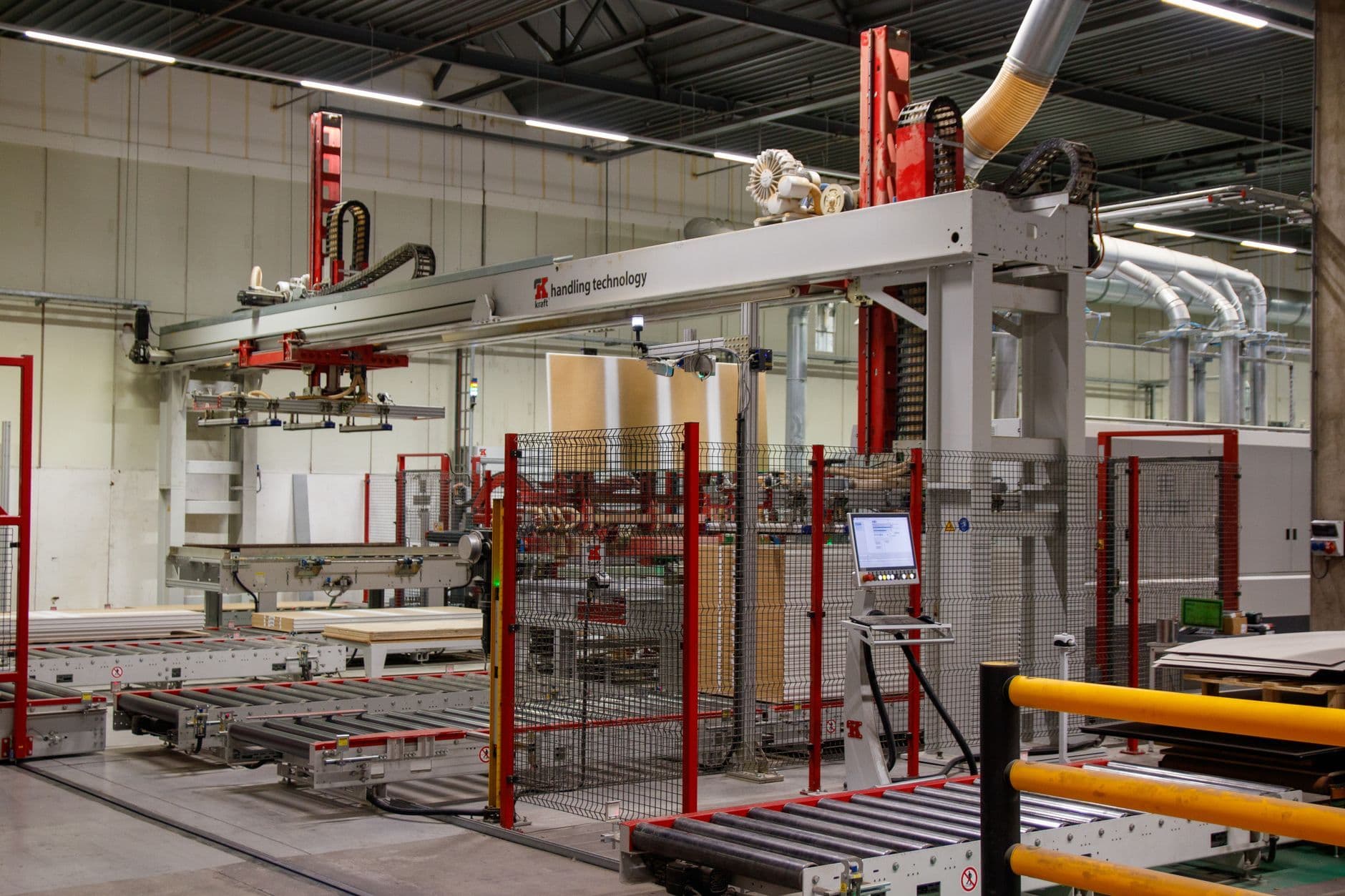
If you run a factory floor in 2026, the AI conversation has moved off the slide deck and onto the line. "AI×IoT for edge manufacturing" is not a product you buy. It's a system you assemble: sensors that instrument the plant, models that read the data, and compute that runs those models on-site instead of in a distant cloud. The "edge" part isn't marketing. A vision system guiding a robot arm or inspecting parts on a moving line has to answer in milliseconds — it can't wait on a round trip to a data center.
The center of gravity for that physical substrate is Asia. China installed 295,000 industrial robots in 2024, which the IFR reports as 54% of the world's installations that year: a majority of the planet's new arms going into one country's factories. That installed base is what every software and edge-AI layer here sits on top of.
A note on method: this is a hand-curated set of 15 vendors, drawn from our published research report. Seven US-sanctioned or Entity-List companies were excluded for compliance, so read this as a compliance-scoped map, not a census.
| Tool | Country | What it does | Stack layer | Pricing | Best for (operator's job) |
|---|---|---|---|---|---|
| Advantech | Taiwan | Edge-AI platform, smart cameras, IoT | Edge-compute / platform | Quote-based | Standardizing the hardware substrate under everything else |
| Mech-Mind Robotics | China | 3D vision + robot guidance | Machine vision | Quote-based | Making a blind robot arm pick and place adaptively |
| Flexiv | China / US | Force-controlled adaptive robots | Industrial robots | Quote-based | Assembly, polishing, insertion that position control can't handle |
| Foxconn Industrial Internet (FII) | China | Lighthouse smart-factory platforms | Orchestration / operator | Quote-based | Running an at-scale smart factory, not just buying parts |
| Inovance | China | Drives, PLC, motion, AI control | Control / edge-compute | Quote-based | The control layer that actually moves the machinery |
| Delta Electronics | Taiwan | Smart-mfg automation + AIoT | Automation / multi-layer | Quote-based | A broad single-vendor automation + AIoT portfolio |
| Geek+ (Geekplus) | China | AI-driven AMR fleets | AMR / intralogistics | Quote-based | Moving materials between processes autonomously |
| Hai Robotics | China | ACR + high-density storage AI | ACR / intralogistics | Quote-based | Squeezing more storage density out of the same floor |
| Dobot | China | Cobots with AI vision | Collaborative robots | Entry units accessibly priced; else quote | A first automation project at SME budget |
| ADLINK Technology | Taiwan | Edge-AI compute + EVA vision SDK | Edge-compute | Quote-based | Running vision inference at line speed on-site |
| Unitree Robotics | China | Legged robots for inspection | Embodied / humanoid | Consumer from low; enterprise quote | Inspecting hazardous, uneven plant environments |
| UBTECH Robotics | China | Humanoids on assembly lines | Embodied / humanoid | Quote-based | Piloting humanoid labor on EV/electronics lines |
| Estun Automation | China | Industrial robots + AI welding | Industrial robots / motion | Quote-based | Domestic-OEM arms with AI-assisted welding/handling |
| Terminus Group | China | AIoT operating system (TacOS) | AIoT-OS / orchestration | Quote-based | Coordinating heterogeneous AIoT devices facility-wide |
| Moxa | Taiwan | Industrial networking / gateways | Connectivity | Quote-based | The reliable plumbing that moves plant data |
One honest word on pricing before the profiles: nearly every vendor here is "Contact Sales." For industrial capital equipment, that's normal, not a dodge. You're buying hardware plus integration plus services, configured to your line. There's no shelf price for that, the way there is for SMB SaaS. Budget for a quote, plus the integration and services on top.
Advantech is the substrate vendor, the one whose boxes end up under everyone else's software. Its portfolio spans the Edge AI SDK, EI-series edge servers, ICAM AI cameras, and the WISE-IoT platform, spanning sensing, connectivity, and edge-compute at once.
Best for: an operations leader who wants to standardize the hardware and platform layer before layering vendors' models on top.
Pricing reality: quote-based and channel-driven. Expect to buy through a system integrator, with a quote that reflects configuration, not a catalog price.
Pros: broad single-vendor coverage of the lower stack; mature industrial hardware you can standardize on; smart cameras and edge servers from one roof.
Cons: breadth can mean leaning on one supplier for much of the base layer (some lock-in); pricing is fully quote-opaque, so cross-vendor comparison is hard.
If it doesn't fit, also consider… ADLINK, if you want a narrower edge-inference specialist rather than a full platform, or Moxa if your gap is really connectivity.
Mech-Mind is the vision pure-play: AI-powered 3D machine vision and robot guidance for pick-and-place, assembly, and quality tasks. It's venture-backed, with Sequoia among its backers (we don't cite a funding figure, as none is independently verified here).
Best for: the operator whose bottleneck is a robot arm that can't "see." Mech-Mind's 3D vision lets an arm perceive part position and orientation and adjust its grasp.
Pricing reality: quote-based. Vision-guidance is sold as a configured system, not a license.
Pros: a well-capitalized specialist in the most mature AI-in-manufacturing category; strong 3D perception for messy, unstructured picking.
Cons: it's a layer, not a full solution, so you still supply the robot and integrator; it pairs with, rather than replaces, your automation stack.
If it doesn't fit, also consider… ADLINK if you'd rather own the edge-vision compute and SDK yourself, or Flexiv if the harder problem is force, not sight.
Flexiv builds adaptive, force-controlled AI robots, the Rizon series, for flexible manufacturing. Force control lets its robots feel contact and modulate motion, exactly what rigid, pre-programmed arms are bad at.
Best for: the operator with tasks that break position-only robots: assembly, polishing, insertion, anything where the part isn't in the same spot every time.
Pricing reality: quote-based. Flexiv operates across China and the US, and maintains a public /news page, which matters if you're tracking releases.
Pros: genuine force-feedback plus AI, aimed at hard-to-automate tasks; cross-border presence eases some Western-buyer conversations.
Cons: advanced adaptive robotics carries real integration cost, and this isn't a plug-in cell; the China/US footprint still warrants an export-compliance check for your jurisdiction.
If it doesn't fit, also consider… Dobot if you want an accessible cobot entry point instead of adaptive force control, or Estun for more conventional domestic-OEM industrial arms.
FII is the outlier in this set: it doesn't just sell you a platform, it runs some of the world's validated advanced factories. Its Fii Cloud and BEACON platforms power WEF Lighthouse smart factories.
Best for: the operations leader thinking at whole-facility scale who wants a partner that has operated frontier factories, not only supplied components to them.
Pricing reality: enterprise, quote-based. This is a platform-and-partnership engagement, sized to the deployment.
Pros: proven at Lighthouse scale; spans orchestration and, as an operator, effectively the whole stack.
Cons: enterprise-scale engagement means enterprise-scale commitment and lock-in; not a fit for a small line or a first pilot — this is the deep end of the pool.
If it doesn't fit, also consider… Delta for a broad automation portfolio at less operator scale, or Terminus if what you want is the orchestration OS layer alone.
Inovance is the control layer of the factory: drives, PLCs, motion control, and increasingly AI-enabled factory logic. It's one of the largest domestic Chinese automation vendors, making a lot of the components that move machinery on China's two-million-unit robot base.
Best for: the operator specifying the drives and controllers that execute motion, who wants AI-enabled control logic on a proven automation foundation.
Pricing reality: quote-based and channel-driven, like most industrial-automation components.
Pros: foundational, widely deployed control hardware; a sensible base to add higher-level AI onto later.
Cons: it's infrastructure, not an application, so the AI value shows up above it; deep reliance on one automation vendor's ecosystem creates standardization lock-in.
If it doesn't fit, also consider… Delta for a broader multi-layer automation portfolio, or Estun if your center of gravity is robots rather than drives and PLCs.
Delta offers one of the broadest smart-manufacturing portfolios in the set: automation, industrial IoT, and AIoT through its DIAStudio software.
Best for: the operator who wants to consolidate automation and AIoT with a single, broad Taiwanese supplier rather than assembling many specialists.
Pricing reality: quote-based and channel-driven. DIAStudio is the software environment; the surrounding hardware is configured and quoted.
Pros: genuine breadth across edge-compute, AI-model, and orchestration layers; a credible advanced-manufacturing track record.
Cons: breadth again invites single-vendor lock-in; a wide portfolio may not be best-in-class at every layer.
If it doesn't fit, also consider… Advantech if your priority is the edge hardware substrate specifically, or FII if you need operator-scale platform depth.
Geek+ is the intralogistics layer: AI-driven autonomous mobile robot (AMR) fleets that move materials through factories and warehouses. It's a global AMR leader, and the value isn't any single robot but the software coordinating a fleet in real time.
Best for: the operator whose bottleneck is material movement between processes. Geek+ automates the transport that connects the fixed robots doing the work.
Pricing reality: quote-based, often offered as robotics-as-a-service (RaaS), which can shift cost from capital to operating expense.
Pros: proven, large-scale AMR fleets; real-time fleet routing and scheduling; RaaS options that ease the upfront capital hit.
Cons: fleet software and infrastructure create meaningful integration and lock-in; the value depends on volume, and a small operation may not clear the ROI bar.
If it doesn't fit, also consider… Hai Robotics if the problem is dense storage rather than floor transport, or Dobot if you need fixed-cell automation instead of mobile robots.
Hai Robotics created the Autonomous Case-handling Robot (ACR) category, pairing ACRs with AI to raise storage density. Where AMRs move goods across the floor, ACRs work inside dense storage systems, handling cases and pushing more inventory into the same footprint.
Best for: the operator constrained by floor space, who needs to raise storage density without expanding the building.
Pricing reality: quote-based, also available as RaaS.
Pros: category-defining specialization in high-density storage; complements rather than duplicates a floor-transport fleet.
Cons: a specific niche, so if your bottleneck is transport, not storage density, it's the wrong tool; dense storage systems are a real integration and commitment.
If it doesn't fit, also consider… Geek+ for general floor transport, or Advantech if what you actually need is the underlying edge and IoT platform.
Dobot is the accessible entry point: collaborative and industrial arms with AI vision across the Nova, CR, and Magician lines, positioned squarely at small and medium manufacturers. Its entry cobots are accessibly priced (exact list prices vary), which makes it one of the few vendors here with visible pricing rather than pure Contact-Sales.
Best for: the SME operator running a first automation project, who needs a cobot that deploys without a large integration team.
Pricing reality: entry cobots are accessibly priced and SME-oriented; higher configurations move to quote. Dobot maintains a public /press page.
Pros: the rare visible entry-level pricing in this set; AI vision attached for guidance and inspection.
Cons: entry accessibility means less headroom for heavy industrial duty cycles; you'll still budget integration and tooling on top of the arm.
If it doesn't fit, also consider… Flexiv if you outgrow cobots and need adaptive force control, or Estun for heavier domestic-OEM industrial arms.
ADLINK is the edge-inference backbone: edge-AI computing platforms plus the Edge Vision Analytics (EVA) SDK. Its center of gravity is the on-site compute that runs vision and other models at line speed, plus the tooling to run those workloads on it.
Best for: the integrator or operator who wants to own the edge-vision compute layer, the hardware and SDK that turn camera feeds into millisecond decisions on the floor.
Pricing reality: quote-based and channel-driven; sold to system integrators and OEMs building vision-enabled edge systems.
Pros: focused edge-inference hardware and a vision SDK; a direct fit for the "edge" requirement.
Cons: it's compute plus tooling, not a finished application, so you bring the models and integration; narrower than a full platform, so you may add other layers around it.
If it doesn't fit, also consider… Advantech for a broader platform, or Mech-Mind if you'd rather buy the vision-guidance capability as a packaged system.
Unitree builds legged and humanoid robots and applies embodied AI to industrial inspection. Its steel-plant inspection deployment with Hunan Steel is the concrete industrial instance behind its prominence, and Unitree recorded the highest news velocity in our featured set this cycle. We frame it strictly for industrial inspection.
Best for: the operator with hazardous or uneven plant environments (steel plants, inspection routes with stairs and rough terrain) that wheeled AMRs can't traverse and are unsafe for humans.
Pricing reality: consumer units like the Go2 start at low price points; enterprise configurations are quote-based. Budget for the enterprise tier, not the consumer sticker.
Pros: legged mobility reaches terrain wheels can't; a concrete lab-to-line inspection deployment already running.
Cons: embodied robotics is early-pilot, not fleet-proven, so plan accordingly; legged robots are export-sensitive, so cross-border deployments need a compliance review.
If it doesn't fit, also consider… Geek+ if flat-floor wheeled AMRs cover your routes, or UBTECH if the task is assembly rather than inspection.
UBTECH builds humanoid robots, the Walker S line, and is piloting them on EV and electronics assembly lines. We frame it strictly for factory-line use. This is the early-pilot phase of humanoid deployment: real robots on real lines, not fleet-scale rollouts.
Best for: the operator running a forward-looking pilot of humanoid labor on assembly-adjacent tasks, who wants to learn the technology before it matures.
Pricing reality: enterprise, quote-based. Treat any Walker S engagement as a pilot budget, not a production line-item.
Pros: a concrete instance of humanoids moving onto real assembly lines; direct fit for EV and electronics contexts.
Cons: genuinely early, so these are pilots, unproven at scale; humanoids are export-sensitive and integration-heavy, so both compliance and services costs are real.
If it doesn't fit, also consider… Flexiv for adaptive fixed-arm assembly that's production-ready today, or Unitree if your task is inspection rather than assembly.
Estun is a top-tier domestic Chinese robot OEM: industrial robots and motion control with AI-assisted welding and handling. It represents the domestic robot-manufacturing base that China's installation lead rests on; its AI-assist features are edge-AI upgrades on a core robot business.
Best for: the operator specifying industrial arms for welding or material handling who wants AI-assisted process features on proven domestic-OEM hardware.
Pricing reality: quote-based and channel-driven.
Pros: established, high-volume industrial-robot OEM; AI applied to specific, high-value processes like welding.
Cons: the AI is process-specific, not a general platform; as with any single-OEM robot line, expect ecosystem lock-in around programming and service.
If it doesn't fit, also consider… Dobot for a lighter, more accessible entry point, or Flexiv if the tasks need adaptive force control rather than conventional motion.
Terminus builds an AIoT operating system, TacOS, for smart facilities and industrial environments. It's the vendor whose product most directly embodies the "AI×IoT" theme: an orchestration layer to coordinate heterogeneous AI and IoT devices across a whole site.
Best for: the operator who has the sensing, compute, and robots but needs a coordination layer to manage them as one system, not disconnected islands.
Pricing reality: enterprise, quote-based.
Pros: a purpose-built orchestration OS for AIoT; directly addresses the integration problem that no single hardware vendor solves.
Cons: an OS layer is a strategic commitment with real lock-in; it's only as valuable as the device ecosystem you connect to it.
If it doesn't fit, also consider… FII if you want orchestration from a proven factory operator, or Advantech's WISE-IoT if you'd rather stay within a hardware vendor's platform.
Moxa is the plumbing: industrial networking and edge connectivity for IIoT. It's rarely the visible application, but it's frequently what lets the visible applications work: the deterministic networks and gateways that move sensor and machine data reliably under factory noise, heat, and uptime demands.
Best for: the operator whose real gap is reliable data movement, connecting sensing to edge-compute across a plant that can't tolerate dropped links.
Pricing reality: quote-based and channel-driven.
Pros: dependable industrial networking built for harsh conditions; the connectivity layer nearly every AIoT deployment quietly needs.
Cons: infrastructure, not intelligence, so the AI value lives elsewhere in the stack; easy to under-budget until an unreliable network stalls everything above it.
If it doesn't fit, also consider… Advantech, which also spans connectivity within a broader platform, or ADLINK if the priority is edge compute rather than the network itself.
Start with your highest-volume bottleneck, not the shiniest category. In practice that's almost always one of two things: vision inspection or intralogistics. If you're throwing labor at defect-catching or at moving material between processes, that's where AI×IoT pays back first. Machine-vision inspection and predictive maintenance are the two most-established, highest-ROI early use cases, and AMR/ACR logistics is close behind. Fix the bottleneck that's costing you now; don't buy a humanoid because it's on the cover.
Second, budget for the whole thing, not the hardware. Quote-based pricing is normal here, but the quote is the floor. Integration and services routinely sit on top of the equipment cost, and for adaptive robotics or a facility-wide orchestration OS, that services layer can rival the hardware. If a vendor won't scope integration, that's your signal to slow down.
Third, pilot before you buy a fleet. Everything embodied, Unitree and UBTECH, is at the early-pilot stage, and even mature vision deserves a line-level proof before rollout. Prove ROI on one cell or one route, then scale.
Fourth, mind your export and compliance exposure. We excluded seven sanctioned vendors from this map for a reason: a real part of the Asian supply base carries constraints for some buyers, and the legged and humanoid vendors are export-sensitive. A supplier that's fine today can face restrictions tomorrow. Factor that into cross-border deployments before you commit.
Why edge instead of cloud for manufacturing AI? Four reasons, and latency is the big one. A vision system guiding an arm or inspecting a moving line must answer in milliseconds — a round trip to a distant cloud can't keep up. Add bandwidth (high-res cameras generate too much data to stream), privacy (process data is commercially sensitive), and offline operation (the line can't stop when the network hiccups), and edge inference becomes a requirement, not a preference.
Are Chinese industrial-AI vendors a compliance risk? Some are, which is why this map deliberately excludes seven US-sanctioned or Entity-List companies. The vendors featured here were screened to avoid that inherited exposure. But sanctions lists shift, and legged/humanoid robotics is export-sensitive, so any cross-border deployment deserves its own compliance review. Treat it as a live, standing question, not a solved one.
What's the difference between an AMR and an ACR? An AMR (Autonomous Mobile Robot) navigates a facility to transport materials across the floor; Geek+ is the example here. An ACR (Autonomous Case-handling Robot) works inside dense storage systems, handling cases to raise storage density, which is Hai Robotics' category. AMRs solve transport; ACRs solve density. They complement each other.
Do I need humanoid robots? Almost certainly not yet. Humanoids (UBTECH's Walker S) and legged robots (Unitree) are in early pilots: real robots on real lines and inspection routes, but not proven at fleet scale. Unless you're running a deliberate learning pilot, your ROI is in vision, predictive maintenance, and logistics first. Watch the space; don't bet the line on it.
How much does industrial edge-AI cost? Expect a quote, not a price tag. That's standard for industrial capital equipment, where hardware, integration, and services are configured to your line. The visible exceptions are entry-level: Dobot's entry cobots are accessibly priced, and Unitree's consumer units start low (though enterprise configs are quoted). Budget integration and services on top of any hardware number.
What's a Lighthouse factory? A site independently validated by the WEF Global Lighthouse Network as an advanced adopter of Fourth Industrial Revolution tech, including industrial AI and IoT. The network reached 238 sites by June 2026, up from 189 in January 2025, and China held the largest national share, about 42% of the January-2025 count. FII in this set is a Lighthouse operator.
Is China actually the most automated place to manufacture? On volume, yes: 54% of 2024 robot installations and an operational stock past two million units. But on density, no. China sits at 166 robots per 10,000 manufacturing employees, behind South Korea's world-leading 1,220, Western Europe's 267, and North America's 204, though above the Asia average of 131. Volume and intensity are two different stories.
The trend to watch is the July 2026 embodied-industrial surge. In a single week, our news monitoring caught four distinct signals: JD.com announced a $1.4B "RoboBase" robot-facility network with a Guangzhou groundbreaking; Unitree partnered with Hunan Steel to put legged robots into steel-plant inspection; UBTECH began piloting Walker S humanoids on assembly lines; and China held an embodied-AI industrial-deployment conference in Beijing. Any one of those is a headline. Four in a week reads as a phase change — embodied robots moving from demonstration toward assigned industrial tasks.
The operator-realist caveat still holds: these are pilots, not fleet rollouts, and the word matters. The direction is real and the geography is consistent with everything else in this map. But if you run a line today, your money is still best spent on the mature layers. Watch the embodied frontier closely. Deploy against your actual bottleneck.
Related reading: our companion Asian AI-IoT smart agriculture report, part of the same series.
Download the full report — The State of Asian AI×IoT for Edge Manufacturing (2026) (PDF)
BestAIFor's research reports cover specific verticals of the AI tools market with the buyer profile most underserved by the existing "best of" lists. This report maps how AI and industrial IoT are converging at the factory edge across the Asian vendor landscape, profiling 15 vendors by their layer in the AIoT stack.
The report was researched and written July 2026 by Daniele Antoniani, Founder at BestAIFor.com. Vendors were hand-selected for fit at the AI×IoT×edge×manufacturing intersection and screened to exclude US-sanctioned and Entity-List companies.
Corrections, additions, or vendor-side responses to this report are welcome at info@bestaifor.com. Featured vendors are sent a courtesy notification at publication; unfeatured candidates are not contacted unless they engage first. BestAIFor does not accept payment for inclusion or editorial position in these reports.
About the author: Daniele Antoniani is the founder of BestAIFor, where he researches and tests AI tools in real operating workflows rather than from spec sheets. He writes these guides for the person running the operation — the one who has to make the tool pay for itself — not the one administering the software. He can be reached at info@bestaifor.com.
DoNotPay popularized the idea of a robot lawyer for everyday problems like tickets, refunds, and forms.
Deep dive compares Grok-4 and ChatGPT 5.2, highlighting their strengths, use cases, and differences.

Meta prompting and step-back prompting allow AI models to collaborate, boosting reasoning and reliability in complex tasks

Google Cloud now offers free access to advanced AI tools like Imagen, Speech-to-Text, enabling rich research and coding applications

China Open Source LLMs: DeepSeek, Qwen & GLM Licensing Guide 2026
China LLMs 2026: Qwen vs DeepSeek vs ERNIE vs Hunyuan Compared

Stop collecting AI tools. Start building a system that works like a fractional employee-automate smarter, not harder.
Discover how ElevenLabs V3 enables teams to scale audio content globally with AI-powered dubbing, voice cloning, and sound effects

How to Use Perplexity AI: The Beginner's Guide (2026)

The Best AI Tools to Run a One-Person Business in 2026 (No Staff, No Code)

Muck Rack's 2026 journalism survey found 82% of journalists use AI, up from 77%. But concern about unchecked AI rose 8 points to 26%. Here is what the numbers mean for editorial teams.

GPT-5.4 shipped March 5, 2026 with native computer use, scoring 75% on real desktop tasks vs. 72.4% human baseline. Most people will prompt it like a chatbot. Here is how to actually get results.

WordPress.com added write access for AI agents in March 2026. After two weeks testing it for editorial drafts, it saves time on the parts you'd expect — and falls apart where it matters most.

Google released two AI memory migration tools on March 26, 2026 that let you move your ChatGPT or Claude context into Gemini as persistent memory. Here’s the workflow, the copy-paste prompt, and when to skip it.

Most AI users are still doing prompt engineering in 2026. Context engineering — feeding the right information at the right time — is the upgrade your workflow needs. Two copy-paste patterns included.

The early-user problem in B2B SaaS is solved by manual work, direct relationships, and ruthless prioritization — not marketing funnels or growth hacks. The tactics are well-documented and consistently replicated....

This report's twelve most important findings, ordered by importance to a solo or small-firm reader. Each is a standalone observation; the body of the report supports each in detail.
BestAIFor Research Report — version 1.0, 11 May 2026

We evaluated 15 AI tools for property managers in 2026 — only 4 publish a price you can act on without a sales call, and one is under active U.S. antitrust litigation. Download the full report.
We hand-curated and compared 15 AI tools for property managers in 2026 across leasing, maintenance, short-term rental, and all-in-one platforms — with verified pricing, the AI-in-entry-tier check, and honest pros and cons.

*By Daniele Antoniani · Last updated May 2026*
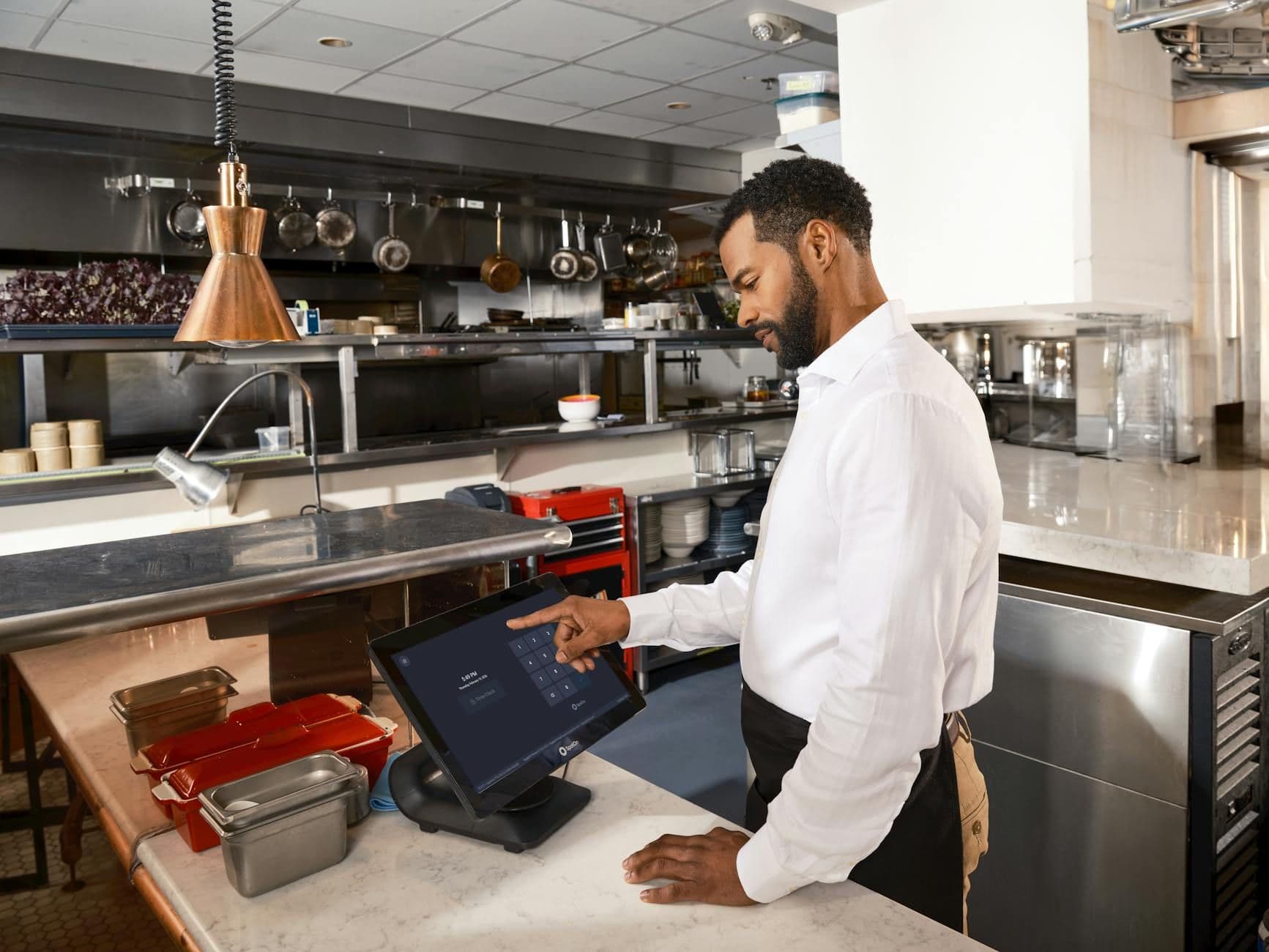
Restaurant operators face a specific kind of software sprawl problem. There's a POS for transactions, a separate scheduling tool for labor, a third platform for online ordering, and a fourth for reservations — and none of them talk to each other...

Real-time translation hardware used to be a curiosity — a crowdfunded earbud that half-worked on a good Wi-Fi day. In 2026 it's a real category, and the prices now run from about $23 to $699. We looked at 11 devices: 9 wearable earbuds and 2...

A typical small-animal vet writes SOAP notes for two to three hours of every clinical day. That's the bottleneck the AI vendors are aiming at — and in the last twelve months, the wedge has widened from a single category (the scribe) to five: AI...
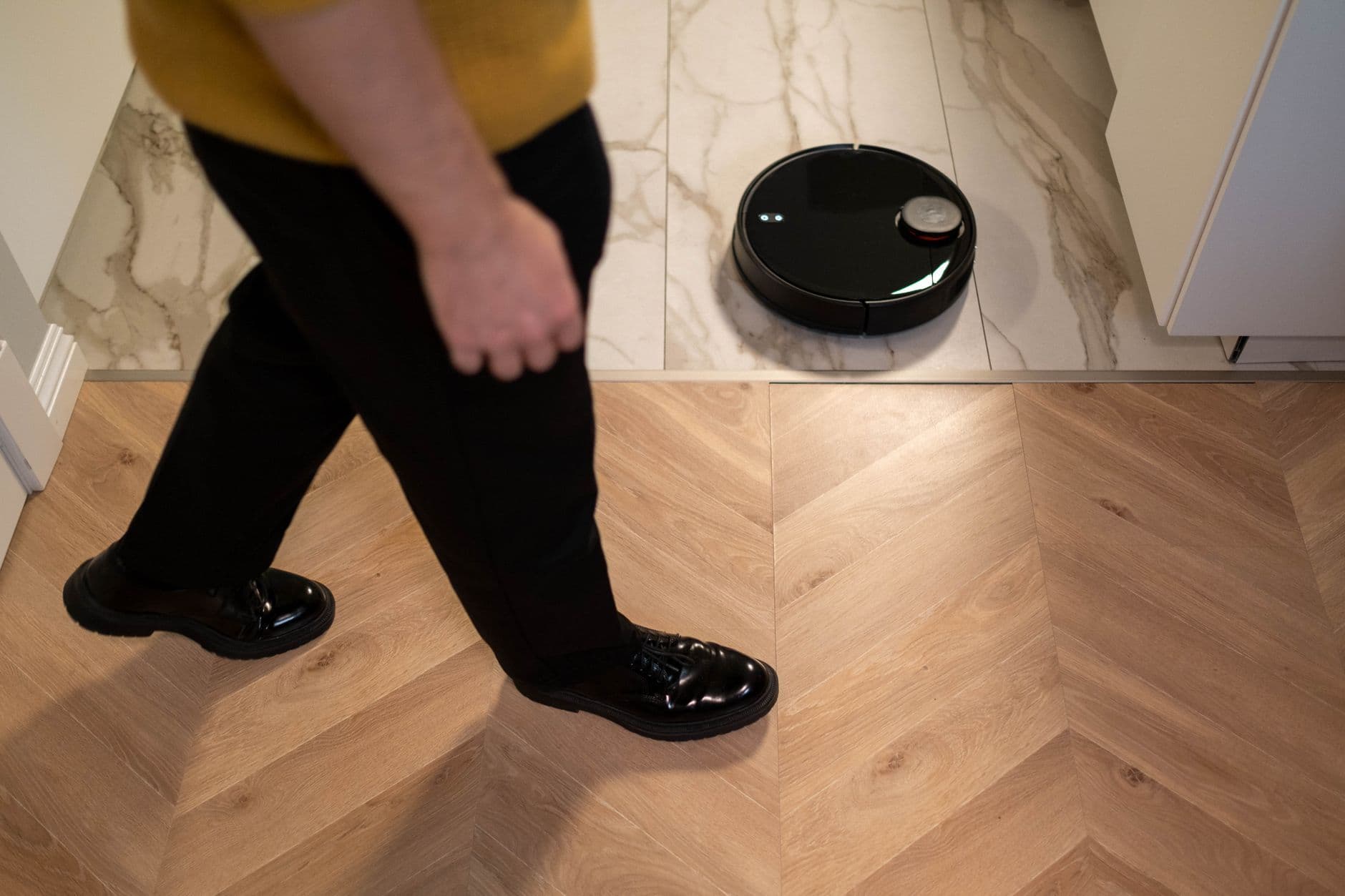
A home robot is a piece of capital equipment that runs every day, breaks in ways you can't easily fix, and quietly maps the inside of your house. That's the frame I'd start with, not the spec sheet. The interesting question in 2026 isn't...

The two platforms in this category that market hardest on artificial intelligence have no independent reviews at all.

Here's something odd about this market. A single click on "endpoint management software" costs an advertiser $371.37. That's not a typo, and it's not an outlier — "PSA software" runs $153.74 and "help desk software" $120.24. For comparison, we...

An investor managing 12 active SaaS portfolio companies surfaced a question circulating in startup communities: how do you track competitors at scale without a full-time analyst at every company? The tooling to solve...
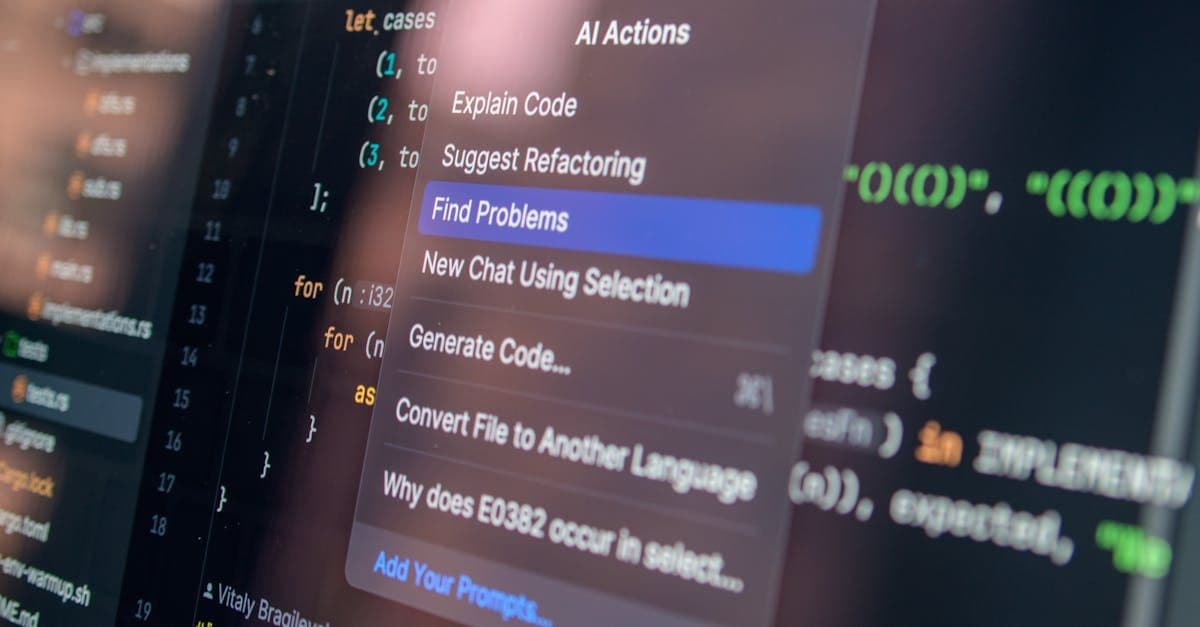
Combining multiple AI coding tools into a unified workflow is delivering measurable productivity gains for developers who get the configuration right. The efficiency argument is real — but the integration overhead is...